Landmark
Escadaria Selarón
 Jtk33 · Wikimedia Commons · CC BY-SA 4.0
Some booking links are affiliate links. If you book through them, we may earn a small commission at no extra cost to you. We never let this influence which places we recommend.
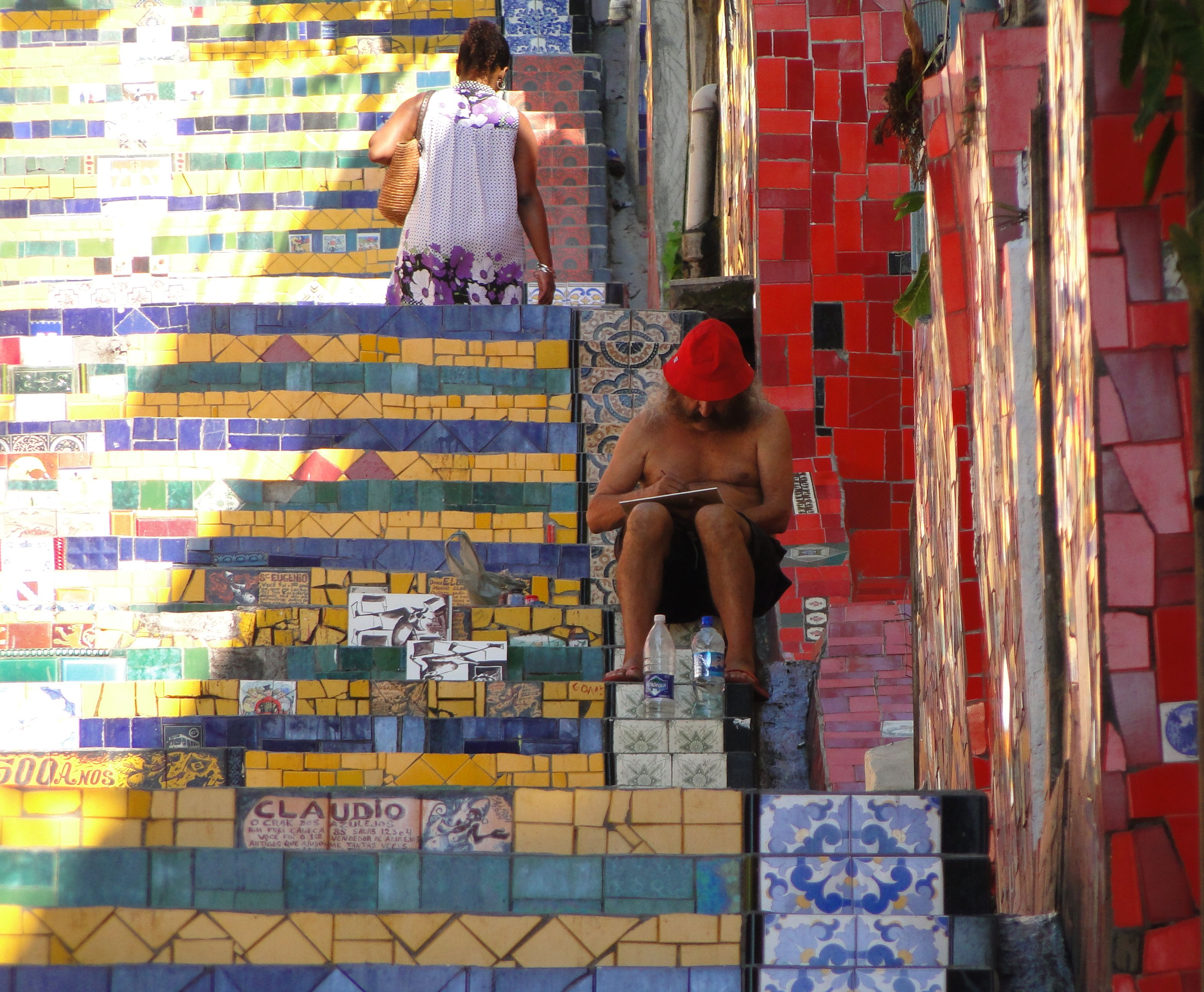
Escadaria Selarón, also called the Lapa Steps, is a world-famous staircase in Rio de Janeiro. It is covered in over 2,000 tiles collected from more than 60 countries, all installed by Chilean-born artist Jorge Selarón. The steps run between the Lapa and Santa Teresa neighborhoods, connecting Joaquim Silva street and Pinto Martins street. There are 215 steps stretching 125 meters.
Don't miss
- Over 2,000 tiles collected from more than 60 countries around the world
- About 300 hand-painted tiles by Selarón depicting a pregnant African woman
- The steps are an ever-evolving piece of art,Selarón constantly changed sections
- The work spills over to steps at the foot of the Arcos da Lapa
- Featured in music videos by Snoop Dogg and U2, and in the show The Amazing Race
Tickets & tours
Ways to visit Escadaria Selarón
You can see Escadaria Selarón on your own. A tour is worth it for the story behind it, for transport, or for combining nearby sights into one day.
 Cheapest way inEntrance to the Giant Roda of Rio de Janeiro4.8★ · 1,447 travelers20 minutesFree cancellationFrom$12 per personSee dates →
 Best full dayFull Day in Rio: Christ, Sugarloaf, Selarón & Barbecue Lunch4.7★ · 3,307 travelers~8 hoursFree cancellationFrom$77 per personSee dates →
 Private & flexibleCityTour Rio de Janeiro -Christ Redemptor-Santa Teresa- Escadaria5★ · 27 travelers2-4 hoursFree cancellationFrom$118 per personSee dates →
Getting there
Know before you go
- The steps are located in the Lapa neighborhood, straddling Lapa and Santa Teresa.
- The artist, Jorge Selarón, lived in the same house by the steps and often worked there by day.
- The steps have appeared in National Geographic, Time, and commercials for Coca-Cola and American Express.
A bit of history
In 1990, Jorge Selarón began renovating the dilapidated steps in front of his house. Neighbors initially mocked his choice of blue, green, and yellow tiles,the colors of the Brazilian flag. He sold paintings to fund the work, which became an obsession. He considered the steps never complete, saying, 'This crazy and unique dream will only end on the day of my death.' Selarón was found dead on the steps on January 10, 2013.
Common questions
How many steps are there?
There are 215 steps, measuring 125 meters (135 yards) long.
Where do the tiles come from?
Originally scavenged from construction sites and urban waste, later most were donated by visitors from around the world.
Why are there so many tiles of a pregnant African woman?
Selarón painted about 300 such tiles but only called it a 'personal problem from my past.'
Is the artwork finished?
Selarón considered it never complete and said it would only end on the day of his death.
More attractions in Rio de Janeiro