
Landmark
Akrotiri Archaeological Site
 Γιάννης Τσάκαλος
Some booking links are affiliate links. If you book through them, we may earn a small commission at no extra cost to you. We never let this influence which places we recommend.
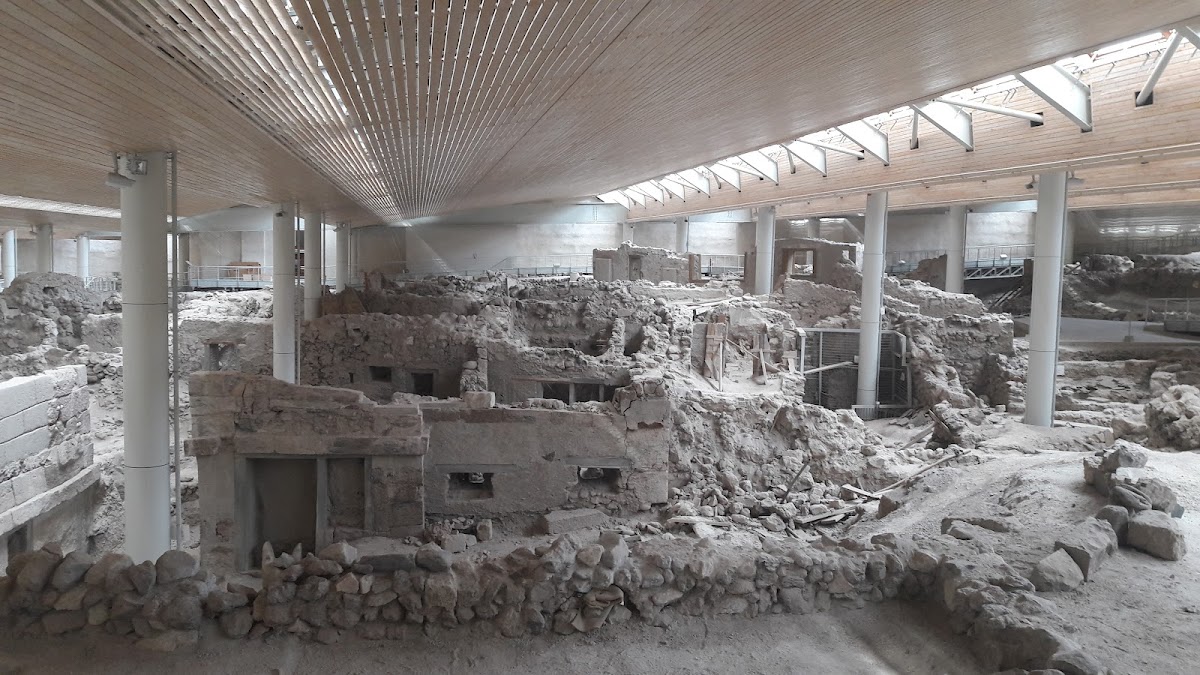
Akrotiri, on the Greek island of Santorini, is one of the most extraordinary archaeological sites in the Mediterranean, a Bronze Age town buried (and preserved) by the same colossal volcanic eruption that shaped the island around 1600 BC. Often called the 'Minoan Pompeii,' it reveals a sophisticated society: multi-storey buildings, paved streets, advanced drainage, and astonishingly vivid frescoes (the finest are displayed in museums in Athens and Fira). A modern roof shelters the excavation, and raised walkways let you look down over the streets and houses frozen in time.
Remarkably, no human remains or valuables have been found, suggesting the inhabitants were warned and fled before the eruption. It's a cool, shaded, fascinating contrast to Santorini's beaches and sunsets, and essential for anyone curious about the ancient Aegean.
Don't miss
- A Bronze Age town preserved under volcanic ash
- Multi-storey buildings, streets, and advanced drainage
- Raised walkways over the excavation
- The story of the eruption and the residents' apparent escape
- Links to the Atlantis legend
Tickets & tours
Ways to visit Akrotiri Archaeological Site
You can visit on your own (Paid entry (combined tickets with other Santorini sites exist). It's covered and shaded). A tour adds transport and a guide, or combines nearby sights into one day.
 Cheapest way inE-Ticket to Heraklion Archaeological Museum with Audio Guide4.1★ · 32 travelers~2 hoursFrom$37 per personSee dates →
 Best full daySantorini Day Tour: Akrotiri, Villages, Wine and Sunset in Oia4.3★ · 1,152 travelers~10 hoursFree cancellationFrom$69 per personSee dates →
 Private & flexibleAcropolis and Museum Private Tour with an Archaeology Expert5★ · 10 travelers2-4 hoursFree cancellationFrom$57 per personSee dates →
Good for
How travelers rate it
Know before you go
- It's roofed and shaded, a great option in the midday heat that ruins beach time.
- The best frescoes are in museums (Fira and Athens), not on site, see them too for the full picture.
- A guide or audio guide adds a lot, as signage is limited.
- Combine with the nearby Red Beach and Akrotiri village.
A bit of history
Akrotiri was a thriving Cycladic/Minoan-influenced settlement until it was buried by the massive Theran (Santorini) volcanic eruption around 1600 BC, one of the largest in human history, which may have influenced the Atlantis legend. Excavations from the 1960s revealed the remarkably preserved town beneath the ash.
Common questions
Why is it called the 'Minoan Pompeii'?
Like Pompeii, it's a town preserved by a volcanic eruption, buried under ash around 1600 BC, revealing streets, multi-storey houses, and frescoes from the Bronze Age Aegean.
Were people killed like at Pompeii?
Apparently not, no human remains or valuables have been found, suggesting the residents were warned and evacuated before the eruption.
Where are the famous frescoes?
The finest are displayed in the museum in Fira and the National Archaeological Museum in Athens, rather than at the site itself.
Is it a good hot-weather option?
Yes, it's covered and shaded, making it a comfortable choice during Santorini's intense midday heat.