Religious site
Wat Pho
 Mastertongapollo · Wikimedia Commons · CC BY-SA 4.0
Some booking links are affiliate links. If you book through them, we may earn a small commission at no extra cost to you. We never let this influence which places we recommend.
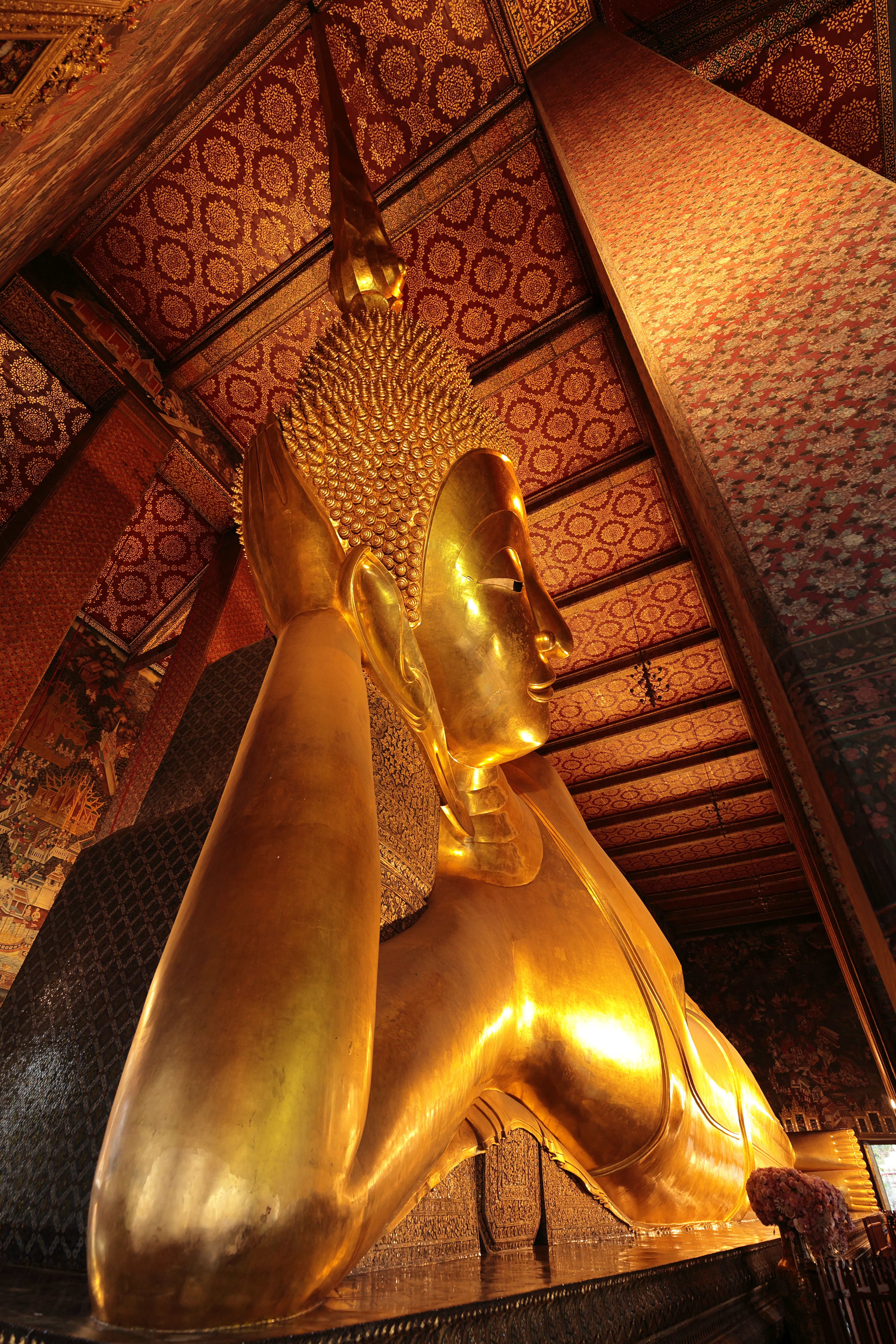
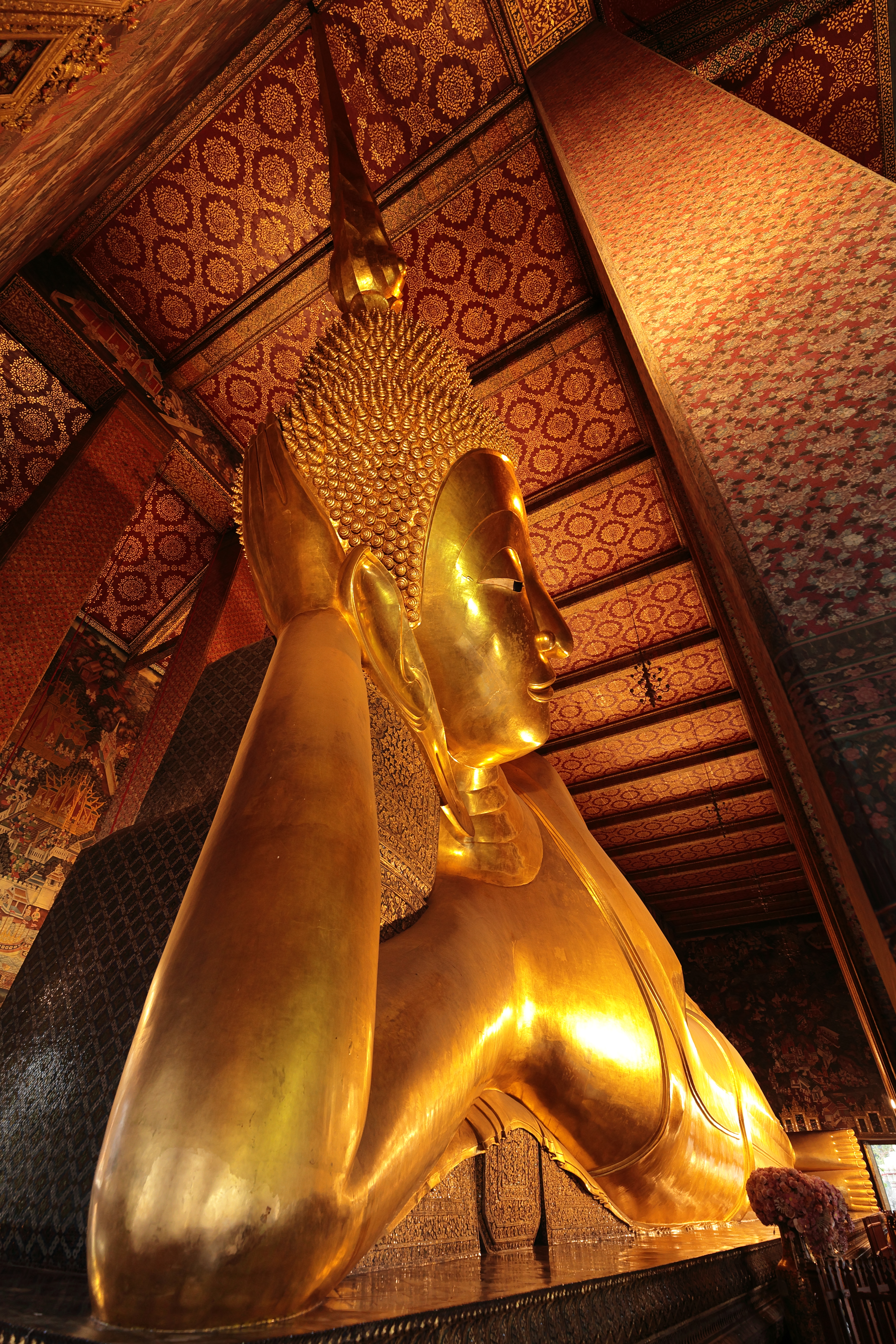
Wat Pho is one of Bangkok's oldest and largest Buddhist temple complexes, standing on Rattanakosin Island directly south of the Grand Palace. Its formal name is Wat Phra Chetuphon Wimon Mangkhalaram Rajwaramahawihan, while Wat Pho shortens the older name Wat Photaram. The site predates Bangkok's establishment as the capital. King Rama I rebuilt it after moving the capital across the Chao Phraya in 1782, made it his principal temple, and had some of his ashes placed beneath its main Buddha image. Rama III later enlarged and extensively renovated the complex. The northern walled compound is the principal visitor area, containing the ordination hall, four directional viharas, cloisters, chedis, pavilions, and the chapel of the Reclining Buddha. The southern compound contains monks' residences and a school. More than one thousand Buddha images are held across Wat Pho, many collected from abandoned temples in Ayutthaya, Sukhothai, and elsewhere under Rama I. The reclining figure is 46 metres long and 15 metres high, built around a brick core and covered in plaster and gilding. Its feet carry 108 mother-of-pearl panels of auspicious symbols. Wat Pho is also a historic center of public education. Stone inscriptions and illustrations cover religion, history, medicine, health, literature, language, and custom. UNESCO placed these records in its Memory of the World Programme, while traditional Thai medicine and massage remain taught and practiced at the temple.
Don't miss
- The 46-metre reclining Buddha, representing the Buddha's entry into Nirvana
- Mother-of-pearl soles divided into 108 panels of auspicious symbols
- The double cloister holding hundreds of gilded Buddha images from several periods
- Four great royal chedis and dozens of smaller chedis across the grounds
- Granite inscriptions and illustrations recognized by UNESCO's Memory of the World Programme
- Medical pavilions with diagrams of traditional massage pressure points
Tickets & tours
Ways to visit Wat Pho
You can visit Wat Pho on your own. A guide is worth it for the history and detail that is easy to walk past, and a tour can combine it with nearby sights.
 Cheapest way inVisit Wat Pho and Wat Arun with Local Expert4.5★ · 32 travelers~3 hoursFree cancellationFrom$13 per personSee dates →
 Most bookedExperience Bangkok with typical Thai tuk-tuk4.9★ · 994 travelers~2 hoursFree cancellationFrom$27 per personSee dates →
 Private & flexibleBangkok highlights Tour, Grand Palace, Wat Pho and Wat Arun5★ · 29 travelers5-6 hoursFree cancellationFrom$134 per personSee dates →
Know before you go
- The northern compound contains the principal sacred buildings open to visitors; the southern compound contains monks' residences and a school.
- The main temple perimeter has sixteen gates, with two serving as public entrances.
- A corridor beside the reclining Buddha has 108 bronze bowls; coin offerings support maintenance of the temple.
- Traditional Thai massage is taught at Wat Pho, and visitors can receive massage treatment in designated pavilions for a fee.
A bit of history
The earlier Wat Photaram was built during the Ayutthaya period, though its founder and exact date are unknown. After Ayutthaya fell in 1767, King Taksin established his capital at Thonburi, across the river, and the temple's proximity to the royal palace raised its status. Rama I founded the new capital at Bangkok in 1782 and ordered major work on the neglected, marshy site in 1788. Workers drained and filled the ground, rebuilt the temple, and installed Buddha images recovered from ruined religious sites. The program took more than seven years, and the renamed complex became Rama I's main temple. Rama III began another transformation in 1832 that lasted sixteen years and seven months. Most structures seen today were built or rebuilt during this campaign, including the Reclining Buddha chapel. Rama III also turned Wat Pho into a public center of learning by commissioning court scholars and monks to prepare diagrams, texts, and illustrations for its walls and pavilions. The inscriptions preserve a broad encyclopedia of knowledge, including massage pressure points and medical instruction. The temple served as a center for medical teaching before modern medicine and continues that role through a school founded in the twentieth century. Later kings made smaller additions. Repair work is continuing and often funded by devotees; the temple was restored again in 1982.
Common questions
Why is Wat Pho called the Temple of the Reclining Buddha?
Its best-known chapel contains a gilded Buddha 46 metres long and 15 metres high in the reclining-lion posture associated with entry into Nirvana.
What is shown on the Buddha's feet?
The soles contain 108 mother-of-pearl panels depicting auspicious symbols such as flowers, dancers, elephants, tigers, and ritual objects.
Why is Wat Pho linked to education?
Rama III commissioned inscriptions and illustrations across eight areas of knowledge so the temple could teach the public.
What is Wat Pho's connection to Thai massage?
It preserved medical diagrams and pressure-point instruction and remains a center for teaching traditional Thai medicine and massage.
How old is the temple?
A temple existed here during the Ayutthaya period before Bangkok became the capital. Rama I rebuilt it from 1788, and Rama III greatly enlarged it from 1832.
More attractions in Bangkok