Historic site
Namdaemun
 DoulosCore · Wikimedia Commons · CC BY-SA 3.0
Some booking links are affiliate links. If you book through them, we may earn a small commission at no extra cost to you. We never let this influence which places we recommend.
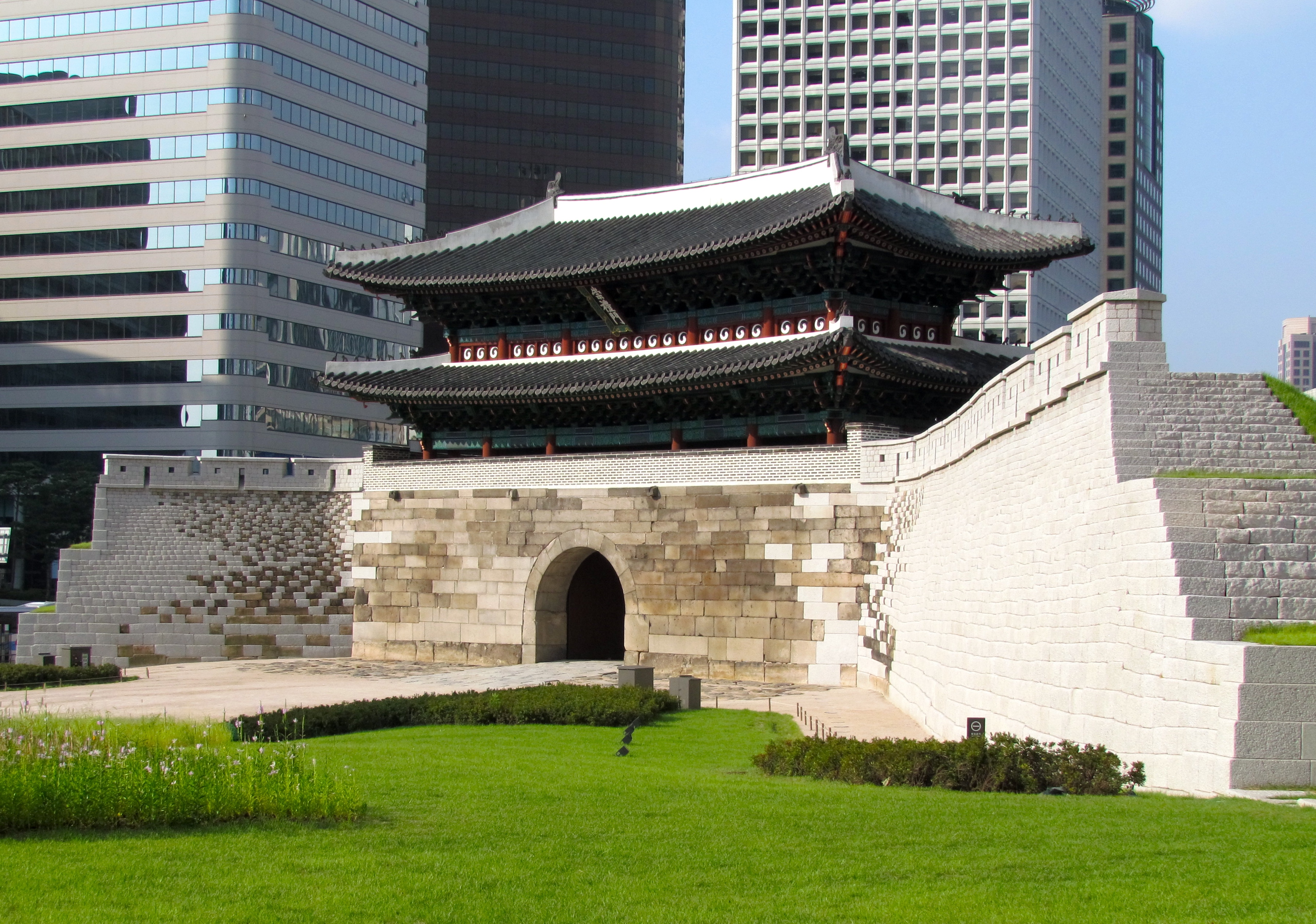
Namdaemun, also known as Sungnyemun, is the historic southern gate of Seoul's original city wall, built in the late 14th century during the Joseon dynasty. It stands in Jung District between Seoul Station and Seoul Plaza, next to the 24-hour Namdaemun Market. The gate is a pagoda-style wooden and stone structure and is designated as South Korea's first National Treasure.
Don't miss
- The two-tiered, pagoda-shaped tiled roof, rebuilt after the 2008 fire using traditional methods and kiln-fired tiles from Buyeo.
- The gate's original stone base and fortress wall, which survived the fire and date back to the Joseon period.
- The signboard reading 'Sungnyemun,' calligraphed by Prince Yangnyeongdaegun, the first son of King Taejong.
- The location next to the historic 24-hour Namdaemun Market, a bustling traditional market.
- The gate's role as the southern entrance to the original Seoul City Wall, which once stretched 18.2 kilometers.
Tickets & tours
Ways to visit Namdaemun
You don't need a tour to visit, entry is free. A tour is worth it if you want transport, a guide, or to combine Namdaemun with nearby sights in one day. That's what these do well.
 Cheapest way inPainters Show in Gwanghwamun Theater (nearby Seodaemun station)4.9★ · 118 travelers~1 hourFree cancellationFrom$24 per personSee dates →
 Best full dayBest DMZ Tour Korea from Seoul (Suspension Bridge & JSA Museum)4.9★ · 47,835 travelers7-9 hoursFree cancellationFrom$50 per personSee dates →
 Private & flexibleSeoul: DMZ with Retired Military Officer & North Korean Defector5★ · 3,852 travelers6-7 hoursFree cancellationFrom$50 per personSee dates →
Know before you go
- Namdaemun is located in Jung District, between Seoul Station and Seoul Plaza, easily accessible by subway.
- The gate was reopened to the public on 4 May 2013 after a five-year restoration following the 2008 arson fire.
- The wooden pagoda was destroyed by arson in 2008; the restoration used traditional materials and techniques.
A bit of history
The gate was first built in 1398 under King Taejo and rebuilt in 1447. It was the oldest wooden structure in Seoul until a 2008 arson fire destroyed its wooden pagoda. Restoration began in February 2010 and was completed on 29 April 2013, with the gate reopening on 4 May 2013. The gate was originally used to greet foreign emissaries, control access to the city, and keep out Siberian tigers. During the Japanese colonial period, the surrounding city walls were demolished, and the gate was closed to the public in 1907. It was damaged in the Korean War and underwent major repairs in 1961.
Common questions
Why is the gate called both Namdaemun and Sungnyemun?
Namdaemun means 'South Great Gate' and was the common name since the Joseon period. Sungnyemun, meaning 'Honoring Propriety Gate,' is the official name given by the South Korean government. The name Sungnyemun was chosen for its feng shui association with fire, believed to protect Gyeongbok Palace.
Was the gate damaged in the Korean War?
Yes, Namdaemun was extensively damaged during the Korean War and underwent major repairs completed in 1963.
Can I see the gate up close?
Yes, the gate is open to the public. It was reopened in May 2013 after restoration. You can view the structure from the surrounding area, including the lawn built around it in 2005.
More attractions in Seoul