Historic site
Gyeongbokgung
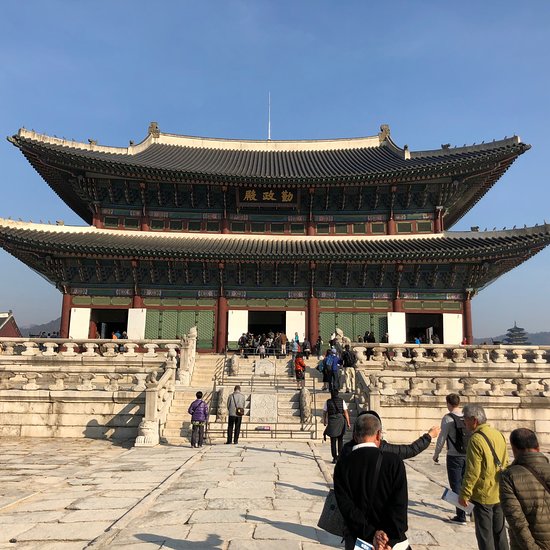 Photo via TripAdvisor (kanemochi)
Some booking links are affiliate links. If you book through them, we may earn a small commission at no extra cost to you. We never let this influence which places we recommend.
Gyeongbokgung is a former royal palace in Seoul, South Korea, established in 1395 as the first royal palace of the Joseon dynasty. It is now one of the country's most significant tourist attractions. The palace was the heart of the Joseon dynasty, with the government ministry district focused here. It contains the National Folk Museum of Korea and the National Palace Museum of Korea.
Don't miss
- The main gate Gwanghwamun and its plaza, considered the center of Seoul
- The changing of the guard ceremony, held twice daily
- The National Folk Museum of Korea, located within the palace grounds
- The National Palace Museum of Korea, also within the palace
- Geunjeongjeon, the main throne hall
Tickets & tours
Ways to visit Gyeongbokgung
You don't need a tour to visit, entry is free. A tour is worth it if you want transport, a guide, or to combine Gyeongbokgung with nearby sights in one day. That's what these do well.
 Cheapest way inGyeongbokgung Palace Hanbok Rental Experience in Seoul4.1★ · 92 travelers~2 hoursFree cancellationFrom$7 per personSee dates →
 Best full dayBest DMZ Tour Korea from Seoul (Suspension Bridge & JSA Museum)4.9★ · 47,835 travelers7-9 hoursFree cancellationFrom$50 per personSee dates →
 Private & flexibleSeoul Private Local Tour: Gyeongbokgung, Seochon & Market Tour5★ · 10 travelers5-6 hoursFree cancellationFrom$68 per personSee dates →
Getting there
Know before you go
- Accessible via Gyeongbokgung Station on the subway.
- Entrance is free for visitors wearing hanbok (traditional Korean clothing).
- The palace is open at night for part of the year.
A bit of history
The palace was established in 1395 by King Taejo. It flourished under Sejong the Great (1418–1450), who developed the Korean script Hangul there. In 1592, during the Imjin War, it was completely burned down. It was not restored until the late 19th century under King Gojong. During Japan's colonization (1910–1945), the palace was systematically demolished; only 40 of its around 500 pre-colonial buildings remained by 1945. Significant restoration efforts began in the 1980s and continue today.
Common questions
What does Gyeongbokgung mean?
Gyeongbokgung means 'great blessings palace,' named after a poem from the Classic of Poetry.
Why was the palace destroyed?
It was burned down in 1592 during the Imjin War, and later systematically demolished by Japan during the colonial period (1910–1945).
Is there a ceremony to see?
Yes, the palace hosts a changing of the guard ceremony twice per day.
More attractions in Seoul