Landmark
D. Maria II National Theatre
 Anne-Lotte O´Dwyer · Wikimedia Commons · CC BY-SA 2.0
Some booking links are affiliate links. If you book through them, we may earn a small commission at no extra cost to you. We never let this influence which places we recommend.
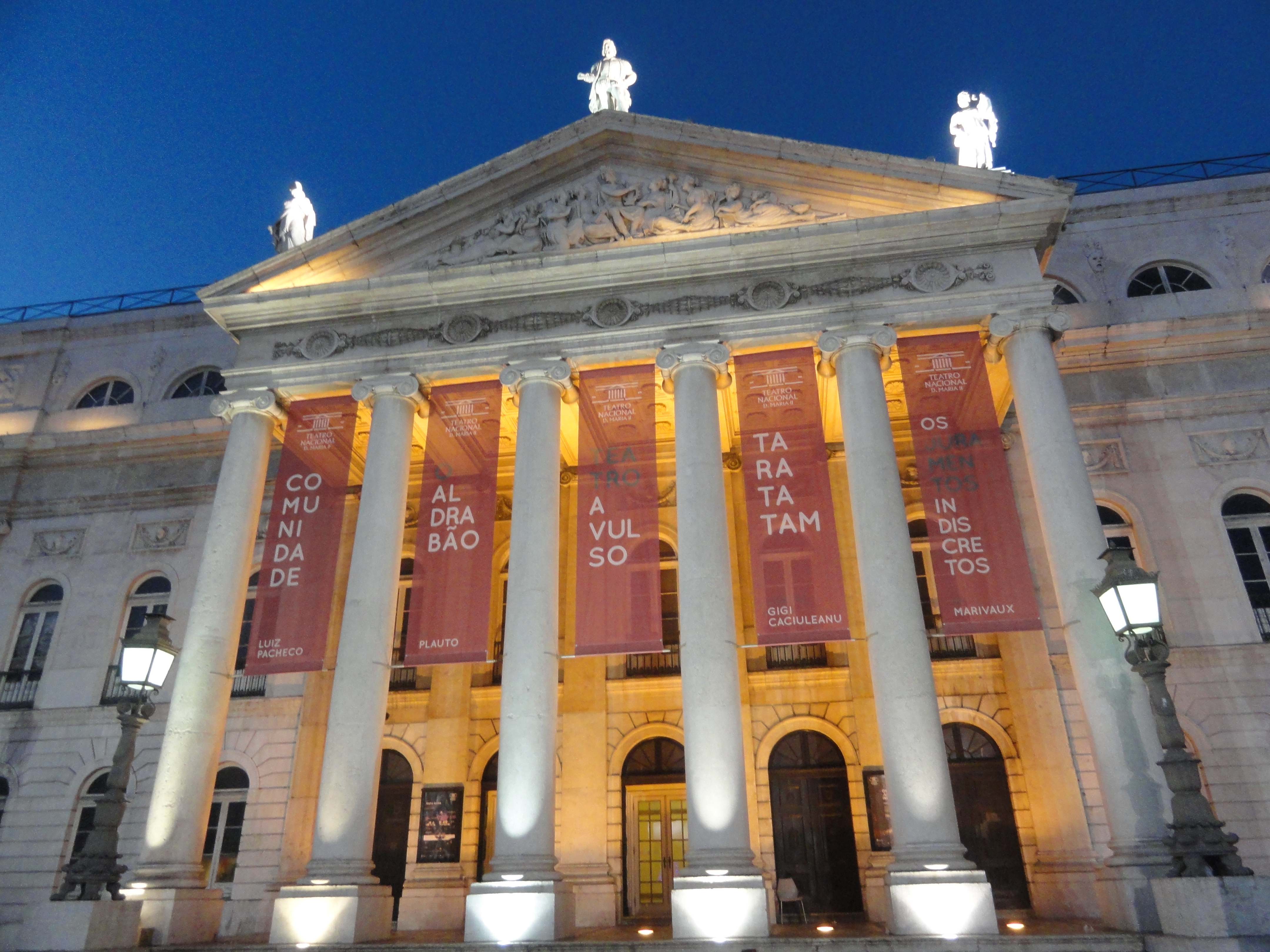
The Queen Maria II National Theatre is a prestigious performance venue situated on Rossio square in central Lisbon. It stands on the site of the former Estaus Palace, which once housed the Inquisition.
Don't miss
- The Neoclassical façade features a hexastyle portico with six Ionic columns reused from the Saint Francis Convent of Lisbon.
- The triangular pediment's tympanum displays a sculpted relief of Apollo and the Muses.
- A statue of Renaissance playwright Gil Vicente, considered the founder of Portuguese theatre, crowns the pediment.
- The interior originally held decorations by important 19th-century Portuguese artists, though much was lost in a 1964 fire; the theatre reopened in 1978 after a complete renovation.
Tickets & tours
Ways to visit D. Maria II National Theatre
You can see D. Maria II National Theatre on your own. A tour is worth it for the story behind it, for transport, or for combining nearby sights into one day.
 Cheapest way inLisbon City Center Tour - The Unmissable Lisbon5★ · 24,758 travelers~3 hoursFree cancellationFrom$2 per personSee dates →
 Most bookedBest of Lisbon Small-Group Guided Walking Tour4.9★ · 5,330 travelers3-4 hoursFree cancellationFrom$22 per personSee dates →
 Private & flexiblePrivate day trip Sintra Cascais Estoril coast from Lisbon5★ · 24 travelers7-8 hoursFree cancellationFrom$194 per personSee dates →
Know before you go
- The theatre is one of Portugal's most prestigious venues and stages theatre, ballet, and other performances.
- It is located on the north side of Rossio square, a central Lisbon plaza rebuilt after the 1755 earthquake.
- The building is the finest example of Palladian-influenced Neoclassical architecture in Lisbon.
A bit of history
The theatre was built between 1842 and 1846 on the location of the old Estaus Palace, a lodging for dignitaries built around 1450 that later became the Inquisition's seat. The palace survived the 1755 earthquake but burned down in 1836. Romantic poet Almeida Garrett championed its replacement with a theatre dedicated to Queen Maria II. The building was classified as a Property of Public Interest in 1928 and upgraded to a National Monument in 2003.
Common questions
What was on this site before the theatre?
The Estaus Palace, built around 1450 as lodging for visitors, later became the seat of the Inquisition. It was destroyed by fire in 1836.
Who was the theatre named after?
Queen Maria II of Portugal, as championed by Romantic poet Almeida Garrett.
Why is there a statue of Gil Vicente on top?
Gil Vicente is considered the founder of Portuguese theatre. Ironically, some of his plays were censured by the Inquisition that once operated on this site.
What happened to the original interior decorations?
Much of the 19th-century decoration was lost in a 1964 fire; the theatre was fully renovated and reopened in 1978.
More attractions in Lisbon