Religious site
Kalyan Das Temple
 Weichan123 · Wikimedia Commons · CC0
Some booking links are affiliate links. If you book through them, we may earn a small commission at no extra cost to you. We never let this influence which places we recommend.
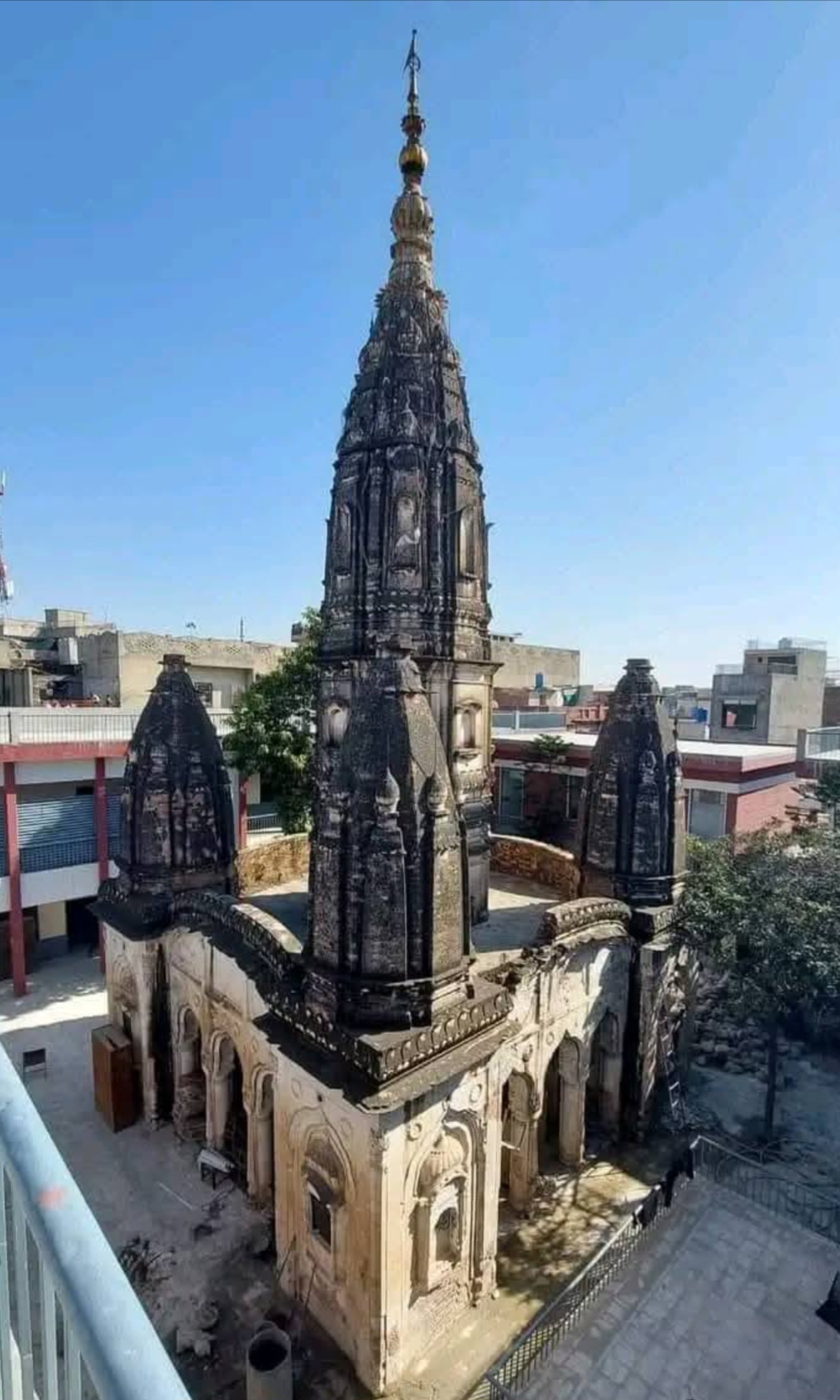
Kalyan Das Temple is a 19th-century Hindu temple in Kohati Bazaar, Rawalpindi, Pakistan. It is known for its tall shikhara-like towers and interior murals and painted panels. Since the mid-20th century, the temple compound has been occupied by a government school for visually impaired children, and the building itself is in a state of neglect.
Don't miss
- Tall shikhara-like domed towers rising above a modest courtyard
- Interior murals and painted panels depicting Hindu deities, including Ganesha, Krishna, and the Trimurti (Brahma, Shiva, Vishnu)
- Frescoes with Gurmukhi inscriptions, including one read as Shamaskhi
- Murals reported to incorporate pigments from lapis lazuli, historically sourced from Afghanistan
- Mughal-influenced decorative elements, such as arches and carved detailing, blended with traditional Hindu temple forms
Tickets & tours
Ways to visit Kalyan Das Temple
You can visit Kalyan Das Temple on your own. A guide is worth it for the history and detail that is easy to walk past, and a tour can combine it with nearby sights.
 Cheapest way inGolden Temple and Jallianwala Bagh Guided Tour4.8★ · 23 travelers~3 hoursFree cancellationFrom$20 per personSee dates →
 Best full daySkip The Line: Sunrise Taj Mahal & Agra Day Tour From Jaipur4.8★ · 295 travelers~12 hoursFree cancellationFrom$99 per personSee dates →
 Private & flexiblePrivate Khewra Salt Mine & Katas Raj Temple Day Tour5★ · 12 travelers1-10 hoursFree cancellationFrom$225 per personSee dates →
Getting there
Know before you go
- The temple stands within the courtyard of a government school for visually impaired children, which has operated here since the 1950s.
- The temple is structurally intact but suffers from neglect and lack of formal conservation; its visibility from surrounding streets is reduced by school buildings.
A bit of history
Construction began around 1850 and was completed by about 1880. The temple was commissioned by the Suri family and named after Kalyan Das Suri. Before the Partition of 1947, it served as the traditional starting point for the Hindu community's pilgrimage to the Amarnath cave shrine, with devotees walking barefoot from the temple through the Murree hills. After Partition, custodianship passed to the Evacuee Trust Property Board, and the school for visually impaired children has operated at the site since the 1950s.
Common questions
Can I visit the temple?
The temple is within the grounds of a school for visually impaired children. It receives occasional visitors, but access may be limited due to the school's operations.
What is the temple's historical significance?
Before 1947, it was the traditional starting point for the Hindu pilgrimage to the Amarnath cave shrine, with devotees walking barefoot from here through the Murree hills.
What makes the artwork special?
The interior murals include depictions of Hindu deities and scenes from Krishna's life, some using pigments from lapis lazuli. The architecture blends Mughal-influenced arches with traditional Hindu temple forms.
More attractions in Rawalpindi