Religious site
Lisbon Cathedral
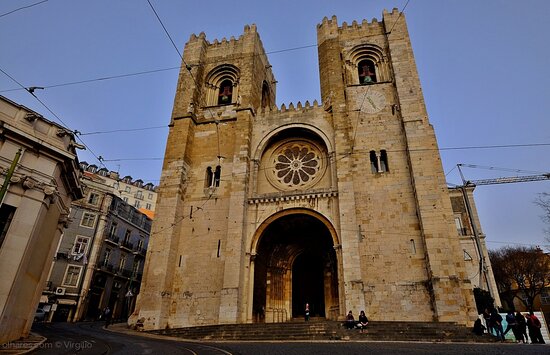 Photo via TripAdvisor (Management)
Sommige boekingslinks zijn affiliate-links. Als je via deze links boekt, kunnen wij een kleine commissie verdienen zonder extra kosten voor jou. We laten dit nooit bepalen welke plekken we aanbevelen.
De Kathedraal van Lissabon (Sé de Lisboa) is de oudste en meest historische kerk van de stad, een robuust romaans bouwwerk dat aardbevingen en belegeringen heeft doorstaan. Bezoekers komen binnen via een groot roosvenster en verkennen de sfeervolle binnenruimte, waarna ze afdalen naar de gotische kloostergangen waar archeologische opgravingen Romeinse, Moorse en middeleeuwse lagen blootleggen. De schatkamer herbergt heilige vaten, gewaden en het reliekschrijn van Sint-Vincentius, de patroonheilige van Lissabon.
Niet te missen
- Verken de gotische kloostergangen en bekijk de opgegraven Romeinse en Moorse ruïnes eronder.
- Bekijk de collectie religieuze voorwerpen in de schatkamer, waaronder het reliekschrijn van Sint-Vincentius.
- Bewonder de vestingachtige romaanse gevel en het prachtige roosvenster.
Tickets & rondleidingen
Manieren om Lisbon Cathedral te bezoeken
Je kunt Lisbon Cathedral op eigen gelegenheid bezoeken. Een gids is de moeite waard voor de geschiedenis en details waar je makkelijk aan voorbijloopt. Een tour kan het combineren met nabijgelegen bezienswaardigheden.
 Goedkoopste optieLisbon Walking Tour - The Perfect Introduction to the City4.9★ · 670 reizigers~3 uurGratis annulerenVanaf$1 per persoonData bekijken →
 Meest geboektLisbon City Center Tour - The Unmissable Lisbon5★ · 24.780 reizigers~3 uurGratis annulerenVanaf$2 per persoonData bekijken →
 Privé & flexibelLisbon Jewish Heritage and History 4H Private Tour Van5★ · 321 reizigers~4 uurGratis annulerenVanaf$181 per persoonData bekijken →
Goed om te weten
- Alfama's hills and cobblestones make sturdy footwear useful on the approach.
- The crenellated façade and twin towers preserve the cathedral's fortress-like Romanesque character.
- Cloister excavations reveal a Roman road, a kitchen, drains, Visigothic traces, and walls from the earlier mosque.
Een stukje geschiedenis
The cathedral was built on the site of Lisbon's main mosque after the city was reconquered in 1147 by Portuguese soldiers and North European crusaders. An English crusader, Gilbert of Hastings, became bishop. The relics of St Vincent of Saragossa, Lisbon's patron saint, were brought here. In 1498, Queen Eleanor of Viseu founded a brotherhood in the cloister that evolved into the Santa Casa da Misericórdia. During the 1383–85 interregnum, an angry crowd threw Bishop Dom Martinho Annes from the northern tower. The 1755 earthquake destroyed the Gothic main chapel and royal pantheon. Excavations in the cloister since 1990 have revealed a Roman road, shops, a kitchen, sewage system, Visigoth buildings, and remains of the mosque.
Veelgestelde vragen
What is the oldest part of the cathedral?
The Romanesque west façade, main portal, north lateral portal, and nave date from the first building period (1147 to early 13th century).
Why does the cathedral look like a fortress?
The crenellations and two towers flanking the entrance are relics from the Reconquista period, when the cathedral may have been used as a base during a siege.
What happened to the original Gothic main chapel?
It was destroyed in the 1755 earthquake and later rebuilt in Neoclassical and Rococo styles.
Can I see remains of the mosque that once stood here?
Yes, excavations in the cloister have uncovered red walls from the mosque, and the Portuguese Minister of Culture determined in 2020 that these Muslim remains should be preserved.
What are the famous Saint Vincent Panels?
Painted by Nuno Gonçalves, they were once in the St Vincent chapel of the ambulatory but are now in the Museu Nacional de Arte Antiga in Lisbon.
Meer bezienswaardigheden in Lisbon