Historic site
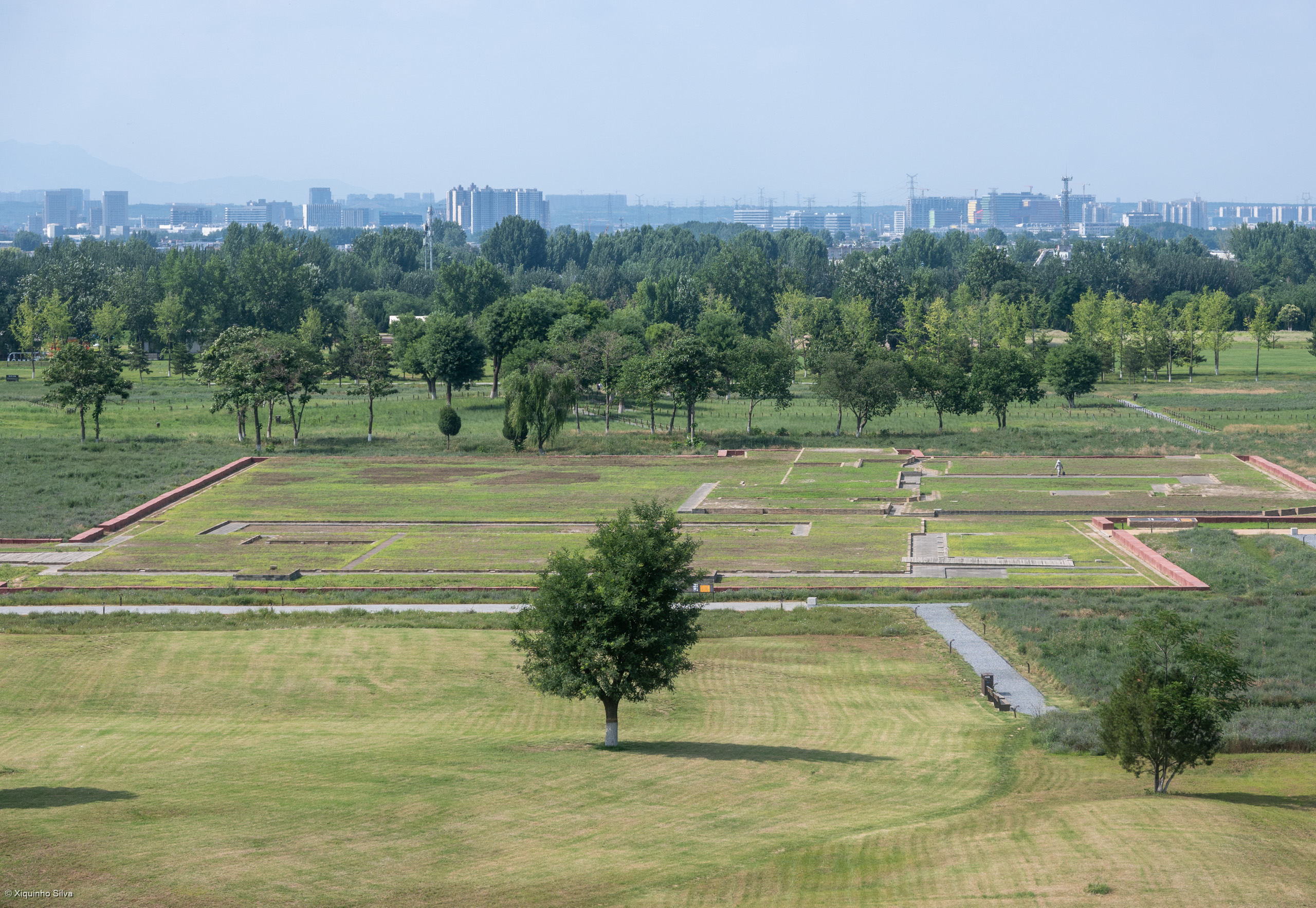
Weiyang Palace
 xiquinhosilva · Wikimedia Commons · CC BY 2.0
일부 예약 링크는 제휴 링크예요. 이 링크로 예약하면 추가 비용 없이 소액의 수수료를 받을 수 있어요. 추천 장소에는 절대 영향을 미치지 않아요.
Weiyang Palace was the main imperial palace complex of the Han dynasty and later dynasties, located in Chang'an (modern-day Xi'an). Built in 200 BC, it served as the administrative center and imperial residence for centuries. At 4.8 km², it was the largest palace ever built on Earth,6.7 times the size of the Forbidden City. Today, little remains of the former palace, but the site is a UNESCO World Heritage Site as part of the Silk Road.
놓치지 마세요
- The sheer scale: 4.8 km², making it the largest palace ever built,6.7 times the size of the Forbidden City.
- The rectangular palace complex, surrounded by walls 2,150 meters east–west and 2,250 meters north–south.
- The eastern and northern gates, which faced Chang'an city and were built with gate towers.
- Major halls like the Front Hall, Xuanshi Hall, and Wenshi Hall, though only their names survive.
- The site's UNESCO World Heritage status, recognized in 2014 as part of the Silk Road.
티켓 & 투어
Weiyang Palace을(를) 즐기는 방법
Weiyang Palace은(는) 혼자서도 방문할 수 있어요. 가이드는 보이는 것의 역사를 설명해 주고, 투어는 주변 명소를 하루 코스로 묶을 수 있어요.
가는 법
방문 전 알아두기
- The site is located in modern-day Xi'an, on the former grounds of Han dynasty Chang'an.
- Little remains of the original palace structures; the visit is about the historical site and its scale.
- The site is a UNESCO World Heritage Site, designated in 2014 along with other Silk Road sites.
역사 이야기
The palace was built in 200 BC at the request of Emperor Gaozu of Han, under the supervision of his prime minister Xiao He. It served the Western Han, Xin dynasty, Eastern Han, Western Jin, Han-Zhao, Former Qin, Later Qin, Western Wei, Northern Zhou, and early Sui dynasty. It survived until the Tang dynasty, when it was burned down by marauding invaders en route to the Tang capital Chang'an.
자주 묻는 질문
Why is it called Weiyang Palace?
Weiyang literally means 'hasn't reached its midpoint' or 'endless.' Together with the nearby Changle Palace ('perpetual happiness'), it suggests 'the perpetual happiness hasn't reached its midpoint yet.'
How big was the palace compared to other landmarks?
It covered 4.8 km², which is 6.7 times the size of the Forbidden City and 11 times the size of Vatican City.
What happened to the palace?
It survived until the Tang dynasty, when it was burned down by marauding invaders on their way to the Tang capital Chang'an.
Xi'an의 다른 명소