Religious site
Hagia Sophia
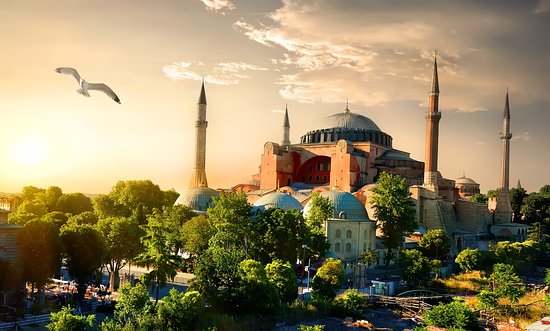 Photo via TripAdvisor (Management)
일부 예약 링크는 제휴 링크입니다. 이 링크를 통해 예약하시면 추가 비용 없이 저희가 소액의 수수료를 받을 수 있습니다. 이는 저희가 추천하는 장소에 절대 영향을 주지 않습니다.
아야소피아는 이스탄불의 기념비적인 건축 걸작으로, 원래 6세기에 대성당으로 지어졌습니다. 공학의 경이인 거대한 돔이 내부를 압도합니다. 수세기에 걸쳐 모스크, 이후 박물관으로 사용되다가 현재 다시 모스크가 되었습니다. 방문객들은 기독교 모자이크와 이슬람 서예가 함께 어우러진 모습을 감상하며 그 층층이 쌓인 역사를 느낄 수 있습니다. 넓은 본당과 치솟은 돔은 경외감을 불러일으키며, 독특한 문화의 융합을 경험할 수 있는 필수 방문지입니다.
놓치지 마세요
- 당대 건축의 경이인 거대한 중앙 돔을 감상하세요.
- 그리스도, 성모 마리아, 세례 요한을 묘사한 비잔틴 예술의 걸작인 데에시스 모자이크를 보세요.
- 기독교 모자이크와 이슬람 서예 패널의 조화를 관찰하세요.
티켓 & 투어
Hagia Sophia 즐기는 방법
Hagia Sophia은 혼자서도 방문할 수 있어요. 가이드는 놓치기 쉬운 역사와 세부 정보를 알려주고, 투어는 주변 명소와 함께 둘러보기에 좋아요.
 최저가 입장Hagia Sophia Tour with Official Licensed Guide - Fast Entry5★ · 여행자 73명~1시간무료 취소부터$17 1인당날짜 확인 →
 종일 코스 추천Istanbul Highlights! Blue Mosque, Hagia Sophia, Topkapı and More4.9★ · 여행자 660명8~9시간무료 취소부터$175 1인당날짜 확인 →
 프라이빗 & 자유Istanbul Guided Tour: Hagia Sophia, Basilica Cistern and More!5★ · 여행자 64명5~7시간무료 취소부터$105 1인당날짜 확인 →
방문 전 알아두기
- Hagia Sophia has been an active mosque again since 2020, after serving as a museum from 1935.
- The current structure is the third church built on the site; visible excavated fragments preserve evidence of the earlier Theodosian basilica.
- Christian mosaics and Ottoman Islamic art share the building, and conservation has long sought to protect both layers.
- Earthquakes, dome collapses, and centuries of buttressing and repair are essential to understanding the structure seen today.
역사 이야기
The first Great Church on the site was dedicated in 360 and burned during unrest in 404. Theodosius II opened a replacement basilica in 415, but it was destroyed during the Nika Revolt of January 532. Justinian began the present building only weeks later, commissioning Anthemius and Isidore to create a much larger church. It was completed in less than six years and became the cathedral of Constantinople and a defining center of Eastern Orthodox worship. The original dome collapsed after an earthquake in 558. Isidore the Younger rebuilt it higher with forty ribs to reduce outward force, though later earthquakes caused further collapses and repairs. Crusaders converted Hagia Sophia into a Catholic cathedral during the Latin Empire from 1204 to 1261 and removed valuable material during the sack of Constantinople. After Mehmed II conquered the city in 1453, the building became an imperial mosque. Ottoman rulers added minarets, buttresses, a prayer niche, calligraphy, and other elements while covering many figurative mosaics. Gaspare and Giuseppe Fossati restored the structure in the nineteenth century and documented mosaics they found. The secular Turkish Republic closed it in 1931 and reopened it as a museum in 1935. A 2020 court decision annulled its museum status, and Hagia Sophia was redesignated as a mosque, a change that produced strong international debate.
자주 묻는 질문
When was the present Hagia Sophia built?
Justinian I began it in 532 after the previous church burned in the Nika Revolt, and the new basilica was completed in 537.
Who designed it?
Anthemius of Tralles and Isidore of Miletus, both known for mathematical and engineering expertise, designed the present building.
Why is the dome important?
Its huge canopy rests on four pendentives, an influential solution that transfers a circular dome onto a square base while opening the interior below.
Has Hagia Sophia always been a mosque?
No. It served mainly as an Eastern Orthodox cathedral until 1453, then as a mosque, a museum from 1935, and a mosque again from 2020.
Do Byzantine mosaics survive?
Yes. Important surviving works include the apse Virgin and Child and several imperial mosaics, though many images were lost, covered, or restored over time.
이스탄불의 다른 명소