Religious site
Meiji Shrine
 Akonnchiroll · Wikimedia Commons · CC BY-SA 4.0
Some booking links are affiliate links. If you book through them, we may earn a small commission at no extra cost to you. We never let this influence which places we recommend.
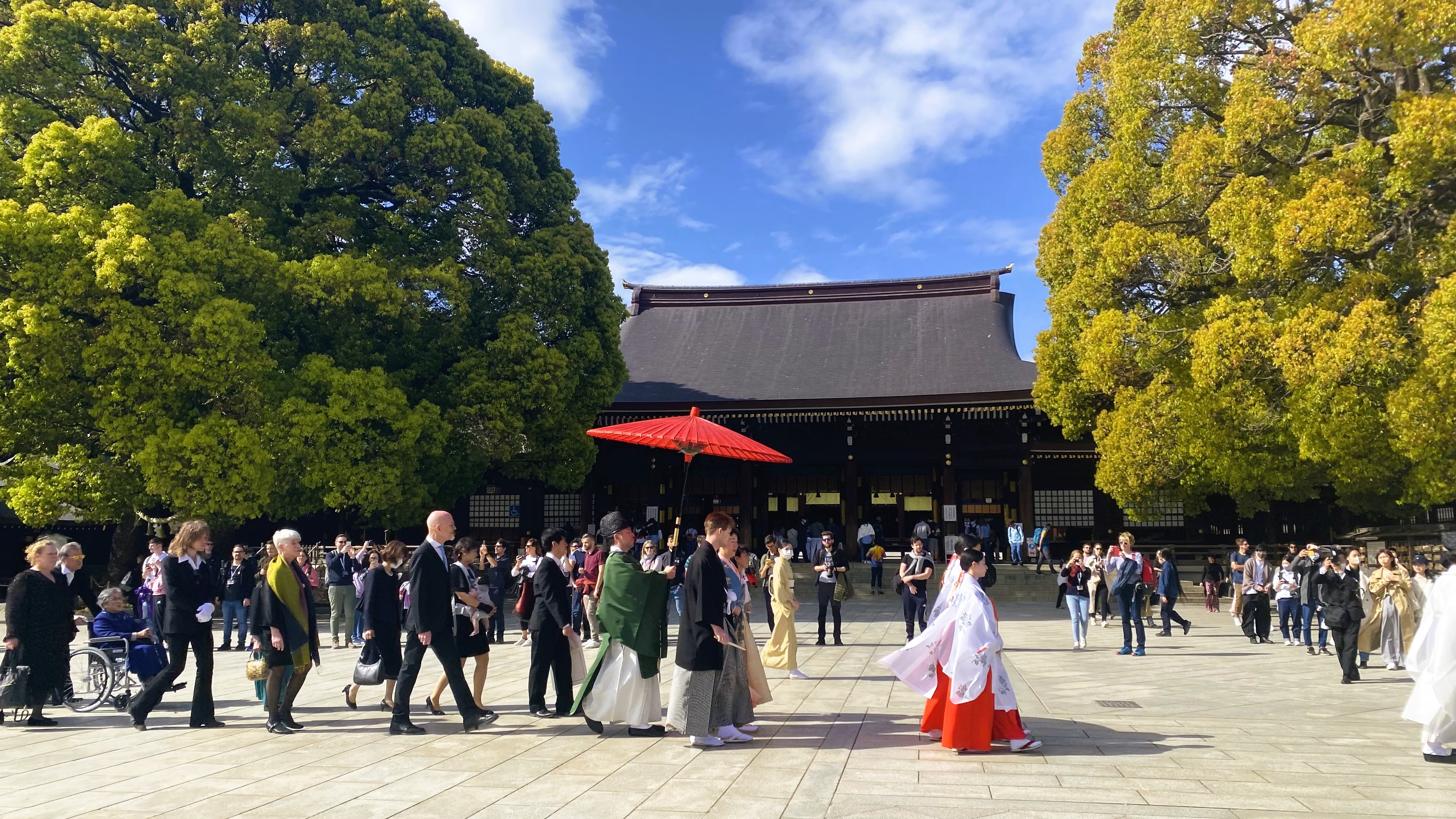
Meiji Shrine is a Shinto shrine in Shibuya, Tokyo, dedicated to Emperor Meiji and Empress Shōken. It sits in a 70-hectare forest of 120,000 trees of 365 species, donated from across Japan. The shrine complex includes the inner precinct (Naien) with the main shrine and a treasure museum, and the outer precinct (Gaien) with a picture gallery, sports facilities, and a memorial hall.
Don't miss
- The 70-hectare evergreen forest with 120,000 trees of 365 species, a recreation area in central Tokyo.
- The inner precinct (Naien) centered on the shrine buildings and the treasure museum in Azekurazukuri style.
- The outer precinct (Gaien) with the Meiji Memorial Picture Gallery, featuring 80 large murals of the Emperor and Empress's lives.
- The Meiji Memorial Hall, originally used for governmental meetings including discussions on the Meiji Constitution, now used for Shinto weddings.
- The Jingu Bashi bridge at the entrance to the shrine complex.
- Annual festivals including the Autumn Grand Festival (Oct 31–Nov 3) with Bugaku performances and a ring-entering ceremony by sumo Yokozuna.
Tickets & tours
Ways to visit Meiji Shrine
You can visit Meiji Shrine on your own. A guide is worth it for the history and detail that is easy to walk past, and a tour can combine it with nearby sights.
 Cheapest way inTokyo Castle & Imperial Palace - Shogun Walking Tour5★ · 1,422 travelers~2 hoursFree cancellationFrom$13 per personSee dates →
 Most bookedTokyo: Imperial Palace and Shogun Historical Walking Tour4.9★ · 2,979 travelers~2 hoursFree cancellationFrom$22 per personSee dates →
 Private & flexibleTokyo Customized Private Tour: See Top Attractions in 1 Day4.9★ · 1,892 travelers4-8 hoursFree cancellationFrom$139 per personSee dates →
Know before you go
- The shrine is in a large forested area adjacent to Yoyogi Park, offering a quiet escape in central Tokyo.
- The entrances open at sunrise and close at sunset.
- Walking from Shinjuku to Shibuya via Omotesando takes roughly one hour; the shrine is in Harajuku.
A bit of history
After Emperor Meiji's death in 1912, the Diet resolved to commemorate his role in the Meiji Restoration. An iris garden the couple had visited was chosen as the site. Construction began in 1915 under Itō Chūta in traditional nagare-zukuri style, using Japanese cypress and copper. Materials came from every Japanese prefecture, including Taiwan and Korea. The shrine was dedicated on November 3, 1920, and completed in 1921. The original building was destroyed in WWII air raids; the current shrine was funded by public fundraising and completed in October 1958.
Common questions
Is the Emperor's grave at Meiji Shrine?
No, the grave is at Fushimi-momoyama, south of Kyoto.
What festivals are held at the shrine?
Several annual festivals include the Autumn Grand Festival (Oct 31–Nov 3) with Bugaku and ceremonies, and a ring-entering ceremony by sumo Yokozuna in January and during the Autumn Festival.
What is the Gaien outer precinct?
It includes the Meiji Memorial Picture Gallery, sports facilities like the national stadiums, and the Meiji Memorial Hall, which hosts Shinto weddings and events.
More attractions in Tokyo