Neighborhood
Harajuku
 Rs1421 · Wikimedia Commons · CC BY-SA 3.0
Some booking links are affiliate links. If you book through them, we may earn a small commission at no extra cost to you. We never let this influence which places we recommend.
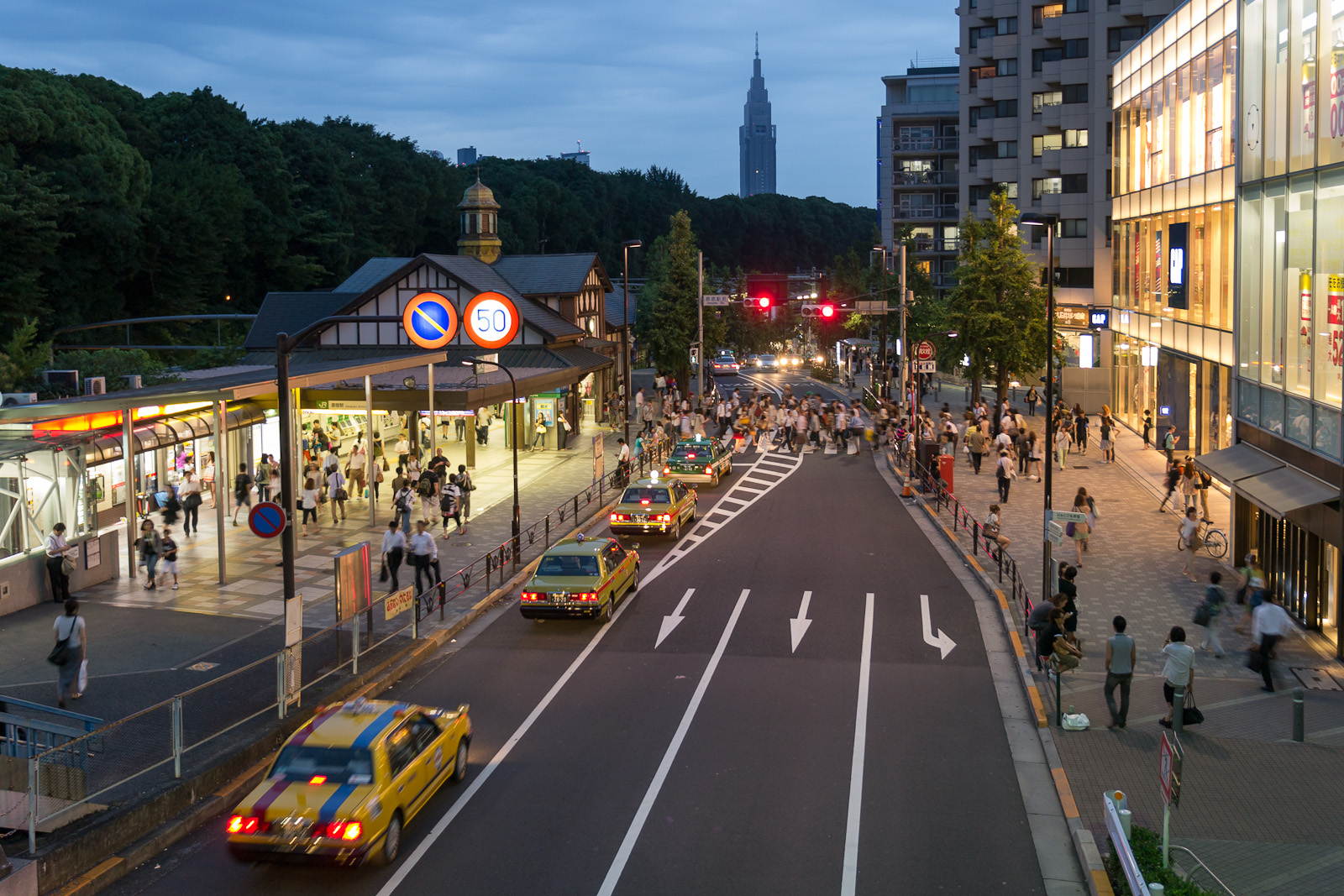
Harajuku is a district in Shibuya, Tokyo, known internationally as a center of Japanese youth culture and fashion. It spreads from Harajuku Station to Omotesando, including smaller backstreets like Takeshita Street and Cat Street. Visitors will find many small, youth-oriented independent boutiques and cafés, as well as larger international chain stores and high-end luxury merchandisers along Omotesando. The area is also a gateway to attractions like Meiji Shrine, Yoyogi Park, and Yoyogi National Gymnasium.
Don't miss
- Meiji Shrine, a large Shinto shrine in an evergreen forest dedicated to Emperor Meiji and Empress Shōken
- Yoyogi Park, a large park adjacent to the shrine
- Yoyogi National Gymnasium, designed by Kenzo Tange for the 1964 Summer Olympics
- Omotesando, a broad avenue with high-end luxury stores
- Takeshita Street, a narrow street known for youth-oriented boutiques and cafés
- Ura-Harajuku, the backstreets with independent fashion trend shops
Tickets & tours
Ways to visit Harajuku
You can usually visit on your own. A tour is worth it for transport, a guide, or combining nearby sights into one day.
 Cheapest way inTokyo / Shibuya / Yokohama Tours! Choose, Explore and Enjoy!4.8★ · 23 travelers~7 hoursFree cancellationFrom$10 per personSee dates →
 Most bookedTokyo Bar Hopping in Shinjuku: Free-flow, Full Dinner, Golden Gai4.9★ · 3,923 travelers~3 hoursFree cancellationFrom$106 per personSee dates →
 Private & flexibleHarajuku Private Tour: Kawaii Fashion & Animal Cafe Included5★ · 79 travelers~4 hoursFrom$116 per personSee dates →
Know before you go
- Harajuku is served by Harajuku Station on the JR East Yamanote Line and Meiji-jingumae 'Harajuku' Station on the Tokyo Metro Chiyoda and Fukutoshin Lines.
- Walking from Shinjuku to Shibuya via Omotesando takes roughly one hour.
A bit of history
In the pre-Edo period, Harajuku was a small post town on the Kamakura Highway. During the Edo period, an Iga clan residence was placed there to defend Edo. In 1906, Harajuku Station opened as part of the Yamanote Line expansion. In 1919, Omotesando was widened as a formal approach route to the newly established Meiji Shrine. Much of the area was burned down in the 1945 Great Tokyo Air Raid. During the postwar occupation, military housing called Washington Heights was built on land now occupied by Yoyogi Park. In 1964, swimming, diving, and basketball events for the Tokyo Olympics were held at Yoyogi National Gymnasium. In the 1970s, fashion-obsessed youth culture shifted from Shinjuku to Harajuku, and Laforet Harajuku opened in 1978. In the 1980s, Takeshita Street became known for teenage street dancing groups called takenoko-zoku. In the 1990s and 2000s, international fashion brands opened flagship stores, and independent trend shops spread into the area known as Ura-Harajuku.
Common questions
What is Harajuku known for?
Harajuku is known internationally as a center of Japanese youth culture and fashion, with many small boutiques, cafés, and larger chain stores.
What are the main streets in Harajuku?
The main streets include Takeshita Street, Omotesando, and Cat Street, along with the backstreets of Ura-Harajuku.
What major attractions are near Harajuku?
Nearby attractions include Meiji Shrine, Yoyogi Park, and Yoyogi National Gymnasium.
More attractions in Tokyo