Religious site
Santissima Annunziata, Florence
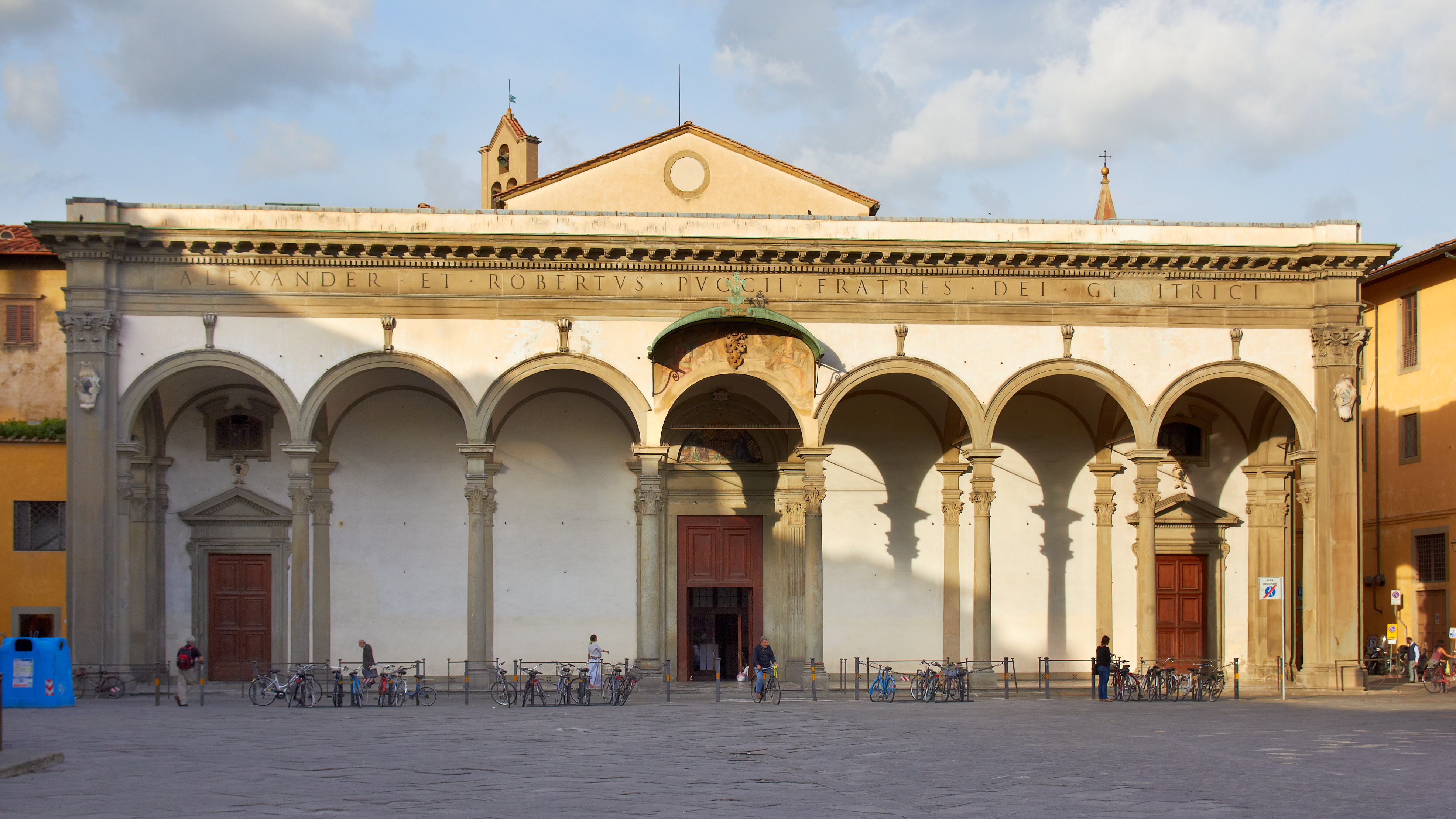 Max_Ryazanov · Wikimedia Commons · CC BY-SA 3.0
Some booking links are affiliate links. If you book through them, we may earn a small commission at no extra cost to you. We never let this influence which places we recommend.
The Basilica della Santissima Annunziata is a Renaissance-style Catholic minor basilica in Florence, considered the mother church of the Servite Order. It sits on the northeastern side of Piazza Santissima Annunziata, close to the city center.
Don't miss
- The miraculous painting of the Annunciation, said to have been completed by an angel while the friar slept.
- The Chiostrino dei Voti, a small cloister designed by Michelozzo, with lunette frescoes by Andrea del Sarto and Pontormo.
- The organ built by Domenico Di Lorenzo da Lucca between 1509 and 1521, the oldest in Florence and third oldest in Italy.
- The Chiostro Grande (or dei Morti), featuring the frescoed lunette Madonna del Sacco (1525) by Andrea del Sarto.
- The Capella di San Luca, which has belonged to the artists' confraternity since 1565 and contains the tombs of artists including Benvenuto Cellini and Pontormo.
Tickets & tours
Ways to visit Santissima Annunziata, Florence
You can visit Santissima Annunziata, Florence on your own. A guide is worth it for the history and detail that is easy to walk past, and a tour can combine it with nearby sights.
 Cheapest way inThe Best Tour in Florence: Renaissance and Medici Tales4.9★ · 11,718 travelers~2 hoursFree cancellationFrom$3 per personSee dates →
 Most bookedThe Best tour in Florence: Renaissance & Medici Tales - guided by a STORYTELLER5★ · 13,458 travelers~2 hoursFree cancellationFrom$3 per personSee dates →
 Private & flexiblePrivate Guided Visit Florence's Santa Croce Basilica and Ancient Leather School4.9★ · 19 travelers~2 hoursFree cancellationFrom$135 per personSee dates →
Getting there
Know before you go
- The church is entered from the Chiostrino dei Voti, a small cloister with a 19th-century glass roof.
- The interior Baroque decoration began in 1644, with a ceiling fresco of the Assumption by Pietro Giambelli based on designs by Baldassare Franceschini.
- Florentine brides traditionally visit the shrine to leave their bouquets.
- Pilgrims once left wax votive offerings, including life-size models; by the late 18th century there were about six hundred, but they were melted down for candles in 1786.
A bit of history
The church was founded in 1250 by the seven original members of the Servite Order. In 1252, a friar named Bartolomeo began a painting of the Annunciation for the Servite monks. According to tradition, he despaired of painting a beautiful enough Virgin, fell asleep, and found the painting completed, which he attributed to an angel. The miraculous painting gained increasing veneration, leading the Gonzaga family of Mantua to finance a special tribune in 1444. Leon Battista Alberti was given the commission in 1469, and construction finished in 1481 after his death. The façade was added in 1601 by Giovanni Battista Caccini, imitating Brunelleschi's Renaissance-style façade of the Foundling Hospital across the piazza.
Common questions
What is the significance of the painting of the Annunciation in this church?
It is a miraculous painting begun by friar Bartolomeo in 1252; tradition holds that an angel completed it while he slept.
Which artists have works in the church?
Works include a Pietà by Baccio Bandinelli, a crucifix by Giambologna, a Resurrection by Bronzino, and frescoes by Andrea del Sarto and Pontormo in the cloisters.
What is the Chiostrino dei Voti?
It is a small cloister in front of the basilica, designed by Michelozzo, with a 19th-century glass roof and lunette frescoes by artists like Baldovinetti, Andrea del Sarto, and Pontormo.
Is there anything notable about the organ?
Yes, the organ built by Domenico Di Lorenzo da Lucca (1509–1521) is the oldest in Florence and the third oldest in Italy.
What is the Capella di San Luca?
It is a chapel off the Chiostro Grande that has belonged to the artists' confraternity since 1565, containing tombs of artists like Benvenuto Cellini and Pontormo, and murals by Vasari and others.
More attractions in Florence