Religious site
Temple of Great Compassion
 Regina800809 · Wikimedia Commons · CC BY-SA 3.0
Some booking links are affiliate links. If you book through them, we may earn a small commission at no extra cost to you. We never let this influence which places we recommend.
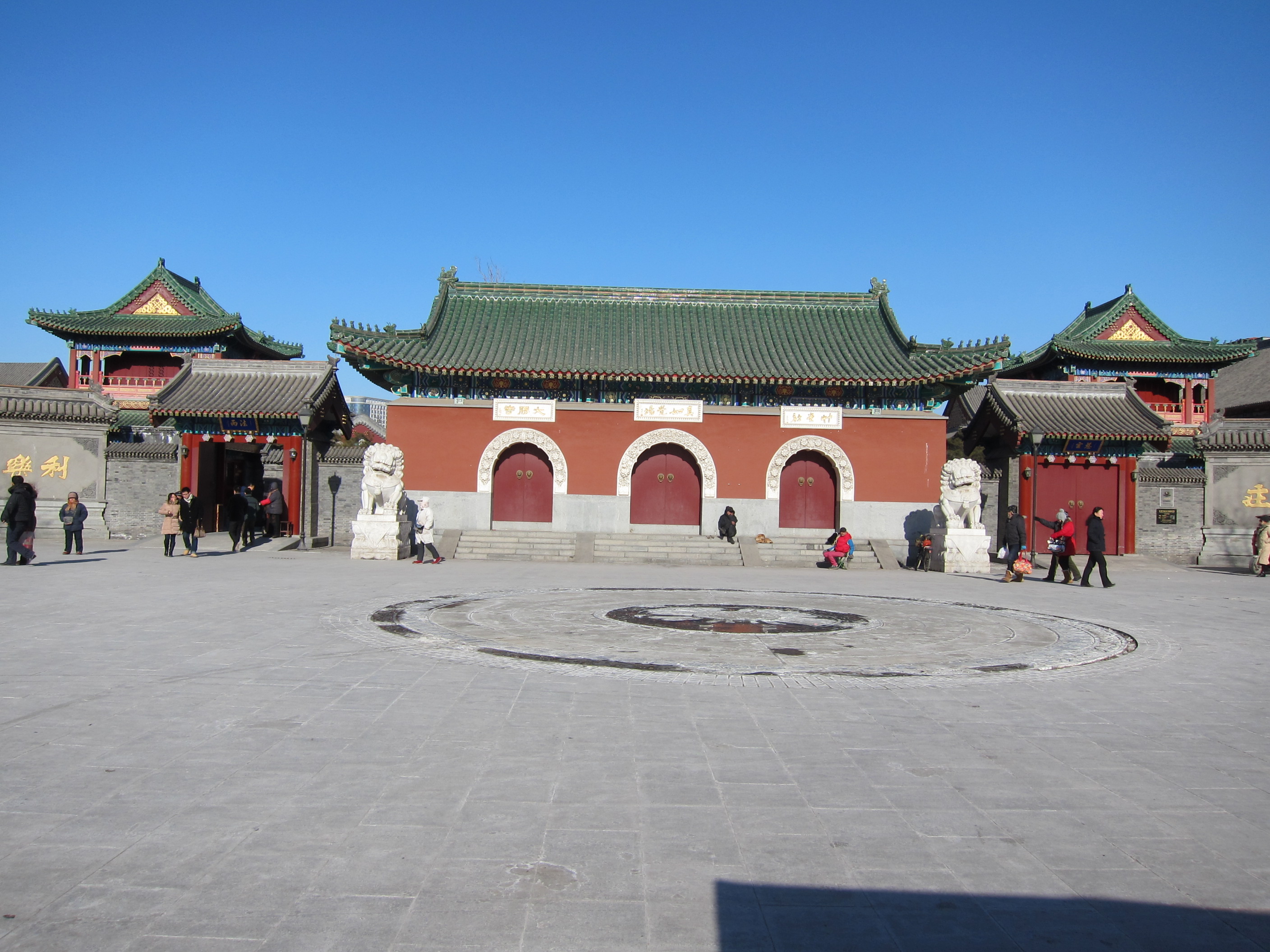
The Temple of Great Compassion (Dabei Yuan) is a Chan Buddhist temple in Tianjin, China. It is the largest and oldest temple in the city, covering an area of 10,600 m². The temple consists of an old monastery (west yard, built in 1669) and a new monastery (east yard, built in 1940).
Don't miss
- The 7-meter-high Sakyamuni statue in the Daxiong Palace, weighing 6 tons, with 9,999 small Buddhas carved on its lotus throne.
- A 3.6-meter-high mud statue of the Thousand-hand Kwan-yin in the Great Compassion hall.
- The Cultural Relic Palace in the west yard, housing hundreds of Buddha statues from various dynasties since the Wei and Jin period, made of bronze, iron, stone, and wood.
- Memorials for the Buddhist monks Xuanzang and Hong Yi in the east yard.
- Mural art and the temple's central status in local culture.
Getting there
Know before you go
- The temple houses the Tianjin Buddhist Institute, which exhibits many ancient statues.
- The temple is made up of two parts: the old monastery (west yard) and the new monastery (east yard).
A bit of history
The monastery was first built during the Qing dynasty and has been heavily rebuilt and renovated since. The old monastery was started in the early Qing dynasty and renovated in the eighth year of the Kangxi Emperor's reign. The temple once held a skull relic of the Buddhist monk Xuanzang, but it was presented to India in 1956 and is now in the Patna museum.
Common questions
What is the significance of the Sakyamuni statue?
The statue in the Daxiong Palace is 7 meters high, weighs 6 tons, and has 9,999 small Buddhas carved on its lotus throne. It was created during the Qing dynasty.
What happened to the relic of Xuanzang?
The temple once held a skull relic of Xuanzang, but it was presented to India in 1956 and is now in the Patna museum. The temple now uses an image of Xuanzang for worship.
What can I see in the Cultural Relic Palace?
The palace in the west yard contains hundreds of Buddha statues from various dynasties since the Wei and Jin period, made of materials like bronze, iron, stone, and wood.
More attractions in Tianjin