Landmark
Carioca Aqueduct
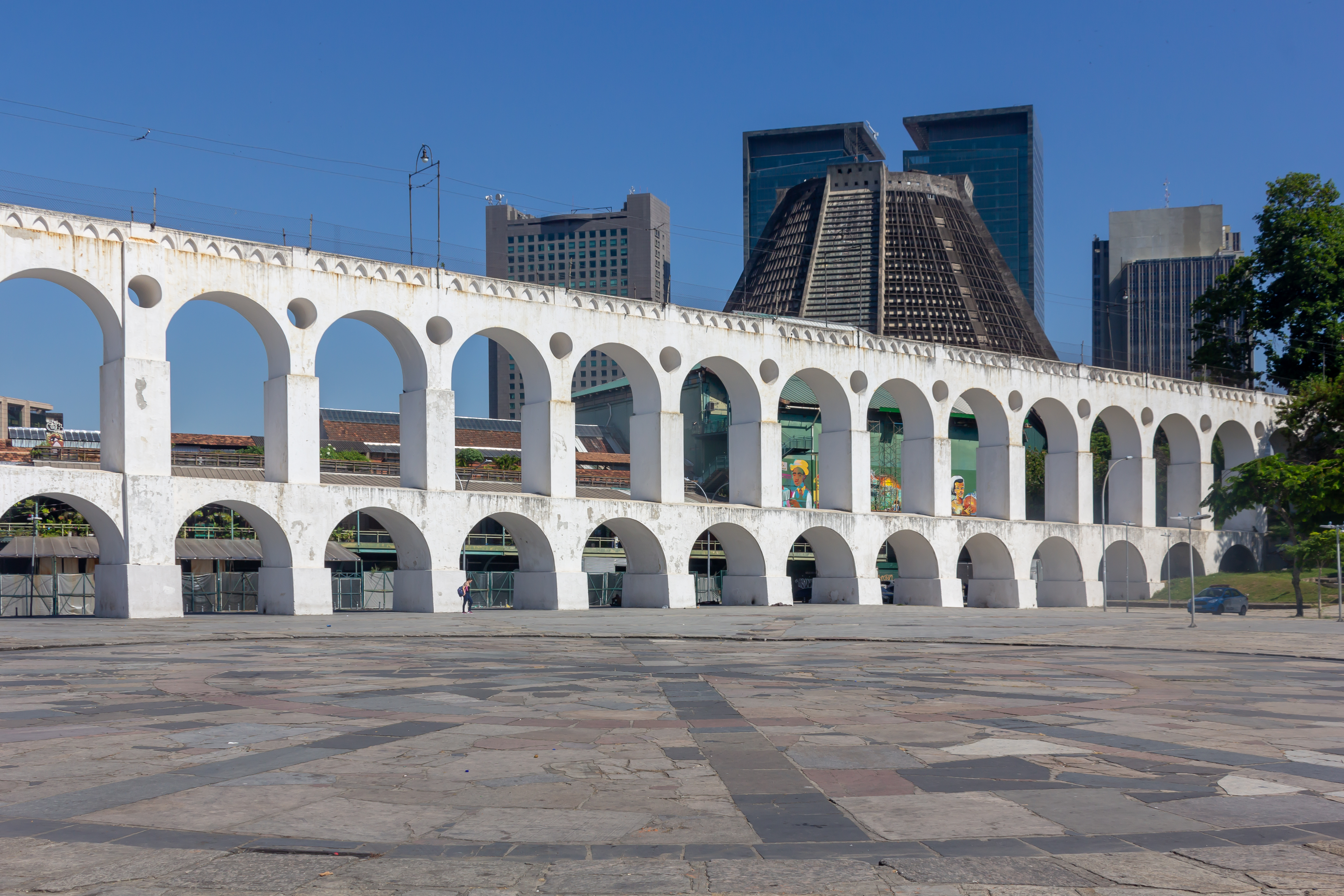 Photograph by Mike Peel (www.mikepeel.net). · Wikimedia Commons · CC BY-SA 4.0
Some booking links are affiliate links. If you book through them, we may earn a small commission at no extra cost to you. We never let this influence which places we recommend.
The Carioca Aqueduct, also known as Arcos da Lapa, is an 18th-century aqueduct in Rio de Janeiro's Lapa neighborhood. It was built to bring fresh water from the Carioca River to the city. Today, it serves as a bridge for the Santa Teresa Tramway, which connects the city center with the Santa Teresa neighborhood uphill.
Don't miss
- Two storeys of 42 monumental arches spanning 270 metres, with a maximum height of 17.6 metres
- The Santa Teresa Tramway (bonde) crossing the aqueduct, the only tram still operating in Rio de Janeiro
- The aqueduct's role as a colonial engineering feat, bringing water from the Carioca River to fountains in squares like Largo da Carioca and Praça XV
- The picturesque tram ride popular with locals and tourists
Tickets & tours
Ways to visit Carioca Aqueduct
You can see Carioca Aqueduct on your own. A tour is worth it for the story behind it, for transport, or for combining nearby sights into one day.
 Cheapest way inEntrance to the Giant Roda of Rio de Janeiro4.8★ · 1,447 travelers20 minutesFree cancellationFrom$12 per personSee dates →
 Most bookedExplore the Best of Tijuca Forest – Hike to Peaks, Caves & Falls4.9★ · 1,028 travelers~5 hoursFree cancellationFrom$82 per personSee dates →
 Private & flexibleCityTour Rio de Janeiro -Christ Redemptor-Santa Teresa- Escadaria5★ · 27 travelers2-4 hoursFree cancellationFrom$118 per personSee dates →
Know before you go
- The Santa Teresa Tramway runs across the aqueduct; limited service resumed in July 2015 after a 2011 accident.
- The aqueduct is located in the Lapa neighborhood, in the center of Rio de Janeiro.
A bit of history
Construction began in the early 18th century to address the city's need for fresh water, as the original nucleus was surrounded by swamps with poor-quality water. The first aqueduct was completed in 1723, but by 1744 a larger structure was ordered by governor Gomes Freire de Andrade. Designed by Portuguese military engineer José Fernandes Pinto Alpoim, it was inspired by similar structures in Portugal, like the Águas Livres Aqueduct in Lisbon. The aqueduct was inaugurated in 1750. It was deactivated at the end of the 19th century and adapted in 1896 for the Santa Teresa Tramway.
Common questions
Can I walk across the Carioca Aqueduct?
The aqueduct now serves as a bridge for the Santa Teresa Tramway, so it is not a pedestrian walkway. You can ride the tram across it.
What is the best way to see the aqueduct?
You can view it from the Lapa neighborhood, especially from the streets below the arches. Riding the Santa Teresa Tramway offers a unique perspective from above.
Is the Santa Teresa Tramway still operating?
Yes, limited service on a portion of the line, including across the aqueduct, resumed in July 2015 after being suspended following a 2011 accident.
More attractions in Rio de Janeiro