Religious site
Trấn Quốc Pagoda
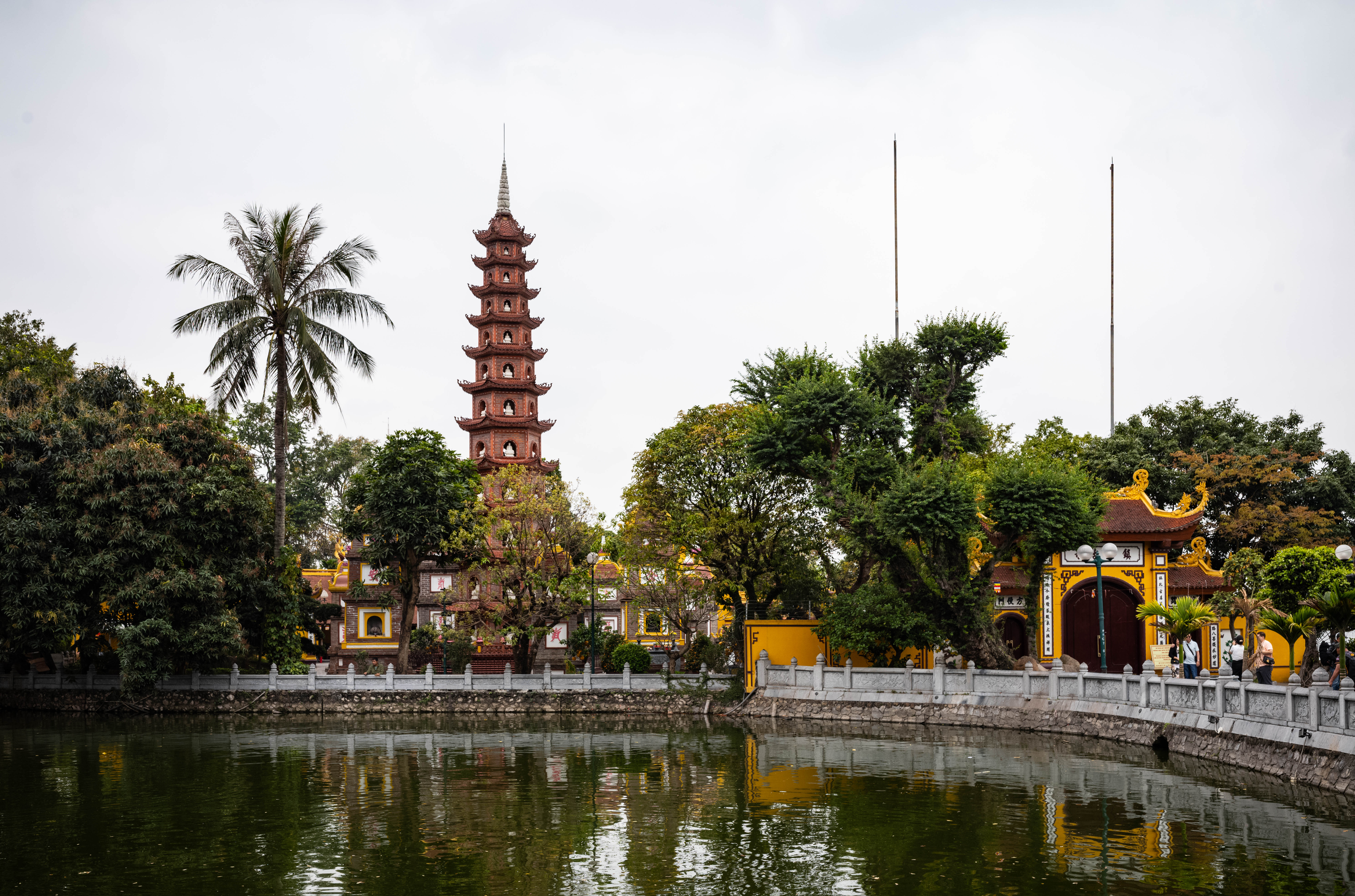 RB Photo · Wikimedia Commons · CC BY 4.0
Some booking links are affiliate links. If you book through them, we may earn a small commission at no extra cost to you. We never let this influence which places we recommend.
Trấn Quốc Pagoda is the oldest Buddhist temple in Hanoi, situated on a small island near the southeastern shore of West Lake. A small causeway connects the island to the mainland, and the pagoda is known for its harmonious architecture that takes advantage of the watery landscape.
Don't miss
- A Bodhi tree on the grounds, grown from a cutting of the original tree in Bodh Gaya, India, gifted in 1959 during a visit by Indian President Rajendra Prasad.
- Historic statuary pieces dating to 1639.
- Multiple lotus flower statues and a stone wall with carved lotus flowers, symbolizing purity and enlightenment.
- Shrines dedicated to the Mẫu (Mother) goddesses: Mẫu Thượng Ngàn (green Mother of mountains and forests), Mẫu Thoải (white Mother of water), and Mẫu Thượng Thiên (red Mother of the sky).
- An eight-spoked wheel, a Buddhist symbol representing the Noble Eight-fold Path.
Tickets & tours
Ways to visit Trấn Quốc Pagoda
You can visit Trấn Quốc Pagoda on your own. A guide is worth it for the history and detail that is easy to walk past, and a tour can combine it with nearby sights.
 Cheapest way inPerfume Pagoda Full-Day Guided Tour from Hanoi - All Inclusive4.4★ · 59 travelers~10 hoursFree cancellationFrom$38 per personSee dates →
 Best full dayExploring Bai Dinh Pagoda -Trang An -Mua Cave with Buffet Lunch 1 Day From Hanoi4.9★ · 235 travelers11-12 hoursFree cancellationFrom$48 per personSee dates →
 Top ratedFull Day Tour to Perfume Pagoda with Traditional Boat Ride4.8★ · 104 travelers9-10 hoursFree cancellationFrom$39 per personSee dates →
Getting there
Know before you go
- The Bodhi tree on the grounds grew from a cutting associated with the tree at Bodh Gaya and was presented in 1959.
- Lotus imagery appears in the pagoda’s statuary and carved stonework as a symbol of purity and enlightenment.
- The pagoda moved to Kim Ngư islet in 1615 after river encroachment threatened its original Red River site.
A bit of history
Originally constructed in the 6th century during the reign of Emperor Lý Nam Đế, the pagoda was first named Khai Quốc and stood on the Red River shores. It was relocated in 1615 to Kim Ngư islet in West Lake due to river encroachment. The last major repair occurred in 1815, and the pagoda has been variously named An Quốc and Trấn Bắc over the centuries.
Common questions
How old is Trấn Quốc Pagoda?
It is over 1,500 years old, originally built in the 6th century.
Why is the pagoda on an island?
It was moved to Kim Ngư islet in West Lake in 1615 because the original site on the Red River was threatened by river encroachment.
What is the significance of the Bodhi tree here?
It is a cutting from the original tree in Bodh Gaya, India, under which the Buddha achieved enlightenment, gifted in 1959.
Are there goddesses worshipped at the pagoda?
Yes, three Mother goddesses are worshipped: the green Mother of mountains and forests, the white Mother of water, and the red Mother of the sky.
More attractions in Hanoi