Religious site
Temple of Literature, Hanoi
 The original uploader was Chuoibk at English Wikipedia. · Wikimedia Commons · CC BY-SA 3.0
Some booking links are affiliate links. If you book through them, we may earn a small commission at no extra cost to you. We never let this influence which places we recommend.
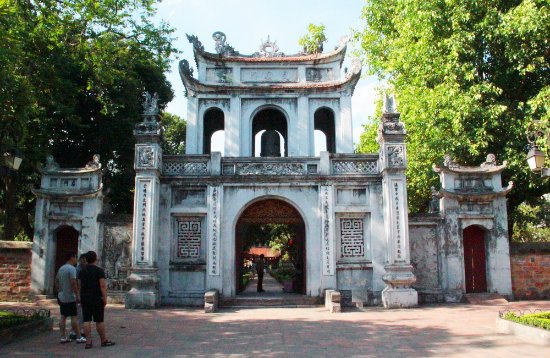
The Temple of Literature in Hanoi is a well-preserved complex dedicated to Confucius, sages, and scholars. Founded in 1070, it once housed Vietnam's first national university, the Imperial Academy, from 1076 to 1779. The site covers over 54,000 square metres and includes courtyards, pavilions, and stone stelae. It appears on the back of the 100,000 Vietnamese đồng banknote.
Don't miss
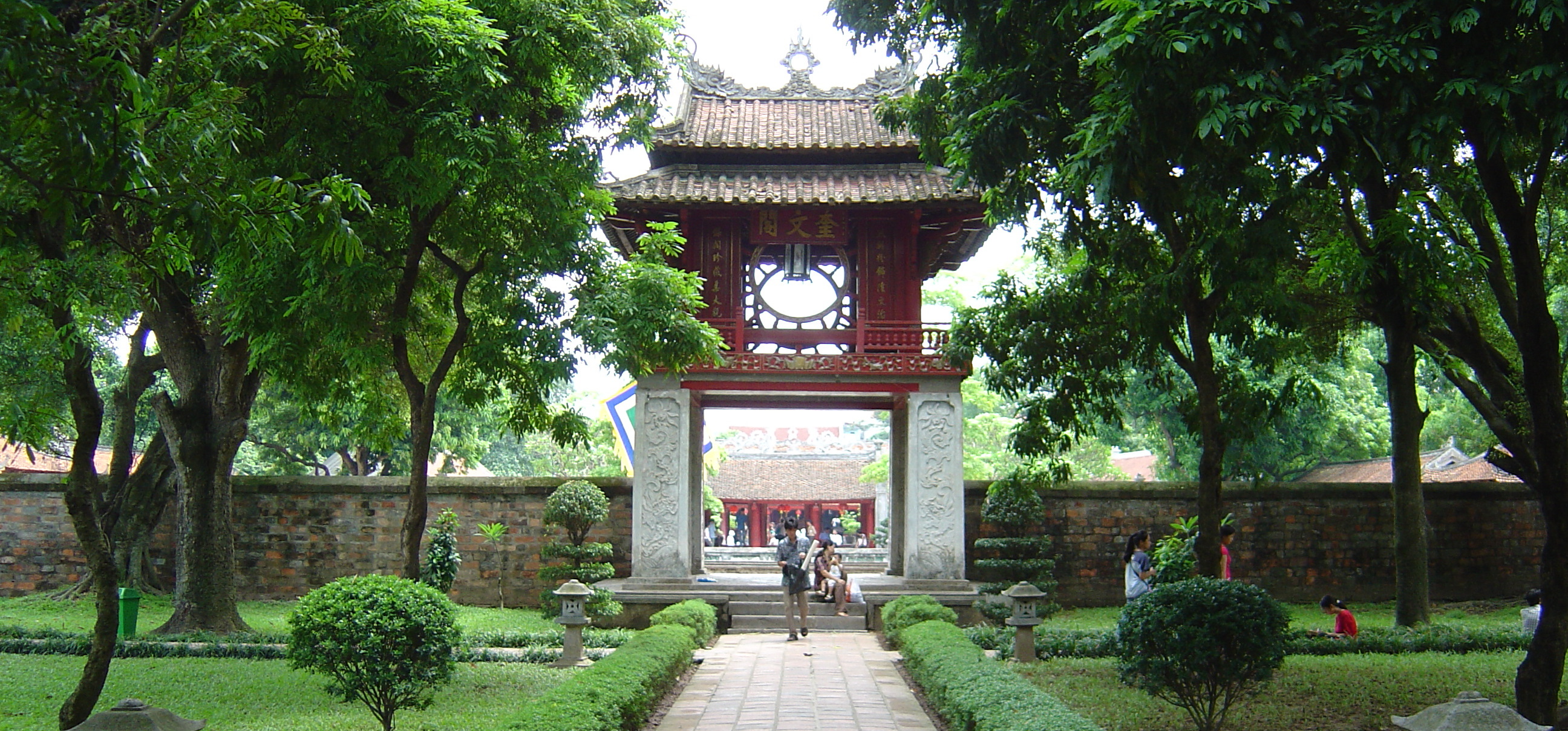
- The Khuê Văn pavilion, built in 1805, features two circular windows and an elaborate roof, and is a symbol of present-day Hanoi.
- 82 stone stelae mounted on turtles, inscribed with names of 1,307 graduates from 82 royal exams between 1442 and 1779; these stelae are on UNESCO's Memory of the World Register.
- The Thiên Quang well in the third courtyard, flanked by two halls housing temple treasures.
- The House of Ceremonies and Thượng Điện, where Confucius and his four closest disciples are worshipped.
- The fifth courtyard, reconstructed in 2000, includes a statue of Chu Văn An and exhibits on Confucian education.
- A bronze bell above the main gate, added in the 19th century, decorated with phoenix and dragon motifs.
Tickets & tours
Ways to visit Temple of Literature, Hanoi
You can visit Temple of Literature, Hanoi on your own. A guide is worth it for the history and detail that is easy to walk past, and a tour can combine it with nearby sights.
 Cheapest way inHo Chi Minh Complex & Temple of Literature Tour (half day)4.8★ · 57 travelers~3 hoursFrom$5 per personSee dates →
 Best full dayNinh Binh Hightlight & Hidden Gem from Hanoi with Skip-The-Line5★ · 4,615 travelers10-11 hoursFree cancellationFrom$90 per personSee dates →
 Private & flexiblePrivate Guided Tour of Hanoi4.9★ · 395 travelers3-4 hoursFree cancellationFrom$5 per personSee dates →
Getting there
Know before you go
- The complex lies south of the Imperial Citadel of Thăng Long in Hanoi.
- The bronze bell above the main gate could only be touched by monks and was used to signify an important person's arrival.
A bit of history
The temple was founded in 1070 under Emperor Lý Thánh Tông. In 1076, the Imperial Academy was established within the temple, operating until 1779. The stone stelae of doctor laureates were first erected in 1484 under Emperor Lê Thánh Tông. The temple was registered as a Monument historique in 1906 under French rule and underwent restorations in 1920, 1947, 1954, and 2000.
Common questions
What is the Temple of Literature?
It is a temple dedicated to Confucius in Hanoi, founded in 1070, and it hosted Vietnam's first national university, the Imperial Academy, from 1076 to 1779.
What are the stone stelae with turtles?
They are 82 stone stelae carved with the names and birthplaces of 1,307 graduates from 82 royal exams held between 1442 and 1779. They were inscribed on UNESCO's Memory of the World Register in 2011.
How is the temple laid out?
The complex is divided into five courtyards, each with distinct features: the first two are quiet with ancient trees, the third has the Thiên Quang well and stelae, the fourth is the ceremonial heart with altars, and the fifth houses the reconstructed Imperial Academy.
What is the Khuê Văn pavilion?
It is a pavilion built in 1805 on four white-washed stone stilts, with a red top, two circular windows, and an elaborate roof. It is a symbol of present-day Hanoi.
Who studied at the Imperial Academy?
Students were bureaucrats, nobles, royalty, and other elite members. They studied Chinese philosophy, literature, and history, and took monthly minor tests and four major tests per year.
What happened to the original Imperial Academy?
The academy moved to Hue in 1803 under the Nguyễn Dynasty. The fifth courtyard was destroyed in 1946 during the First Indochina War and reconstructed in 2000.
More attractions in Hanoi