Museum
National Gallery
 Diego Delso · Wikimedia Commons · CC BY-SA 4.0
Some booking links are affiliate links. If you book through them, we may earn a small commission at no extra cost to you. We never let this influence which places we recommend.
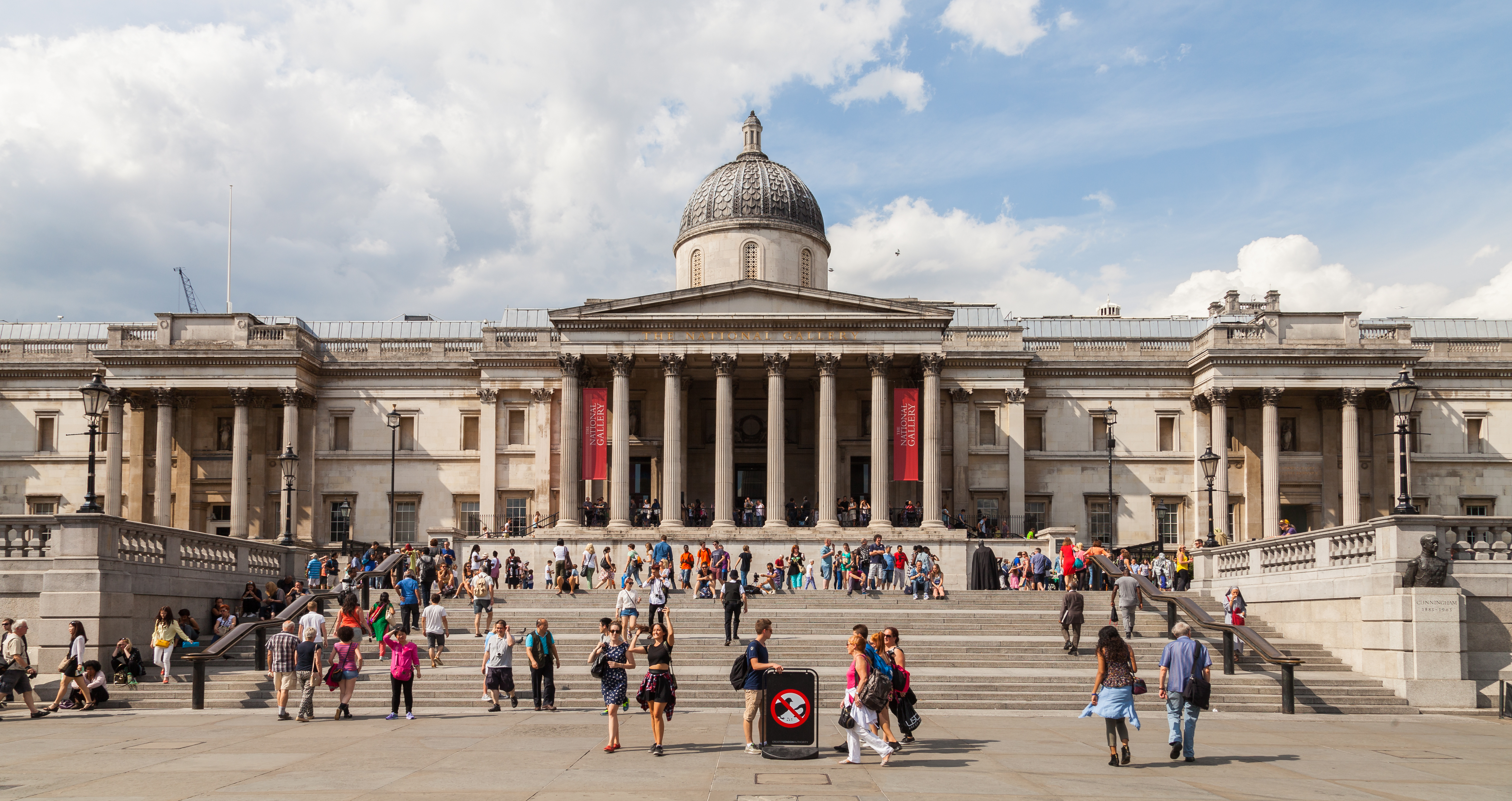
London's National Gallery is an art museum in Trafalgar Square and holds more than 2,300 paintings dating from the mid-thirteenth century to 1900. The main collection is held in trust for the British public and is free to enter. Although smaller than several continental national museums, it was assembled to represent major developments in Western European painting from Giotto to Cézanne. Its unusual strength lies in how it was formed. Britain did not nationalize a royal collection. The government instead bought thirty-eight paintings from the heirs of banker John Julius Angerstein in 1824, then expanded the gallery through carefully chosen purchases and private gifts. Donations now account for about two-thirds of the collection. Early Italian and Northern Renaissance works grew under director Charles Lock Eastlake, while later acquisitions and bequests added British, Dutch, Spanish, French, and other European painting. The Trafalgar Square building opened in 1838 to a design by William Wilkins. Its Trafalgar Square façade remains essentially unchanged from the original 1838 structure, while later wings and internal rebuilding reflect the gallery's continued expansion. The Postmodern Sainsbury Wing by Robert Venturi and Denise Scott Brown opened in 1991 on the west side. The collection's chronological range, public ownership, and central location make it both a survey of Western painting and a record of how Britain built a national museum through purchase, philanthropy, and debate.
Don't miss
- An encyclopedic route through Western painting from the mid-thirteenth century to 1900
- The original Angerstein paintings that founded the collection in 1824
- Early Italian and Northern Renaissance works acquired under Charles Lock Eastlake
- Turner works divided between Trafalgar Square and Tate Britain, including two paintings still displayed beside works by Claude under his bequest
- The 1838 Wilkins façade overlooking Trafalgar Square
- The Sainsbury Wing by Robert Venturi and Denise Scott Brown
Tickets & tours
Ways to visit National Gallery
You don't need a tour to visit, entry is free. A tour is worth it if you want transport, a guide, or to combine National Gallery with nearby sights in one day. That's what these do well.
 Cheapest way inLondon: Natural History Museum Guided Tour & Audio Guide4.4★ · 186 travelers~1 hourFree cancellationFrom$14 per personSee dates →
 Best full dayTower of London and Crown Jewels Exhibition Day Ticket4.4★ · 7,295 travelers~24 hoursFree cancellationFrom$51 per personSee dates →
 Private & flexibleThe National Gallery of London - Exclusive Guided Museum Tour5★ · 112 travelers~3 hoursFree cancellationFrom$111 per personSee dates →
Getting there
Know before you go
- Entry to the main collection is free of charge.
- The collection contains more than 2,300 paintings from the mid-thirteenth century to 1900.
- The museum grew through many extensions; only the Trafalgar Square façade remains essentially unchanged from Wilkins's 1838 building.
- Private donations account for about two-thirds of the collection, which did not originate as a nationalized royal collection.
A bit of history
Calls for a British national gallery intensified after important collections were sold abroad in the late eighteenth century. Artists argued that access to leading European paintings was essential for a British school of art. The decisive opportunity came when Angerstein's thirty-eight paintings went on sale. Parliament approved their purchase for £57,000, encouraged by collector George Beaumont's offer of sixteen more works if the government bought Angerstein's group and found a suitable building. The National Gallery opened in 1824 in Angerstein's Pall Mall townhouse. The Pall Mall gallery was overcrowded and hot. Subsidence forced a brief move from No. 100 to No. 105 before Wilkins's Trafalgar Square building opened in 1838. Its position between the wealthy West End and poorer districts to the east was defended as essential to access across social classes. Eastlake became the first director and traveled across Europe to acquire neglected early Italian and Northern Renaissance works. Private gifts remained crucial, including the Turner Bequest, though lack of space eventually contributed to the creation of the Tate Gallery for British art in 1897. During the Second World War, the paintings were evacuated to Wales. Winston Churchill rejected moving them to Canada, and the collection was stored in a slate quarry at Manod. The central London building was repeatedly extended, including major later projects such as the Sainsbury Wing, while conservation and cleaning policies generated recurring public debate.
Common questions
Is the National Gallery free?
Yes. Entry to the main collection is free.
How was the collection founded?
The British government bought thirty-eight paintings from John Julius Angerstein's heirs in 1824, then added gifts and later purchases.
Did the collection come from the royal family?
No. Unlike several continental museums, it was not created by nationalizing a royal or princely collection.
What period does it cover?
The paintings range from the mid-thirteenth century to 1900 and represent major developments in Western European art.
What happened to the paintings during the Second World War?
They were evacuated to Wales and ultimately stored in the Manod slate quarry rather than being sent overseas.
More attractions in London