Religious site
Green Mosque, Bursa
 Yahia.Mokhtar · Wikimedia Commons · CC BY-SA 4.0
Some booking links are affiliate links. If you book through them, we may earn a small commission at no extra cost to you. We never let this influence which places we recommend.
The Green Mosque, also known as the Mosque of Mehmed I, is part of a larger complex in eastern Bursa that includes a mausoleum, madrasa, public kitchen, and bathhouse. Its name comes from the green and blue interior tile decorations, and it is part of the historic UNESCO World Heritage Site.
Don't miss
- Notice the striking green and blue tilework throughout the interior, especially on the mihrab and recesses, created by the 'Masters of Tabriz'.
- Observe the octagonal white marble fountain with a pool beneath the central dome, illuminated by a lantern overhead.
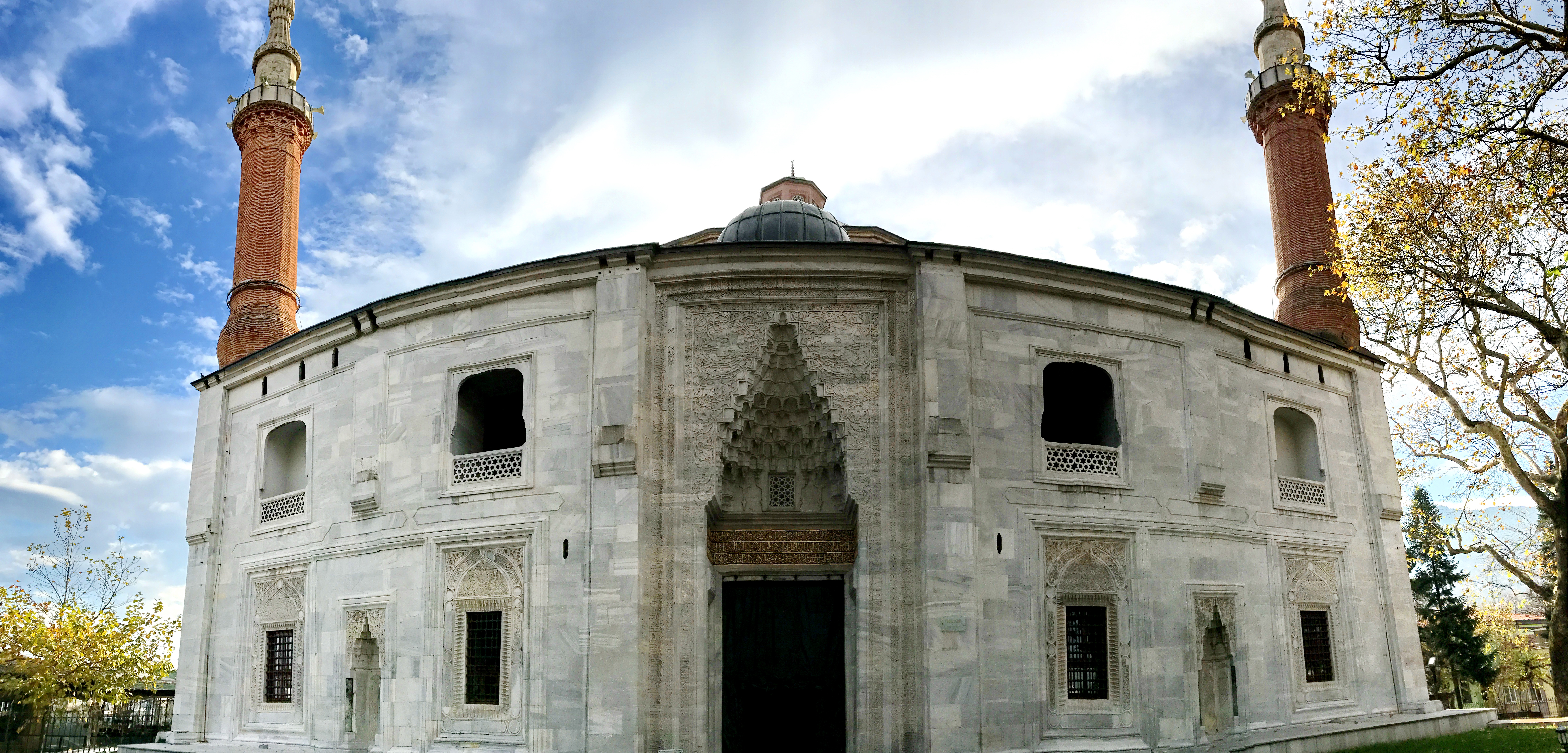
- Look for the carved marble front portal with a tall, recessed muqarnas niche and unique marble tympana decorated with arabesques.
- See the two minarets on the north facade, which were rebuilt on old bases during the 19th-century restoration and have stone spires carved in a baroque manner.
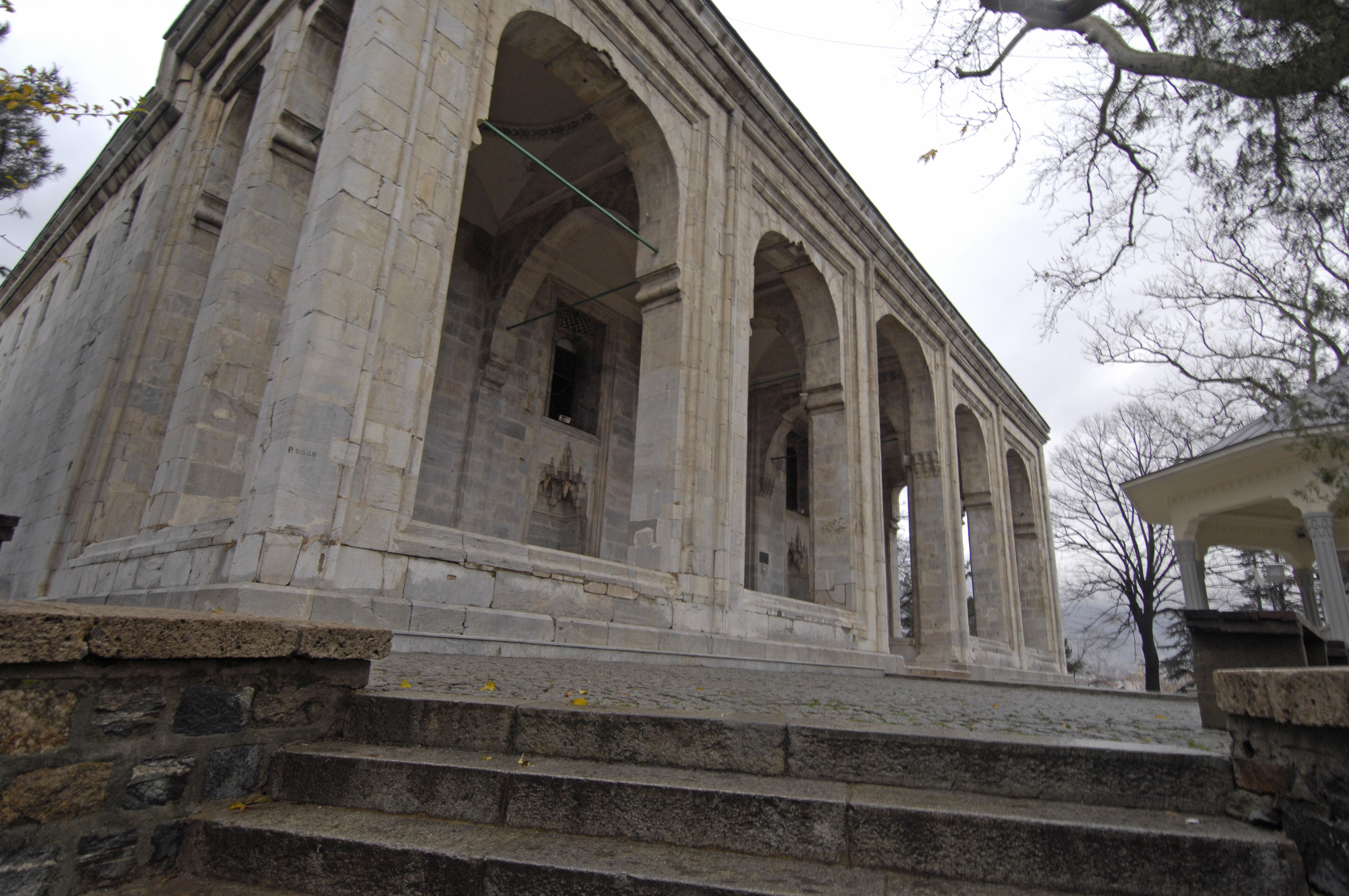
- The adjacent madrasa building, part of the larger complex.
Getting there
Know before you go
- The mosque forms part of a larger complex with the Green Tomb, madrasa, public kitchen, and bathhouse.
- Green and blue tilework gives the mosque its name, with especially rich decoration around the mihrab.
- The front portal uses carved marble with a tall recessed muqarnas niche and arabesque-decorated tympana.
A bit of history
Commissioned by Sultan Mehmed I Çelebi after he reunified the Ottoman Empire, construction began in 1412 and was completed in December 1419 or January 1420. The mosque was supervised by vizier Hacı İvaz Pasha, and decorative work continued after Mehmed I's death, finishing in August 1424. The tiles were created by craftsmen including the “Masters of Tabriz,” reflecting Timurid influence. The mosque suffered damage in the 1855 Bursa earthquake and underwent extensive restorations planned by French architect Léon Parvillée starting in 1863, with further renovations in the 1940s and from 2010 to 2012.
Common questions
What is the Green Mosque named after?
It is named after its green and blue interior tile decorations.
Who commissioned the Green Mosque?
It was commissioned by Sultan Mehmed I Çelebi, who ruled from 1413 to 1421.
What is the architectural plan of the mosque?
It is a two-story, cube-shaped building based on an inverted T-plan, with a central prayer hall flanked by iwans.
What other buildings are part of the complex?
The complex includes the Green Tomb (mausoleum of Mehmed I), a madrasa, a public kitchen, and a bathhouse.
What is unique about the tilework?
The tiles employ diverse techniques including black-line tiles, monochrome underglaze, mosaic, and painted terra-cotta relief, with colors like green, blue, turquoise, white, yellow, light purple, and dark purple.
More attractions in Bursa