Religious site
Almudena Cathedral
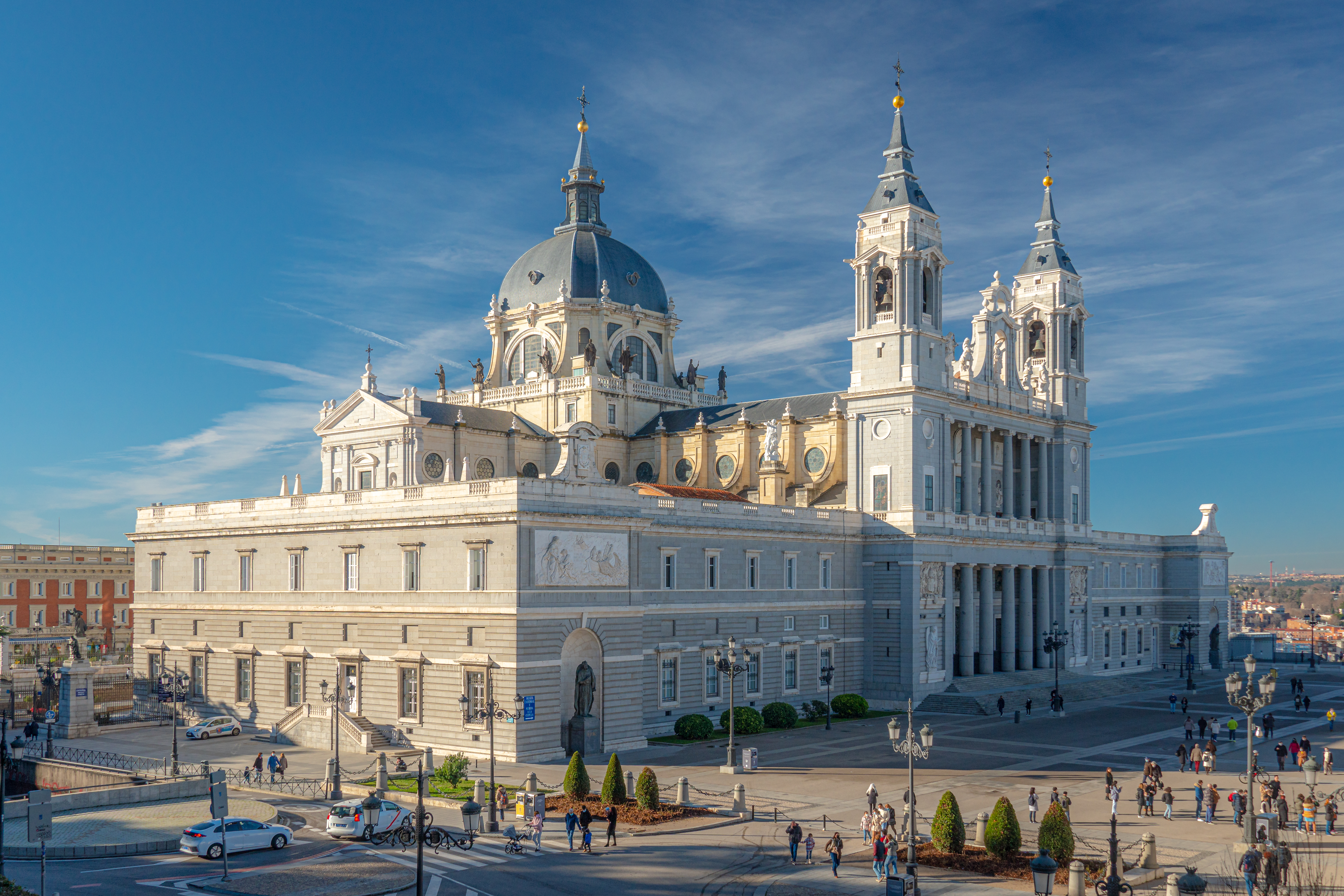 Fernando · Wikimedia Commons · CC BY-SA 4.0
Some booking links are affiliate links. If you book through them, we may earn a small commission at no extra cost to you. We never let this influence which places we recommend.
Almudena Cathedral is the main Catholic church of Madrid and the seat of the Archdiocese of Madrid. It sits directly opposite the Royal Palace, and its design was influenced by that regal setting. Construction began in 1883 and was completed more than a century later, with consecration by Pope John Paul II in 1993.
Don't miss
- Neo-Gothic interior with chapels and statues by contemporary artists, ranging from historical revivals to pop-art decor
- Blessed Sacrament Chapel featuring mosaics by Father Marko Ivan Rupnik
- Apse icons painted by Kiko Argüello, founder of the Neocatechumenal Way
- Neo-Romanesque crypt housing a 16th-century image of the Virgen de la Almudena
- Excavations along Calle Mayor near the cathedral have revealed remains of Moorish and medieval city walls
Tickets & tours
Ways to visit Almudena Cathedral
You can visit Almudena Cathedral on your own. A guide is worth it for the history and detail that is easy to walk past, and a tour can combine it with nearby sights.
 Cheapest way inMadrid Walking Tour from Puerta del Sol to Retiro Park5★ · 2,695 travelers~2 hoursFree cancellationFrom$3 per personSee dates →
 Best full dayToledo Tour from Madrid: Cathedral, Synagogue & St. Tome's Church4.8★ · 7,597 travelers~8 hoursFree cancellationFrom$92 per personSee dates →
 Private & flexibleMadrid Old City Guided Exclusive Guided Walking Tour5★ · 611 travelers~3 hoursFree cancellationFrom$60 per personSee dates →
Getting there
Know before you go
- The cathedral stands opposite the Royal Palace, one of the largest palaces in Europe.
- It is the seat of the Archdiocese of Madrid.
- The interior mixes Neo-Gothic architecture with modern artistic styles, including pop-art decor.
A bit of history
Plans for a Madrid cathedral dedicated to the Virgin of Almudena date back to the 16th century, but the cost of expanding and maintaining the Spanish Empire delayed construction. The foundation stone was laid in 1883 for a parochial church designed by Francisco de Cubas. After Pope Leo XIII created the Madrid-Alcalá bishopric in 1885, the plans were changed to a Gothic Revival cathedral. The site may have been a medieval mosque destroyed in 1083 when Alfonso VI reconquered Madrid. The Spanish Civil War interrupted construction, and the site was abandoned until 1950, when Fernando Chueca Goitia adapted the plans to a baroque exterior matching the Royal Palace's façade. The cathedral was completed in 1993 and consecrated by Pope John Paul II. In 2004, the wedding of King Felipe VI (then crown prince) and Letizia Ortiz Rocasolano took place here.
Common questions
When was Almudena Cathedral completed?
Construction finished in 1993, and it was consecrated that same year by Pope John Paul II.
Who is buried at the cathedral?
Notable burials include Queen Mercedes of Orléans, several members of the Bavarian royal family, Cardinal Ángel Suquía Goicoechea, and architect Francisco de Cubas.
What architectural styles are present?
The exterior is baroque to match the Royal Palace, while the interior is Neo-Gothic with modern chapels and pop-art elements.
Is there a crypt?
Yes, a Neo-Romanesque crypt that contains a 16th-century image of the Virgen de la Almudena.
More attractions in Madrid