Religious site
Jogyesa
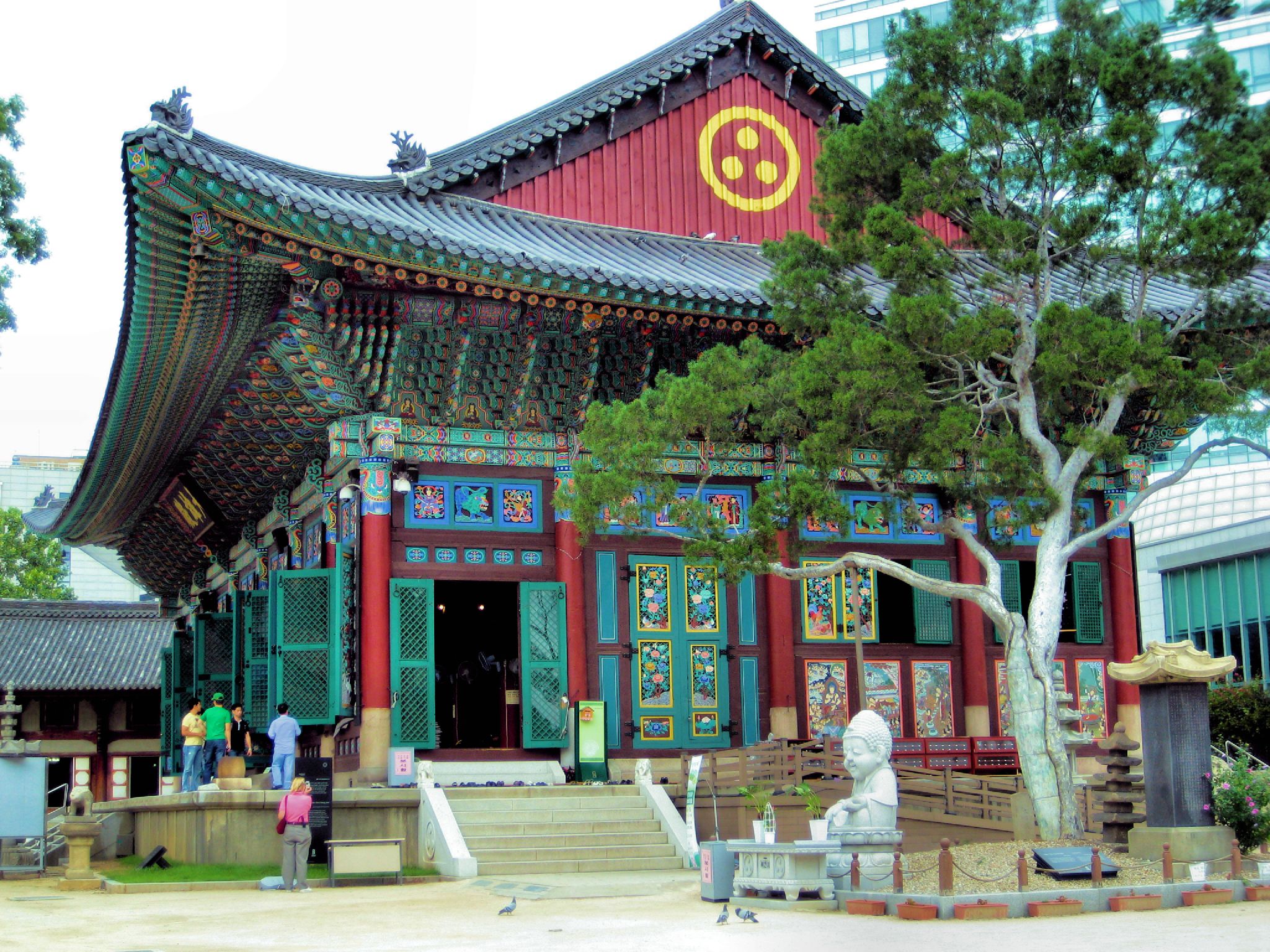 Francisco Anzola · Wikimedia Commons · CC BY 2.0
Some booking links are affiliate links. If you book through them, we may earn a small commission at no extra cost to you. We never let this influence which places we recommend.
Jogyesa is the chief temple of the Jogye Order of Korean Buddhism, located in downtown Seoul near Insa-dong and Gyeongbokgung Palace. The main hall, Daeungjeon, was built in 1938 from pine wood from Baekdu Mountain. In the courtyard, you can see a 500-year-old white pine tree (Natural Monument No. 9) and a Chinese scholar tree.
Don't miss
- Daeungjeon (Main Buddha Hall) built in 1938 with pine wood from Baekdu Mountain, always filled with chanting sounds
- 500-year-old white pine tree (Natural Monument No. 9) about 10 meters high, brought by Chinese missionaries during the Joseon period
- 500-year-old Chinese scholar tree, 26 meters tall and four meters in circumference
- Geuknakjeon (Hall of Supreme Bliss) enshrining Amitabha Buddha
- Beomjongnu, a structure housing a bell that enlightens the public with its sound
- Iljumun (one pillar gate), the entry that separates the mortal world from the world of Buddha
Tickets & tours
Ways to visit Jogyesa
You can visit Jogyesa on your own. A guide is worth it for the history and detail that is easy to walk past, and a tour can combine it with nearby sights.
 Cheapest way inGyeongbokgung Palace Hanbok Rental Experience in Seoul4.1★ · 92 travelers~2 hoursFree cancellationFrom$7 per personSee dates →
 Best full dayBest DMZ Tour Korea from Seoul (Suspension Bridge & JSA Museum)4.9★ · 47,799 travelers7-9 hoursFree cancellationFrom$50 per personSee dates →
 Private & flexibleSeoul Private Local Tour: Gyeongbokgung, Seochon & Market Tour5★ · 10 travelers5-6 hoursFree cancellationFrom$68 per personSee dates →
Know before you go
- The temple is located in Gyeonji-dong, Jongno District, in downtown Seoul, near Insa-dong and Gyeongbokgung Palace.
- Jogyesa participates in the Templestay program, where you can experience the life of Buddhist monks, eat Buddhist food, and learn about Korean Buddhism.
- The Buddha's Birthday festival (Yeondeunghoe) features lanterns hung from May 6 to 22, from 6 p.m. to midnight, with a Lotus Lantern Parade along Jongno Street.
A bit of history
The temple was first established in 1395 at the dawn of the Joseon period. During Japanese colonial rule, it became a fortress of resistance against efforts to suppress Korean Buddhism. The modern temple was founded in 1910 as Gakhwangsa, renamed Taegosa in 1938, and then Jogyesa in 1954 when it became the main temple of the Jogye Order.
Common questions
What is the significance of the white pine tree in the courtyard?
The white pine tree is about 10 meters high and is designated Natural Monument No. 9. It was brought by Chinese missionaries during the Joseon period and gave the nearby area 'Susong-dong' its name (song means 'pine tree').
Can I stay overnight at Jogyesa?
Yes, the temple participates in the Templestay program, where visitors can sign up to experience the life of Buddhist monks, eat Buddhist food, and learn the history of the temple and Korean Buddhism.
What is the Iljumun gate?
The Iljumun, or 'one pillar gate', is the entry to the temple that represents the division separating the mortal world from the world of Buddha.
More attractions in Seoul