Neighborhood
Bo-Kaap
 Dietmar Rabich · Wikimedia Commons · CC BY-SA 4.0
Some booking links are affiliate links. If you book through them, we may earn a small commission at no extra cost to you. We never let this influence which places we recommend.
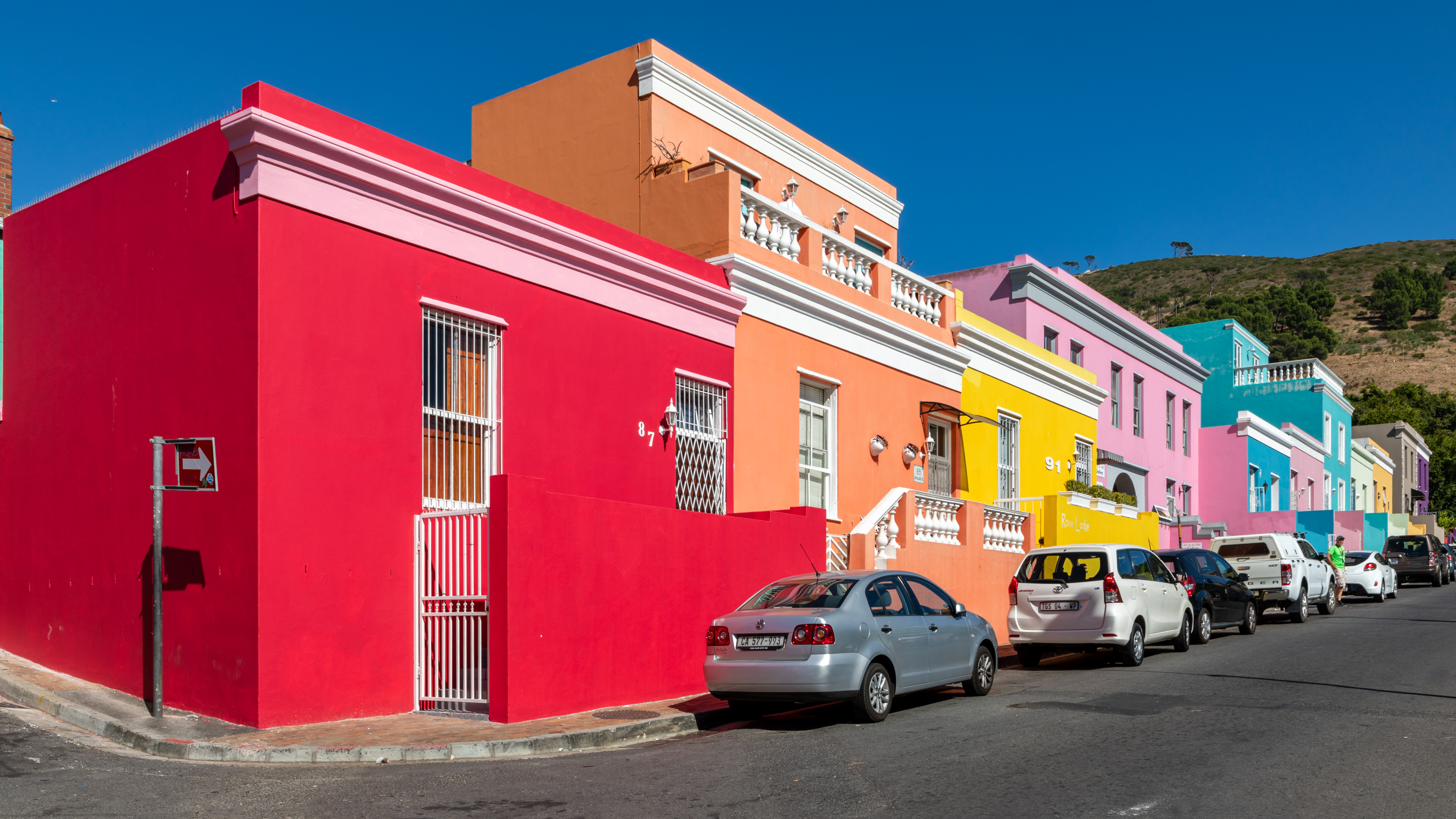
Bo-Kaap is a historic neighborhood on the slopes of Signal Hill above central Cape Town, known for its brightly colored homes and cobblestoned streets. It is a center of Cape Malay culture and contains the largest concentration of pre-1850 architecture in South Africa, making it the oldest surviving residential neighborhood in the city.
Don't miss
- Brightly painted facades in shades of pink, red, blue, green, and purple, a tradition that began in the late 20th century as an expression of freedom by homeowners.
- Cobblestoned streets winding up the slopes of Signal Hill.
- The Nurul Islam Mosque, established in 1844, and the Auwal Mosque on Dorp Street, built in 1794.
- The Bo-Kaap Museum at 71 Wale Street, the oldest house in the area still in its original form, featuring 19th-century furnishings and a voorstoep (front terrace with benches).
- Large murals of the Palestinian flag, reflecting the neighborhood's support for Palestinian liberation.
- Rows of narrow, deep huurhuisjes (rental houses) in Cape Dutch and Cape Georgian architectural styles.
Tickets & tours
Ways to visit Bo-Kaap
You can usually visit on your own. A tour is worth it for transport, a guide, or combining nearby sights into one day.
 Cheapest way inCape Town Hop-On Hop-Off City Tour with Optional Cruise4.7★ · 1,967 travelers1-2 hoursFree cancellationFrom$25 per personSee dates →
 Best full day5-Star Small-Group: Cape of Good Hope, Penguins & Bo-Kaap Tour4.8★ · 1,294 travelers~10 hoursFree cancellationFrom$53 per personSee dates →
 Private & flexibleCape Town's Finest City Bike Tour4.9★ · 65 travelers~3 hoursFree cancellationFrom$77 per personSee dates →
Getting there
Know before you go
- The area is a living residential neighborhood, not a museum; be respectful of residents and their homes.
- The brightly colored houses are a popular photo subject, but avoid blocking doorways or streets.
- Streets are steep and cobblestoned, so wear comfortable walking shoes.
- Bo-Kaap has a strong Muslim heritage; dress modestly and be mindful of local customs, especially near mosques.
A bit of history
The area was first developed in the 1760s when Jan de Waal built rental houses for his slaves. Skilled Muslim laborers from Southeast Asia, known as Mardijkers, settled here, and the first mosque, Auwal Mosque, was built in 1794 on Dorp Street. After emancipation in 1834, more narrow rental houses were built for freed slaves. During apartheid, non-Malay residents were forcibly removed under the Group Areas Act to preserve the Malay character, but unlike nearby District Six, the area was not bulldozed. In 2019, 19 sites were declared National Heritage sites.
Common questions
Why are the houses in Bo-Kaap so brightly colored?
The tradition of painting houses in bright colors began in the late 20th century, attributed to an expression of freedom by new homeowners after the houses were no longer leased and painted white.
What is the historical significance of Bo-Kaap?
It is the oldest surviving residential neighborhood in Cape Town, with the largest concentration of pre-1850 architecture in South Africa, and has been a center of Cape Malay culture since the 18th century.
Can I visit the Bo-Kaap Museum?
Yes, the museum is located at 71 Wale Street in the oldest house in the area, dating to the 1760s, and exhibits the lifestyle of a prosperous 19th-century Cape Muslim family.
Is Bo-Kaap affected by gentrification?
Yes, the neighborhood faces pressure from wealthy outsiders moving in, leading to rising property values and the eviction of long-term residents, which some say is dissolving its distinctive character.
What heritage protections does Bo-Kaap have?
In 2019, 19 sites were declared National Heritage sites, and a Heritage Protection Overlay Zone covers around 600 privately owned homes to conserve the area's character.
More attractions in Cape Town