Landmark
Qasr Al-Hukm
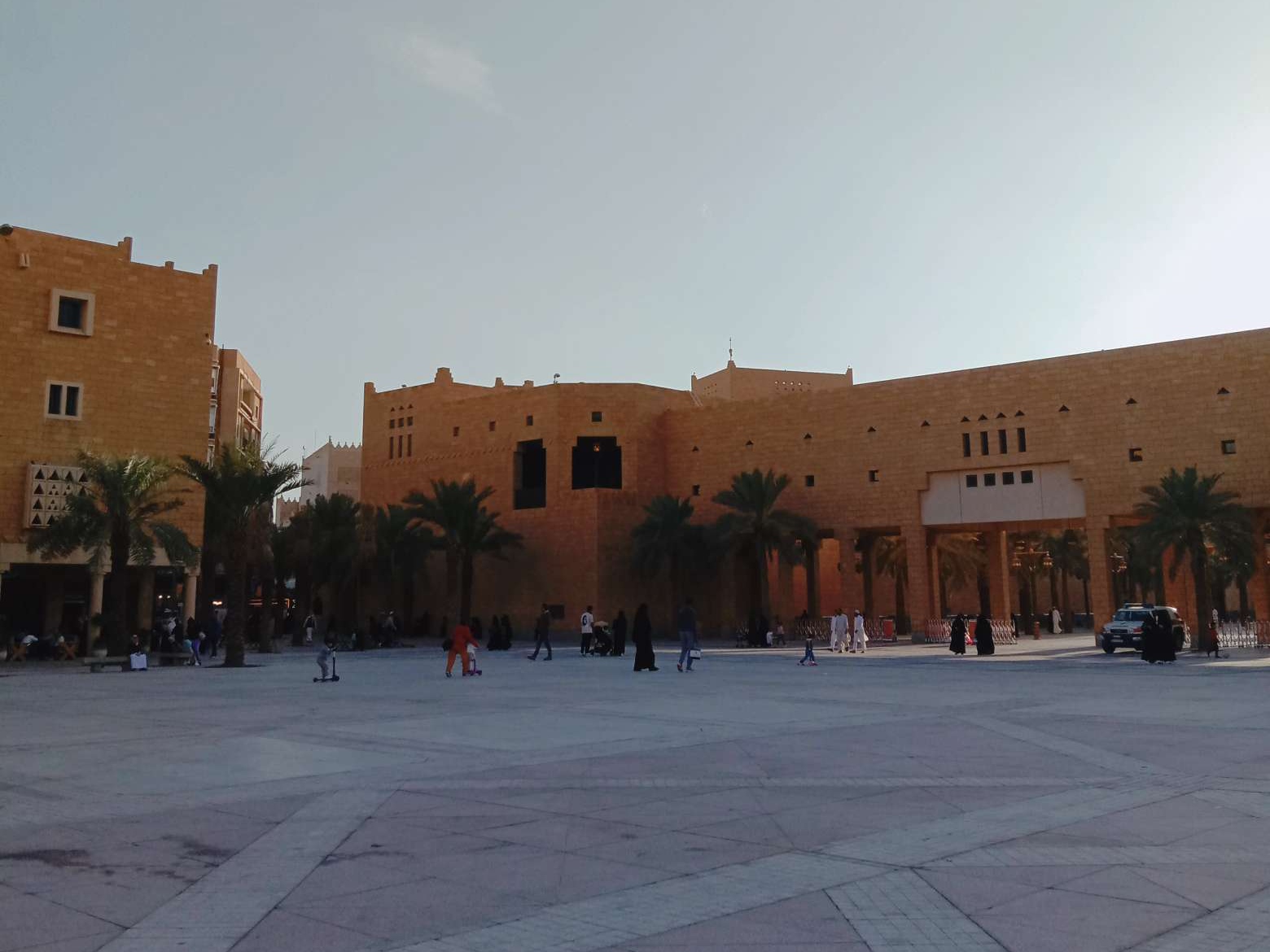 Geektaker · Wikimedia Commons · CC0
Some booking links are affiliate links. If you book through them, we may earn a small commission at no extra cost to you. We never let this influence which places we recommend.
Qasr Al-Hukm, also known as Al-Hukm Palace, is a historic palace in the ad-Dirah neighborhood of Riyadh, opposite the Imam Turki bin Abdullah Grand Mosque. It was built in 1747 by Dahham ibn Dawwas as a fortified palace to safeguard the walled town. Today, it serves as the main office of the governor of Riyadh and is a cultural heritage landmark where tribal leaders and Saudi royals have pledged allegiance to the country's leadership.
Don't miss
- The palace is the oldest structure in Riyadh, built in 1747.
- It overlooks al-Adl Plaza, a public square used for allegiance ceremonies.
- The site includes the restored Imam Turki bin Abdullah Mosque and al-Thumairi Gate.
- The palace entrance is featured on the Saudi SAR 200 note issued in 2021.
- It was opened to the public for the first time in September 2015.
Tickets & tours
Ways to visit Qasr Al-Hukm
You don't need a tour to visit, entry is free. A tour is worth it if you want transport, a guide, or to combine Qasr Al-Hukm with nearby sights in one day. That's what these do well.
 Cheapest way inEdge of The World Riyadh Transfer in an Air-conditioned Car5★ · 44 travelers~2 hoursFree cancellationFrom$22 per personSee dates →
 Best full dayEdge of the World Riyadh Tour with Camel Ride, Bat Cave & Dinner4.9★ · 1,445 travelers8-9 hoursFree cancellationFrom$60 per personSee dates →
 Top ratedRed Sand Adventure Riyadh (Quad Biking,Camel Ride ,HeritageHouse)5★ · 218 travelers3-4 hoursFree cancellationFrom$100 per personSee dates →
Getting there
Know before you go
- The palace is located in the ad-Dirah neighborhood, opposite the Imam Turki bin Abdullah Grand Mosque.
- The Qasr Al-Hukm metro station, part of the Riyadh Metro project, serves the area.
- Entry was free when the palace opened to the public in 2015.
A bit of history
Built in 1747 by Dahham ibn Dawwas, the palace was originally his fortified residence. After the First Saudi State fell in 1818, it was inhabited by an Ottoman-backed emir until Turki bin Abdullah recaptured Riyadh in 1824 and made the palace the new center of power for the House of Saud. In 1834, Turki was assassinated leaving the Great Mosque; his son Faisal besieged the palace to kill the usurper. The Rashidi Emirate destroyed much of the palace around 1889 to efface Saudi legacy. Ibn Saud retook Riyadh in 1902 and lived in the palace after its reconstruction was completed in 1912, until moving to al-Murabba Palace in 1938. The palace declined in importance in the 1950s but was restored as part of a major development project between 1983 and 1992. In September 2015, it opened to the public for the first time with a free exhibition.
Common questions
Who built Qasr Al-Hukm?
It was built in 1747 by Dahham ibn Dawwas, the then-ruler of the Riyadh oasis.
Why is the palace historically significant?
It was the center of power for the House of Saud during the Second Saudi State and is where tribal leaders and royals pledge allegiance to new monarchs.
Can the public visit the palace?
Yes, the Saudi government opened it to the general public for the first time in September 2015, with free entry.
More attractions in Riyadh