Landmark
Roman Baths
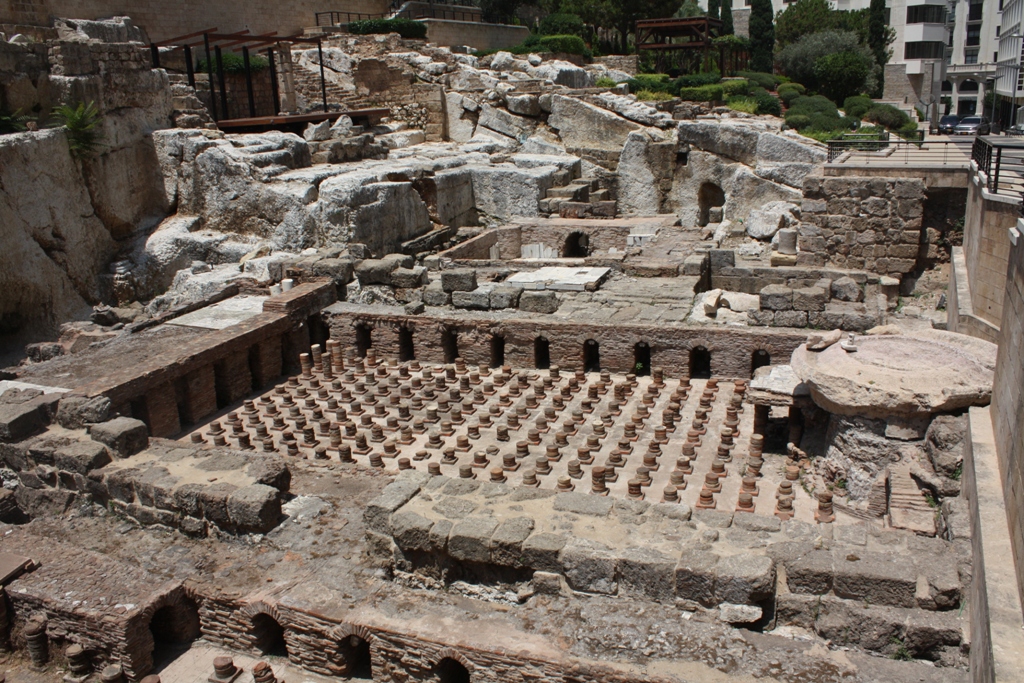 A.K.Khalifeh · Wikimedia Commons · CC BY-SA 3.0
Some booking links are affiliate links. If you book through them, we may earn a small commission at no extra cost to you. We never let this influence which places we recommend.
The Roman Baths in Beirut are a well-preserved archaeological site located in the city center, near the Beirut Souks. Dating back to the 2nd century AD, these baths were part of the Roman colony of Berytus. Visitors can walk through the ruins, seeing the remains of hot and cold rooms, pools, and underfloor heating systems. The site is open-air and surrounded by modern buildings, creating a striking contrast. Informational plaques explain the history. It's a peaceful spot to take a break from shopping or sightseeing. The baths are less crowded than other attractions, making for a pleasant visit. They are a testament to Beirut's long history and Roman heritage.
Don't miss
- See the remains of the caldarium (hot room) and frigidarium (cold room)
- Observe the hypocaust (underfloor heating) system
- Read the informational plaques detailing Roman bathing culture
- Enjoy the contrast of ancient ruins against modern buildings
- Take photos of the well-preserved mosaic floors
Tickets & tours
Ways to visit Roman Baths
You don't need a tour to visit — entry is free. A tour is worth it if you want transport, a guide, or to combine Roman Baths with nearby sights in one day. That's what these do well.
 Cheapest way inPigeon Rocks Boat Ride Beirut (Raouche Rocks)5★ · 31 travelers~1 hourFrom$22 per personSee dates →
 Most bookedRoman Baths and Bath City Walking Tour4.7★ · 1,011 travelers~2 hoursFrom$35 per personSee dates →
 Private & flexiblePRIVATE Beirut Historical Walking Half Day Tour5★ · 28 travelers3–4 hoursFree cancellationFrom$93 per personSee dates →
Good for
How travelers rate it
Know before you go
- Wear comfortable shoes as the ground is uneven.
- Bring water and sun protection as there is little shade.
- Photography is allowed; no flash needed.
- Combine with a visit to the nearby Beirut National Museum for more context.
A bit of history
Built in the 2nd century AD, the baths were used for public bathing and socializing. They were destroyed by earthquakes in the 6th century and later buried. Excavations in the 1990s uncovered them during the reconstruction of downtown Beirut.
Common questions
Is there an entrance fee?
No, entry is free.
Are there guided tours?
No official tours, but you can explore on your own with the help of information boards.
How long does it take to see everything?
About 30 minutes to an hour.
Is it open every day?
Yes, it's an open-air site accessible at all times, but best visited during daylight.
Can I touch the ruins?
No, please respect the site and do not climb on the structures.
Are there restrooms nearby?
Public restrooms are available in the Beirut Souks, a short walk away.
More attractions in Beirut