Religious site
Heian-jingū Shrine
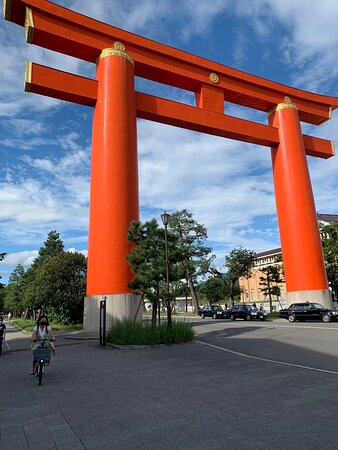 Photo via TripAdvisor (akira8288)
Some booking links are affiliate links. If you book through them, we may earn a small commission at no extra cost to you. We never let this influence which places we recommend.
Heian-jingū Shrine is a relatively modern Shinto shrine in Kyoto, built in 1895 to commemorate the 1,100th anniversary of the founding of Heian-kyō (the former name of Kyoto). The shrine is dedicated to Emperor Kanmu, who moved the capital to Kyoto, and Emperor Kōmei, the last emperor to reign in Kyoto. The most striking feature is the massive torii gate at the entrance, one of the largest in Japan, standing 24 meters tall. The main hall is a scaled-down replica of the original Imperial Palace, painted in vibrant vermilion and white. The expansive gardens, especially the East Garden with its weeping cherry trees and the South Garden with its irises, are a highlight. Visitors can also enjoy the traditional architecture, peaceful atmosphere, and occasional traditional weddings held on the grounds. The shrine is particularly popular during the Jidai Matsuri festival in October, which features a grand historical procession.
Don't miss
- The colossal vermilion torii gate, one of Japan's largest
- The main hall, a replica of the Heian-period Imperial Palace
- The East Garden with weeping cherry trees in spring
- The South Garden's irises and seasonal flowers
- The Jidai Matsuri historical festival in October
Tickets & tours
Ways to visit Heian-jingū Shrine
You don't need a tour to visit — entry is free. A tour is worth it if you want transport, a guide, or to combine Heian-jingū Shrine with nearby sights in one day. That's what these do well.
 Cheapest way inKyoto: Gion and Geisha District Walking Tour5★ · 338 travelers~2 hoursFree cancellationFrom$12 per personSee dates →
 Most bookedKyoto: Gion Hidden Gems & Geisha Culture Tour4.9★ · 3,021 travelers~2 hoursFree cancellationFrom$25 per personSee dates →
 Private & flexibleKyoto Magical Night English Tour: Gion & Fushimi Inari Shrine5★ · 167 travelers~3 hoursFree cancellationFrom$32 per personSee dates →
Know before you go
- The shrine grounds are open 24/7, but the garden and buildings have set hours (usually 8:30-17:30).
- Photography is allowed in most areas, but avoid using flash inside the main hall.
- You might see traditional Shinto weddings on weekends, observe quietly from a distance.
- Purify your hands and mouth at the temizuya (water pavilion) before approaching the main hall.
A bit of history
Heian-jingū was built in 1895 for the 1,100th anniversary of Kyoto's founding as the capital. It enshrines Emperor Kanmu and later Emperor Kōmei. The shrine was partially destroyed in a fire in 1976 but was rebuilt using traditional methods.
Common questions
Is there an entrance fee?
The shrine grounds are free to enter. The garden has a separate admission fee, check the official website for current prices.
How do I get there from Kyoto Station?
Take bus number 5 or 100 from Kyoto Station to 'Heian-jingū-mae' stop (about 20 minutes). Alternatively, take the Tozai Subway Line to Higashiyama Station and walk 10 minutes.
What is the best time to visit for cherry blossoms?
Late March to early April is the peak cherry blossom season. The weeping cherry trees in the East Garden are especially beautiful.
Can I see traditional weddings here?
Yes, Shinto weddings are often held on weekends. You can observe from a respectful distance.
Is the shrine wheelchair accessible?
Yes, the main grounds are flat and accessible. The garden has paved paths, though some areas may have slight slopes.
What is the Jidai Matsuri festival?
It's a major festival on October 22, featuring a parade of people in historical costumes from different eras of Kyoto's history.
More attractions in Kyoto