Landmark
Sforza Castle
 Jakub Hałun · Wikimedia Commons · CC BY-SA 4.0
Some booking links are affiliate links. If you book through them, we may earn a small commission at no extra cost to you. We never let this influence which places we recommend.
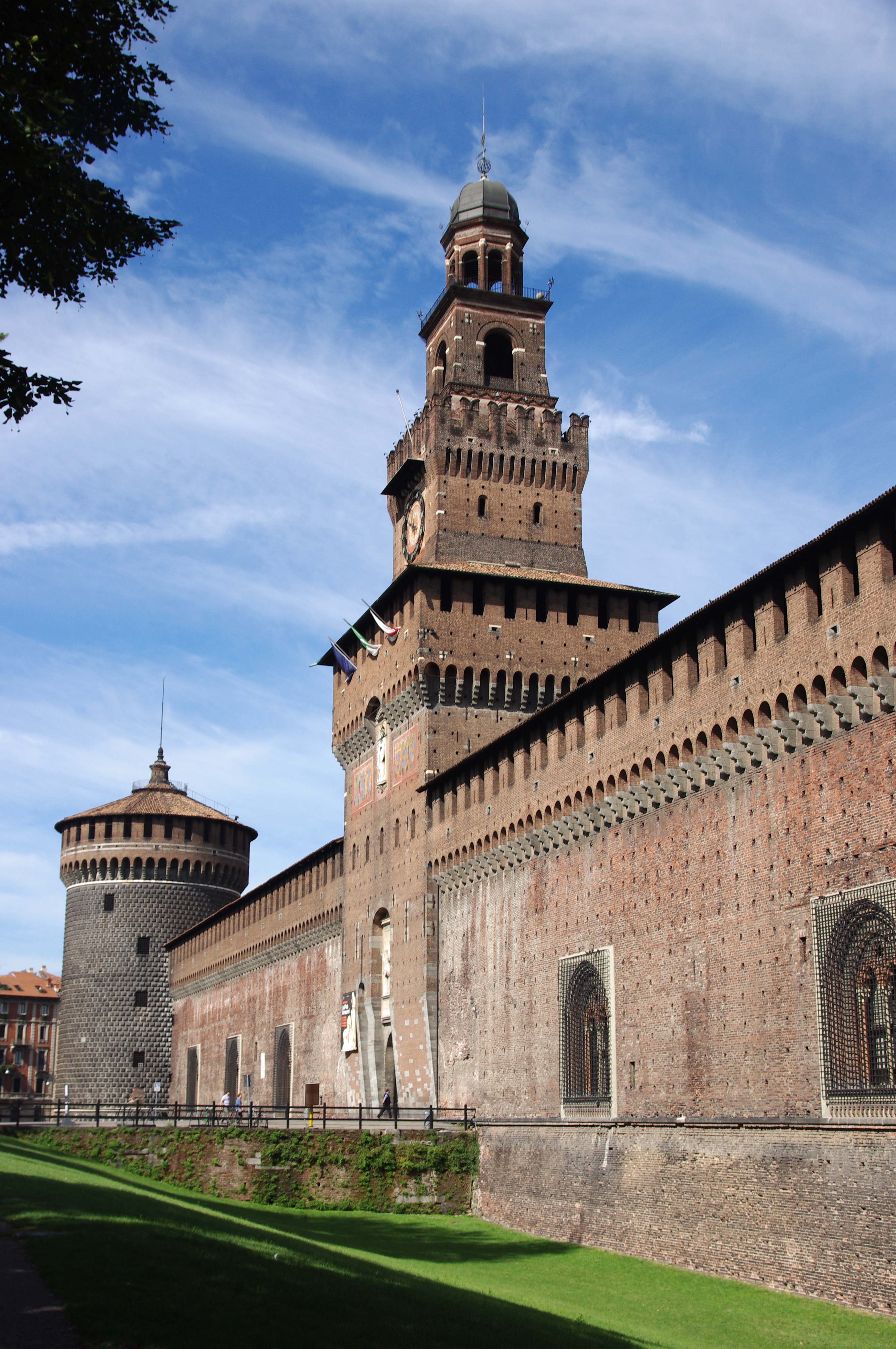
Sforza Castle is a medieval fortification in Milan built in the 15th century by Francesco Sforza on the site of an earlier 14th-century stronghold. It was later enlarged and, during the 16th and 17th centuries, ranked among Europe's largest citadels. Extensively rebuilt between 1891 and 1905, it now houses several city museums and art collections.
Don't miss
- The Torre del Filarete, the central tower rebuilt between 1900 and 1905 based on 16th-century drawings as a monument to King Umberto I
- The Rocchetta, an internal defensive ridotto with its own gate and a portico featuring 15th-century arcades
- The Corte Ducale, the wing originally used as a ducal residence, with two loggias including the Loggiato dell'Elefante named for a fresco of an elephant
- The Pinacoteca del Castello Sforzesco, housing works by Mantegna, Canaletto, Tiepolo, Titian, and Tintoretto
- The Museum of the Rondanini Pietà, which contains Michelangelo's last sculpture
- The Biblioteca Trivulziana, holding around 180,000 books including a 1337 illuminated codex of Dante's Divine Comedy and Leonardo da Vinci's Codex Trivulzianus
Tickets & tours
Ways to visit Sforza Castle
You can see Sforza Castle on your own. A tour is worth it for the story behind it, for transport, or for combining nearby sights into one day.
 Cheapest way inSforza Castle and Michelangelo's Pietà Rondanini guided experience4.6★ · 256 travelers~2 hoursFree cancellationFrom$58 per personSee dates →
 Most bookedMilan Duomo & The Last Supper Skip-the-Line Small Group Tour4.6★ · 2,999 travelers~3 hoursFree cancellationFrom$162 per personSee dates →
 Private & flexibleMilan Private Tour - Duomo, Sforza Castle & Gelato Tasting5★ · 40 travelers~3 hoursFrom$285 per personSee dates →
Getting there
Know before you go
- The castle has a quadrangular plan with square towers on the side that once faced the countryside and two round towers on the side facing the walled city
- Multiple museums are housed within the castle complex, including the Museum of Ancient Art, the Egyptian Museum, and the Museum of Musical Instruments
- The Biblioteca Trivulziana inside the castle contains the Civic Historical Archive with civic documentation for Milan and the Duchy dating from 1385 onwards
- In 2025, evidence of tunnels sketched by Leonardo da Vinci was identified below the structure
A bit of history
The original castle was ordered by Galeazzo II Visconti around 1358–1370 and was known as Castello di Porta Giova. It was built on the same area as an ancient Roman fortification that served as a military camp when Milan was the capital of the Roman Empire. The castle was destroyed by the Golden Ambrosian Republic in 1447, then rebuilt by Francesco Sforza starting in 1450 as his princely residence. In 1494 Ludovico Sforza commissioned artists including Leonardo da Vinci and Bramante to decorate the castle. After French victory at the Battle of Marignano in 1515, the castle was besieged and capitulated when sappers placed mines under its foundations. Under Spanish rule it became a citadel, and most outer fortifications were demolished during the Napoleonic period. After Italian unification, the castle was transferred to the city of Milan and Parco Sempione was created on the former parade grounds.
Common questions
Who originally built the Sforza Castle?
The original construction was ordered by Galeazzo II Visconti around 1358–1370, and the castle was later rebuilt by Francesco Sforza starting in 1450.
What museums are inside the castle?
The castle complex includes the Pinacoteca del Castello Sforzesco, Museum of Ancient Art, Museum of Musical Instruments, Egyptian Museum, Prehistoric collections of the Archaeological Museum of Milan, Applied Arts Collection, Antique Furniture & Wooden Sculpture Museum, Achille Bertarelli Print Collection, and the Museum of the Rondanini Pietà.
Is Leonardo da Vinci connected to the castle?
Yes, Leonardo da Vinci frescoed several rooms in the castle around 1494, and around 1498 he worked on the ceiling of the Sala delle Asse painting vegetable motifs. The Biblioteca Trivulziana also holds his Codex Trivulzianus notebook.
What happened to the castle during World War II?
Allied bombardment of Milan in 1943 severely damaged the castle, and post-war reconstruction for museum purposes was undertaken by the BBPR architectural partnership.
Can I see Michelangelo's work at the castle?
Yes, the Museum of the Rondanini Pietà displays Michelangelo's last sculpture, the Rondanini Pietà.
More attractions in Milan