Religious site
Milan Cathedral
 Jiuguang Wang · Wikimedia Commons · CC BY-SA 3.0
Some booking links are affiliate links. If you book through them, we may earn a small commission at no extra cost to you. We never let this influence which places we recommend.
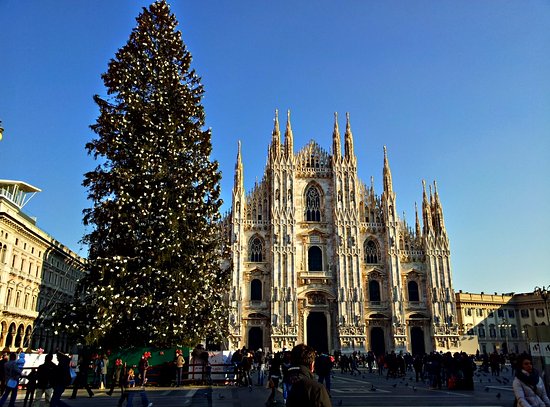
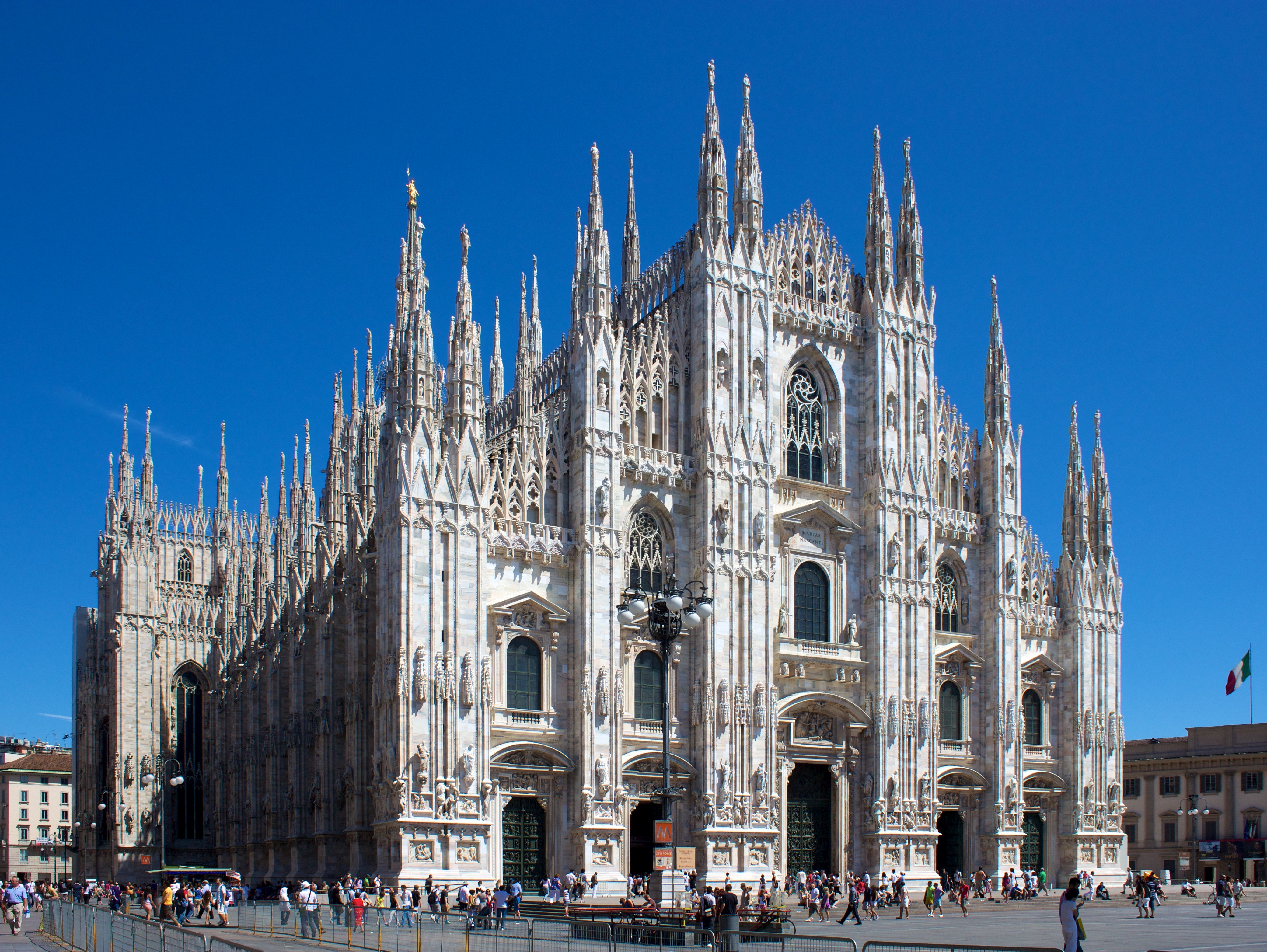
Milan Cathedral, the Duomo di Milano, is the cathedral church of Milan and the seat of its archbishop. Dedicated to the Nativity of Saint Mary, it occupies a site at the center of the city since Roman Mediolanum, where streets still radiate from or circle the cathedral. Construction began in 1386 and continued across nearly six centuries, with final details completed in 1965. That long timeline produced a building of immense scale and mixed architectural influence. The plan has a central nave, four side aisles, transepts, choir, and apse. Forty pillars divide the five naves, and the central vault rises about 45 metres. Brick construction is faced with marble from the Candoglia quarries, granted to the cathedral works by Gian Galeazzo Visconti. Outside, a dense forest of openwork pinnacles, flying buttresses, statues, and 135 spires gives the roof its unmistakable profile. The highest historic spire carries the polychrome Madonnina, a symbol of Milan. Visitors can access the roof for close views of sculpture and tracery that are difficult to appreciate from the piazza. Inside, major works include Marco d'Agrate's 1562 statue of Saint Bartholomew Flayed, the Trivulzio Candelabrum, archbishops' tombs, Renaissance presbytery furnishings, vast stained-glass windows, and one of Italy's largest pipe organs. Beneath the cathedral, the early Christian baptistery dating to 335 preserves evidence of worship on the site long before the present Duomo.
Don't miss
- The roof terraces among openwork pinnacles, flying buttresses, statues, and spires
- The polychrome Madonnina atop its 108.5-metre spire, erected in 1762
- Saint Bartholomew Flayed by Marco d'Agrate, showing the saint carrying his skin
- The early Christian baptistery dating to 335 beneath the cathedral
- The twelfth-century Trivulzio Candelabrum and its intricate base of vines, plants, and animals
- Five naves divided by forty pillars beneath some of the highest completed Gothic vaults
Tickets & tours
Ways to visit Milan Cathedral
You can visit Milan Cathedral on your own. A guide is worth it for the history and detail that is easy to walk past, and a tour can combine it with nearby sights.
 Cheapest way inMilan Duomo : Guided Cathedral Tour & Rooftop Access Included4.1★ · 119 travelers~2 hoursFree cancellationFrom$36 per personSee dates →
 Most bookedMilan Duomo & The Last Supper Skip-the-Line Small Group Tour4.6★ · 2,999 travelers~3 hoursFree cancellationFrom$162 per personSee dates →
 Private & flexibleMilan Photoshoot with the Cathedral5★ · 35 travelers~1 hourFree cancellationFrom$57 per personSee dates →
Getting there
Know before you go
- This is Milan's active cathedral and the seat of the archbishop, dedicated to the Nativity of Saint Mary.
- The roof is open to visitors for a fee and gives close views of sculpture, pinnacles, and flying buttresses.
- The building is brick faced with Candoglia marble, a material that requires continuing maintenance.
- An early Christian octagonal baptistery dating to 335 can be visited below the present cathedral.
A bit of history
Archbishop Antonio da Saluzzo began the present cathedral in 1386 during the rise of Gian Galeazzo Visconti. The project was intended to emphasize Milan's centrality during Gian Galeazzo Visconti's rise. Simone da Orsenigo initially planned a brick church in Lombard Gothic style, but Visconti brought in French expertise and secured tax-free use of Candoglia marble. Nicolas de Bonaventure added Rayonnant Gothic influence. French engineer Jean Mignot later criticized the structure, pushing Milanese builders to refine their tools and methods. By Gian Galeazzo's death in 1402, nearly half the cathedral was complete, but money and design uncertainty slowed progress. Leonardo da Vinci and Donato Bramante made models for the central cupola competition in 1488; Leonardo withdrew, and the octagonal cupola was finished in the early sixteenth century. Later archbishops and architects debated whether the incomplete façade should follow Gothic or Renaissance ideals. Carlo Borromeo consecrated the church in 1577, though major portions remained unfinished. The Madonnina spire rose in 1762. Napoleon ordered completion of the façade before his 1805 coronation as King of Italy, renewing work that continued through the nineteenth and twentieth centuries. Wartime bombing caused damage, later repaired. The final gate was inaugurated in 1965, commonly marking completion, although regular maintenance continues because pollution affects the building and marble repairs are complicated.
Common questions
How long did Milan Cathedral take to build?
Construction began in 1386 and final details were completed in 1965, a span of nearly six centuries.
What is the Madonnina?
It is the polychrome statue of Mary atop a 108.5-metre spire erected in 1762, and it became a symbol of Milan.
Can visitors go onto the roof?
Yes. Paid roof access allows close views of the cathedral's pinnacles and sculpture.
What can be seen beneath the cathedral?
The early Christian octagonal baptistery, dating to 335, survives under the Duomo and is open to visits.
Why does the cathedral mix styles?
Many architects worked over almost six centuries, and successive builders debated Lombard Gothic, French Gothic, Renaissance, and later approaches.
More attractions in Milan