Museum
National Museum of Indonesia
 Chainwit. · Wikimedia Commons · CC BY 4.0
Some booking links are affiliate links. If you book through them, we may earn a small commission at no extra cost to you. We never let this influence which places we recommend.
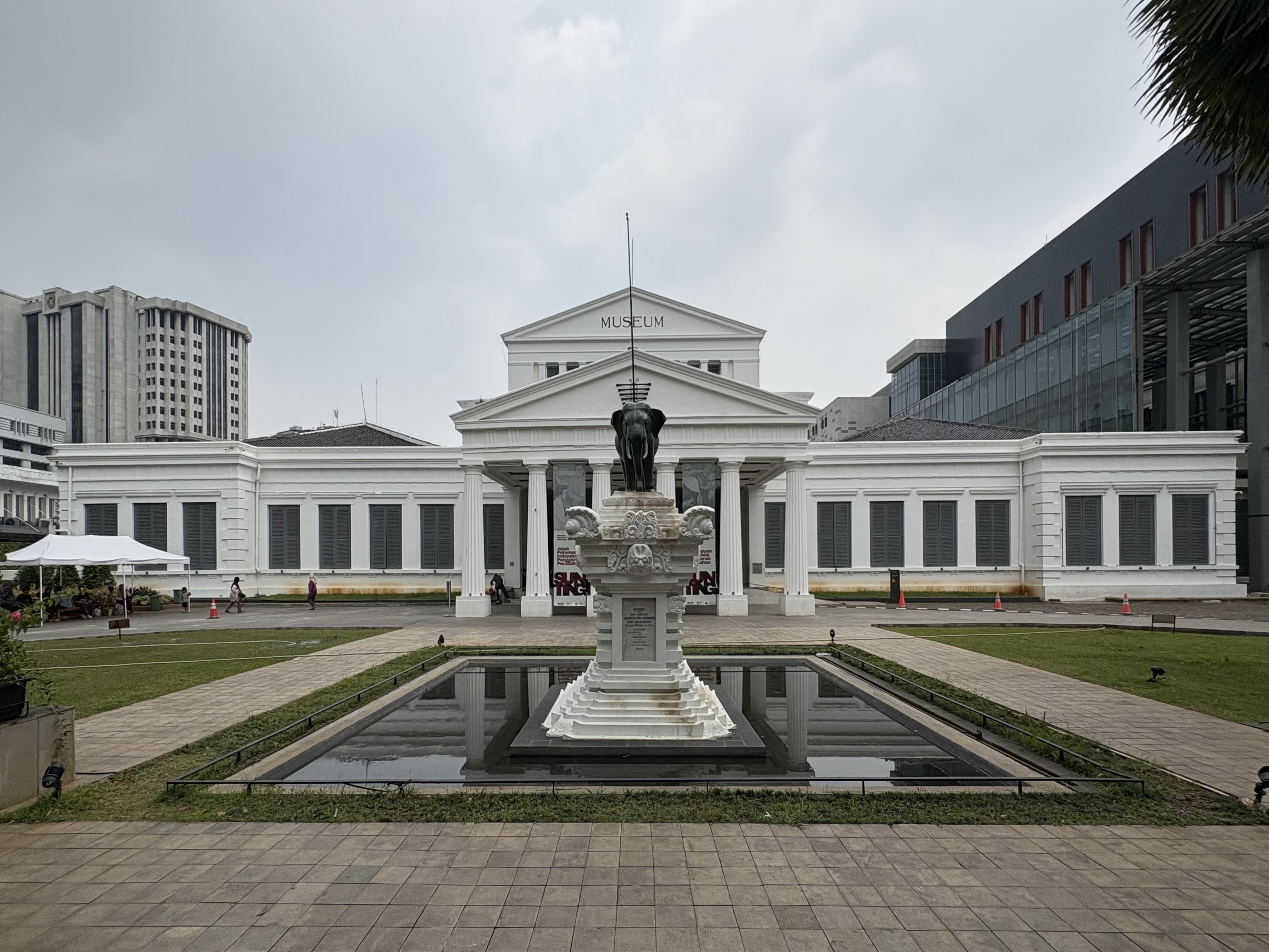
The National Museum of Indonesia, also called the Elephant Museum for the bronze elephant statue in its forecourt, sits on the west side of Merdeka Square in Central Jakarta. It holds about 141,000 objects covering archaeology, history, ethnology, and geography from across Indonesia. The museum has two main buildings: the old wing (Gedung Gajah) and the new wing (Gedung Arca), which opened in 2007.
Don't miss
- The 4-meter-tall, 4-ton statue of Adityavarman depicted as Bhairava, the museum's largest artifact, dating from the 13th–14th century.
- The Prajnaparamita statue, often called the most beautiful sculpture of ancient Java, displayed at the entrance of the archaeology treasure room.
- The Wonoboyo Hoard, a 9th-century gold treasure from the Hindu Mataram kingdom, including a Ramayana-scene bowl and corn-seed-shaped gold coins.
- The extensive ceramics collection, the largest in Southeast Asia, with Chinese pieces from the Han to Qing dynasties and ceramics from shipwrecks like the Cirebon wreck.
- The ethnography treasure room featuring royal regalia from Indonesian kingdoms, including gilded kris, golden crowns, and ceremonial weapons.
- The new wing (Gedung Arca) organizes exhibits by cultural elements such as religious systems, knowledge, and technology across four levels.
Tickets & tours
Ways to visit National Museum of Indonesia
You can visit National Museum of Indonesia on your own. A guide mainly adds context, what you are looking at and why it matters, and a tour can add transport or combine nearby sights into one day.
 Cheapest way inJakarta Walking Tour with Public Transportation Visiting Sites4.9★ · 18 travelers4-5 hoursFree cancellationFrom$45 per personSee dates →
 Best full dayActive Volcano, Rice Field, Hot Spring, Fruit market, Tea Plantation with Lunch4.8★ · 546 travelers12-13 hoursFree cancellationFrom$110 per personSee dates →
 Private & flexibleJakarta Private City Tour with Obama School visit5★ · 17 travelers5-6 hoursFree cancellationFrom$65 per personSee dates →
Getting there
Know before you go
- Look for the bronze elephant statue in the forecourt, a gift from King Chulalongkorn of Siam in 1871, which gives the museum its popular nickname.
- The museum has two wings: the old Gedung Gajah (south) and the new Gedung Arca (north), connected by a glass-walled bridge gallery over an outdoor amphitheatre.
- A September 2023 fire damaged the old wing; the museum reopened after renovation in October 2024.
- The old wing's central atrium courtyard displays large stone statues, including Nandi bulls and makaras from Java and Jambi.
A bit of history
Founded in 1778 by Dutch intellectuals as the Bataviaasch Genootschap van Kunsten en Wetenschappen, the museum began with a donated building and collection from J.C.M. Radermacher. In 1868 a new building opened, later called Gedung Gajah after an 1871 gift of a bronze elephant statue from King Chulalongkorn of Siam. After Indonesian independence, it was renamed Museum Pusat and then Museum Nasional in 1979. A fire in the old wing on 16 September 2023 closed the museum for renovation until October 2024.
Common questions
What is the museum's most famous artifact?
The statue of Prajnaparamita, the goddess of transcendental wisdom, is often called the most beautiful sculpture of ancient Java and is displayed at the entrance of the archaeology treasure room.
Why is it called the Elephant Museum?
It is popularly known as the Elephant Museum because of the bronze elephant statue in the forecourt, which was a gift from King Chulalongkorn of Siam in 1871.
What happened during the 2023 fire?
On 16 September 2023, a fire broke out in the Gedung Gajah building, destroying at least four rooms with precolonial artifacts and causing the roof and back walls to collapse. The museum closed for renovation and reopened on 15 October 2024.
What can I see in the new wing?
The new wing, Gedung Arca, has four levels of permanent exhibits organized by cultural elements: Man and Environment, Knowledge/Technology/Economy, Social Organization/Settlement Patterns, and Treasures/Ceramics.
More attractions in Jakarta