Landmark
Gandhi Ashram
 Chauhan Rakesh
Some booking links are affiliate links. If you book through them, we may earn a small commission at no extra cost to you. We never let this influence which places we recommend.
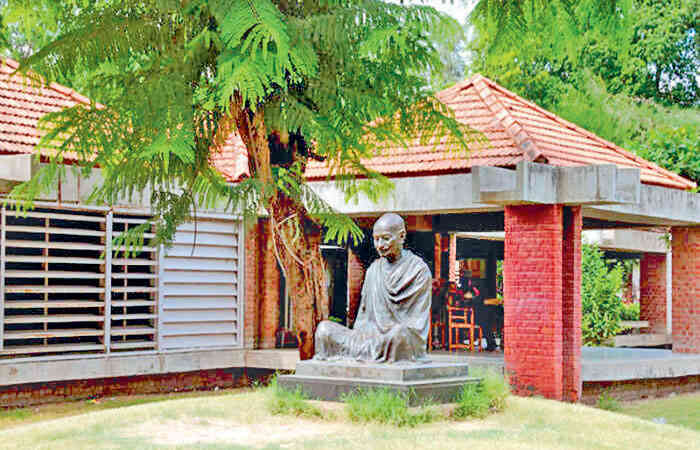
The Sabarmati Ashram in Ahmedabad was Mahatma Gandhi's home and headquarters for some of the most pivotal years of India's independence struggle (1917–1930), and it remains a deeply moving place of pilgrimage. Set peacefully on the bank of the Sabarmati River, the simple, whitewashed ashram preserves Gandhi's spartan living quarters (Hriday Kunj) exactly as he left them, his spinning wheel, writing desk, and few possessions, alongside an excellent museum of photographs, letters, and documents tracing his life and philosophy of non-violence.
It was from here that Gandhi set out on the famous 1930 Salt March. The atmosphere is serene and reflective, and entry is free. It's an essential stop for understanding Gandhi and modern India, and a calming counterpoint to Ahmedabad's bustle.
Don't miss
- Gandhi's preserved living quarters (Hriday Kunj)
- The museum of photographs, letters, and documents
- The peaceful Sabarmati riverside setting
- The starting point of the 1930 Salt March
- A reflective insight into Gandhi's philosophy
Tickets & tours
Ways to visit Gandhi Ashram
You don't need a tour to visit — entry is free. A tour is worth it if you want transport, a guide, or to combine Gandhi Ashram with nearby sights in one day. That's what these do well.
 Cheapest way inGandhi Delhi Private History Adventure Tour4.9★ · 133 travelers~4 hoursFree cancellationFrom$40 per personSee dates →
 Best full dayWorld heritage Ahmedabad city tour in private car with guide and lunch5★ · 44 travelers~8 hoursFree cancellationFrom$135 per personSee dates →
Good for
How travelers rate it
Know before you go
- Entry is free, it's a place of reflection, so visit unhurried and respectfully.
- Don't miss Hriday Kunj, Gandhi's preserved simple quarters.
- A major precinct redevelopment has been underway, check what's open.
- It's serene and riverside, a calm break from the city.
A bit of history
Gandhi established the Sabarmati Ashram in 1917 as a base for his movement and experiments in communal living, self-reliance, and non-violent resistance. He lived here until 1930, when he left on the Salt March, vowing not to return until India was independent. It's now a national monument and museum.
Common questions
Why is the Sabarmati Ashram significant?
It was Gandhi's home and the headquarters of his independence movement from 1917 to 1930, and the starting point of the famous 1930 Salt March.
Is it free?
Yes, entry is free. Note that a major redevelopment of the wider precinct has been underway, so check current access.
What will I see?
Gandhi's preserved spartan living quarters, his few possessions and spinning wheel, and a museum of photographs, letters, and documents on his life and philosophy.
How long should I spend?
About an hour, unhurried, to absorb the quarters, museum, and the peaceful riverside setting.
More attractions in Ahmedabad