Landmark · Louvre / Palais-Royal
Statue Equestre de Louis XIV
Some booking links are affiliate links. If you book through them, we may earn a small commission at no extra cost to you. We never let this influence which places we recommend.
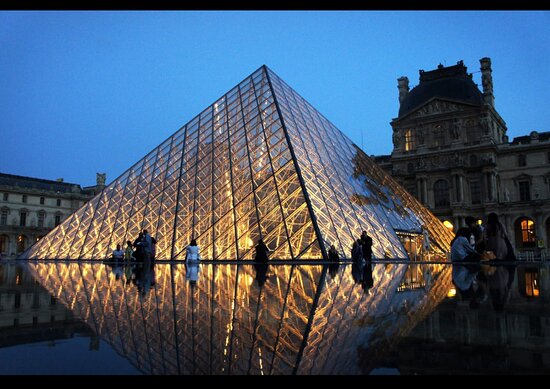
The Statue Equestre de Louis XIV stands proudly in the Cour Napoléon of the Louvre Palace, directly facing the iconic glass pyramid. This bronze sculpture depicts the Sun King on horseback, a symbol of absolute monarchy and French grandeur. Created in the 19th century, it is one of several equestrian statues of Louis XIV in Paris, but its placement here offers a striking contrast between classical art and modern architecture. Visitors often pause to admire the statue's detailed craftsmanship, the king's flowing wig, the horse's dynamic pose, and to photograph it against the backdrop of the pyramid. The statue is part of the Louvre's outdoor collection, free to view for anyone passing through the courtyard. Its location makes it a natural meeting point or a moment of reflection before entering the museum.
Don't miss
- Equestrian bronze of Louis XIV in the Cour Napoléon
- Striking contrast with the modern Louvre Pyramid
- Free to view without museum entry
- Detailed craftsmanship of horse and rider
- Central location for photos and meeting
Tickets & tours
Ways to visit Statue Equestre de Louis XIV
You can visit on your own (no ticket needed; the courtyard is open to the public). A tour adds transport and a guide, or combines nearby sights into one day.
 Cheapest way inParis Highlights Bike Tour: Eiffel Tower, Louvre and Notre-Dame4.9★ · 909 travelers~4 hoursFree cancellationFrom$52 per personSee dates →
 Most bookedLouvre Museum Masterpieces Guided Tour with Access4.5★ · 12,899 travelers~3 hoursFree cancellationFrom$74 per personSee dates →
 Private & flexibleSkip the line Invalides Dome Louis XIV and Napoleon Guided Tour4.9★ · 78 travelers~2 hoursFree cancellationFrom$154 per personSee dates →
Good for
How travelers rate it
Know before you go
- Best photos taken from the pyramid side to include both elements.
- The statue faces east; morning light illuminates the king's face.
- Combine with a visit to the Louvre or Tuileries Garden.
- Look for the inscription on the base identifying the sculptor.
A bit of history
This statue was commissioned in the 19th century as part of a series honoring French monarchs. It was installed in the Cour Napoléon during renovations of the Louvre, replacing earlier royal monuments destroyed during the Revolution.
Common questions
Is the statue inside the Louvre museum?
No, it's in the outdoor courtyard, free to all.
Who created the statue?
It was sculpted by François Joseph Bosio in the 19th century.
Can I touch the statue?
Touching is discouraged to preserve the bronze.
Are there guided tours focused on the statue?
Not specifically, but many Louvre tours mention it.
Is the statue lit at night?
Yes, the courtyard is illuminated, making it visible after dark.
Why is it in front of the pyramid?
The statue predates the pyramid; its placement creates a dialogue between old and new.
More attractions in Paris