Religious site
Quito Metropolitan Cathedral
 Quito magnífico · Wikimedia Commons · CC BY-SA 3.0
Some booking links are affiliate links. If you book through them, we may earn a small commission at no extra cost to you. We never let this influence which places we recommend.
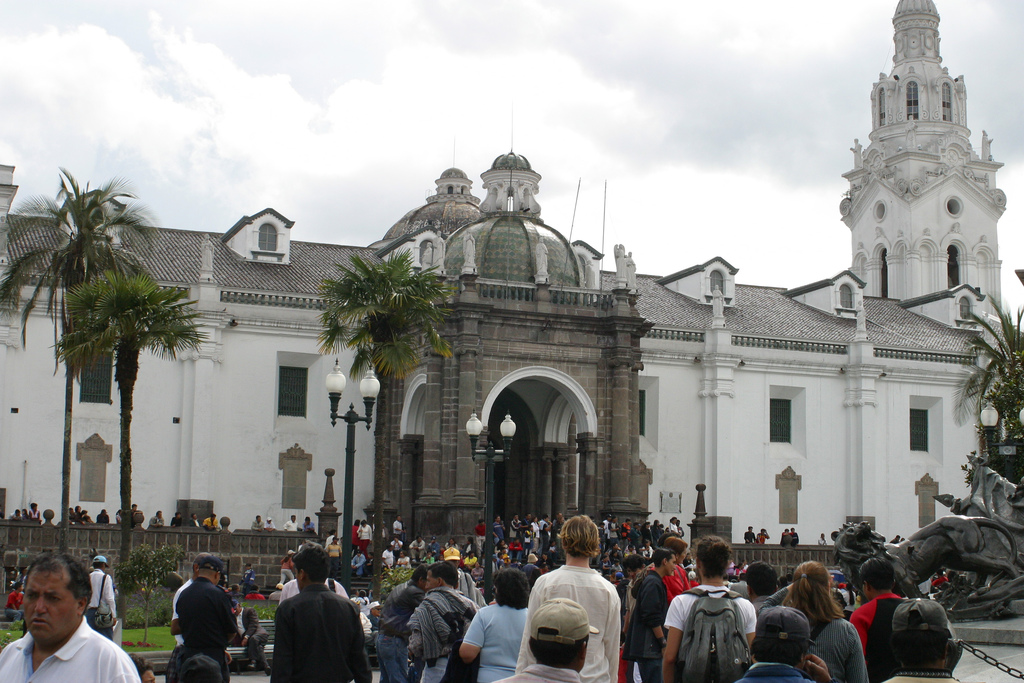
The Quito Metropolitan Cathedral is a Catholic cathedral on the southwestern side of Plaza de la Independencia (La Plaza Grande) in Quito, Ecuador. It is a white-painted monumental church with a single high belltower offset to the right of the main entrance. The building has two main entrances: one at mid-nave facing the Plaza and another with the belltower at the northwest facade. Three green-glazed ceramic domes rise above the transept, high altar, and Carondelet Arch.
Don't miss
- The Carondelet Arch, an elaborate arched side-entrance with a semi-circular staircase facing the Plaza
- Three green-glazed ceramic domes, including one topped with an iron rooster weather vane
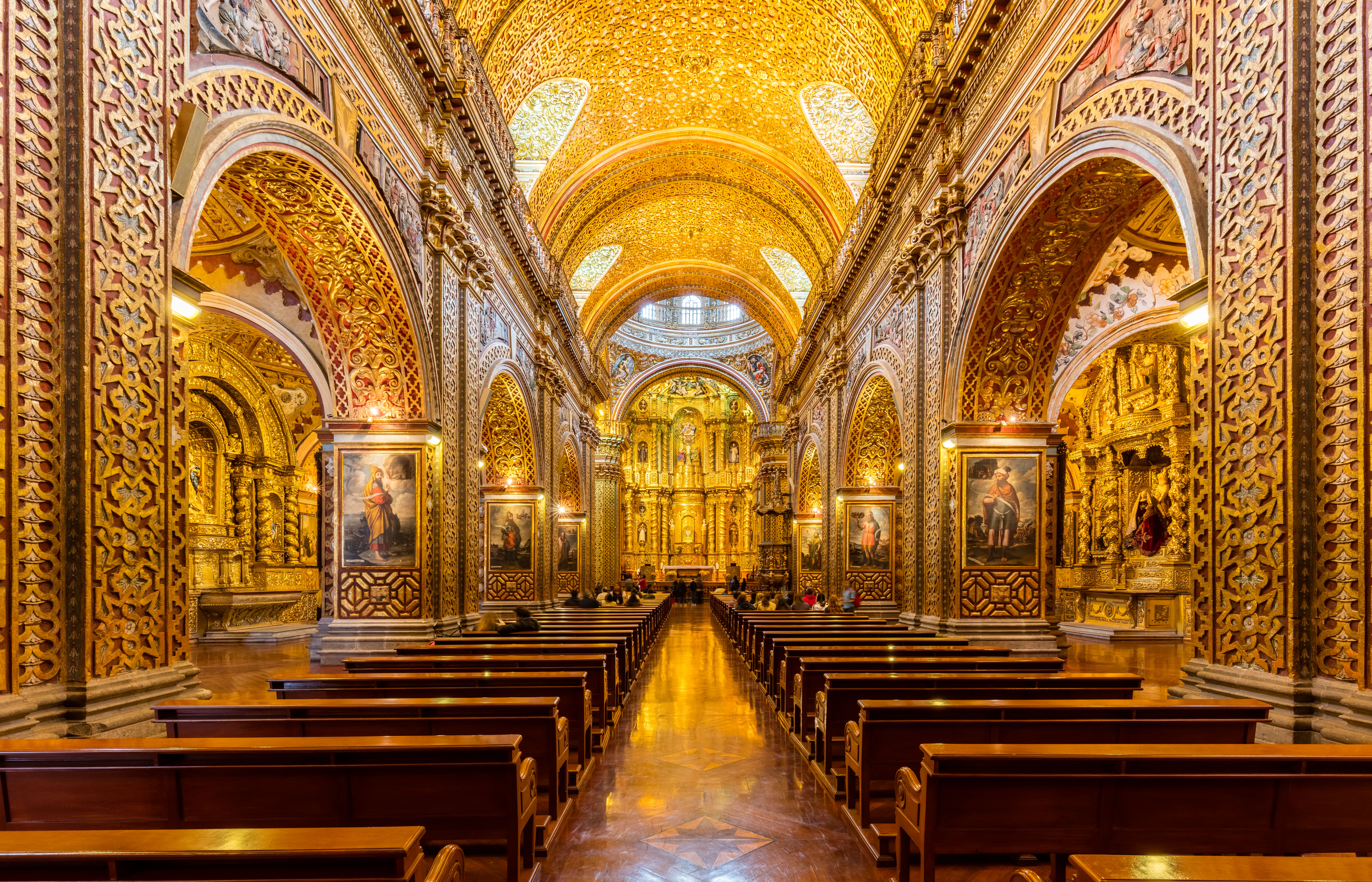
- The high altar, said to be entirely of gold, showing Baroque and Mudéjar patterns
- Works by artists of the Quito School of Art, including Manuel de Samaniego's painting of the Assumption of the Virgin (1793)
- The small altar of Nuestra Señora de los Dolores, with a plaque marking where President Gabriel García Moreno was shot in 1875
- The annual Holy Week liturgy 'El Arrastre de Caudas', where canons process with long black cloth trains
Tickets & tours
Ways to visit Quito Metropolitan Cathedral
You can visit Quito Metropolitan Cathedral on your own. A guide is worth it for the history and detail that is easy to walk past, and a tour can combine it with nearby sights.
 Cheapest way inQuito City Tour Double Decker Bus4.6★ · 588 travelers~2 hoursFree cancellationFrom$15 per personSee dates →
 Best full dayCotopaxi Full-Day from Quito Including Entrances4.9★ · 1,491 travelers~12 hoursFree cancellationFrom$59 per personSee dates →
 Private & flexiblePrivate Day Tour of Quito and Middle of the World5★ · 253 travelers~6 hoursFree cancellationFrom$89 per personSee dates →
Getting there
Know before you go
- Located on the southwestern side of Plaza de la Independencia (La Plaza Grande) in Quito.
- The cathedral has two main entrances: one at mid-nave facing the Plaza and another at the northwest facade facing Calle Garcia Moreno.
- Interior artworks include pieces by Miguel de Santiago, Manuel Chili 'Caspicara', and Bernardo Rodríguez.
A bit of history
Construction began in 1535 and the building became a cathedral with the creation of the Bishopric of Quito in 1545. It was consecrated in 1572. The cathedral was rebuilt after a volcanic eruption in 1660 and again after earthquakes in 1755 and 1797. The Carondelet Arch, a main entrance facing the Plaza, was added in the early 19th century. The catacombs hold many important figures, including independence leader Antonio José de Sucre. In 1995 it was elevated to the Cathedral of Ecuador, the seniormost Catholic church in the country.
Common questions
Why doesn't the main entrance face the plaza?
A deep gorge (la quebrada de Sanguña) present at the time of construction prevented extending the building backward, so the main entrance is at the side.
What is 'El Arrastre de Caudas'?
It is a Holy Wednesday liturgy unique to this cathedral, where canons process with long black cloth trains (caudas) as part of a larger procession.
Who is buried in the cathedral?
Independence leader Antonio José de Sucre is in his own Mausoleum Chapel. Several presidents of Ecuador, bishops, and priests are also buried in the catacombs.
More attractions in Quito