Landmark
Casa Rosada
 Lars Curfs (Grashoofd) · Wikimedia Commons · CC BY-SA 3.0 nl
Some booking links are affiliate links. If you book through them, we may earn a small commission at no extra cost to you. We never let this influence which places we recommend.
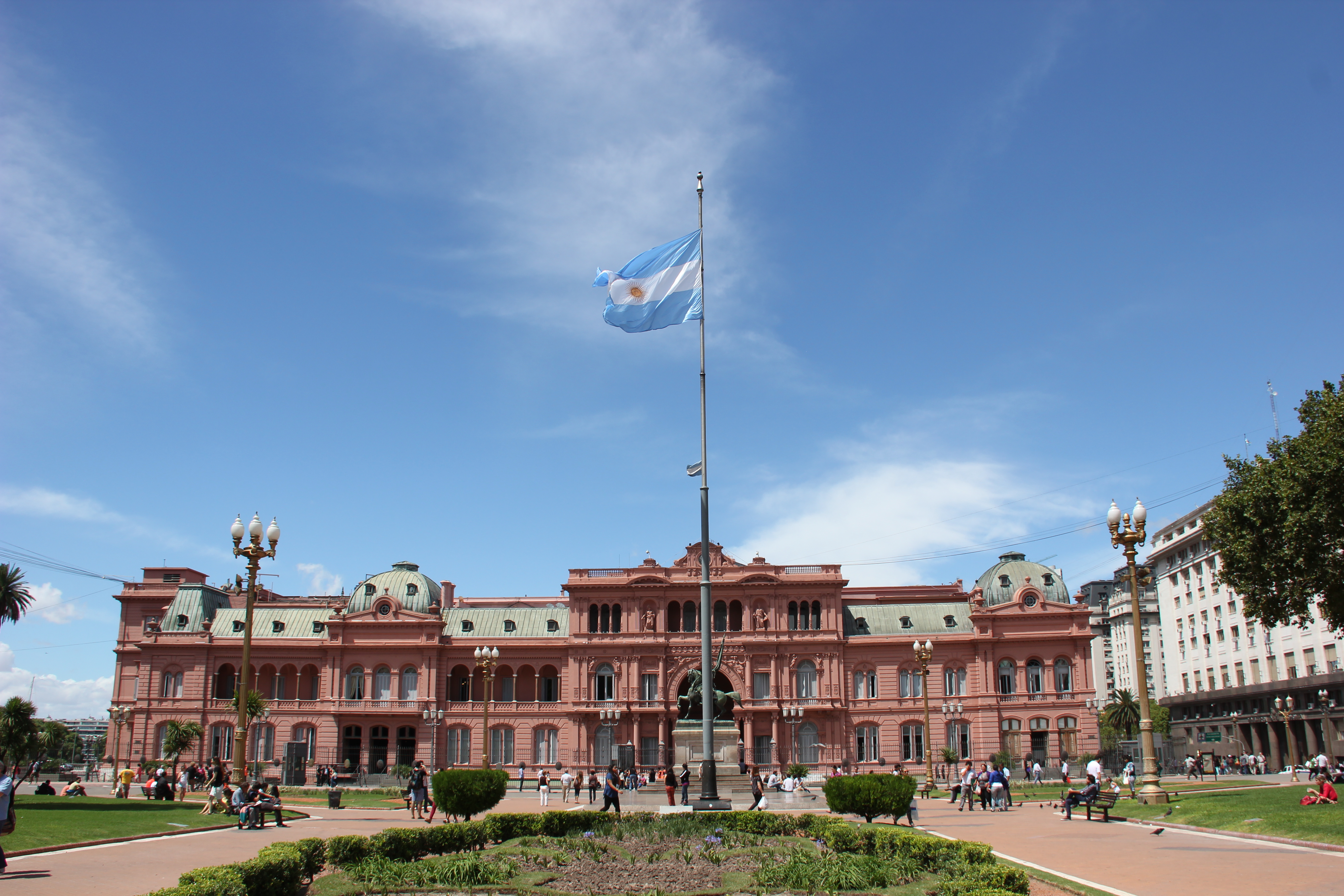
Casa Rosada is the official workplace of the president of Argentina, located at the eastern end of Plaza de Mayo in Buenos Aires. Its characteristic baby-pink color makes it one of the city's most emblematic buildings, and it also houses a museum with objects related to former presidents.
Don't miss
- The baby-pink exterior, which is the building's characteristic color and a symbol of Buenos Aires.
- The iconic Italianate archway built in 1884 that joins the two original structures.
- The Hall of Busts, which displays marble busts of many Argentine presidents, though the collection has been subject to political changes.
- The Museum of the Casa Rosada, which contains presidential memorabilia such as sashes, batons, books, furniture, and three carriages.
- The excavated remains of the former fort, visible behind the building and incorporated into the museum.
- The 'Seat of Rivadavia', the president's office chair named in honor of the first president of Argentina.
Tickets & tours
Ways to visit Casa Rosada
You can see Casa Rosada on your own. A tour is worth it for the story behind it, for transport, or for combining nearby sights into one day.
 Cheapest way inPalacio Tango: Tango Show at the Piazzolla Theater4.2★ · 302 travelers~4 hoursFree cancellationFrom$23 per personSee dates →
 Most bookedBuenos Aires City Private Tour with Local Guide4.9★ · 3,890 travelers~4 hoursFree cancellationFrom$120 per personSee dates →
 Private & flexibleDiscover the Best of Buenos Aires on a Full-Day Private Tour5★ · 167 travelers7-8 hoursFree cancellationFrom$144 per personSee dates →
Getting there
Know before you go
- The building is officially known as Casa de Gobierno ('Government House'), but is universally called Casa Rosada ('Pink House').
- It has been declared a National Historic Monument of Argentina.
- In the Pink House Museum, you can see a cannon-ball hole in part of a storage room of the Royal Treasury's warehouse.
A bit of history
The site was first occupied in 1594 by the 'Fort of Juan Baltazar of Austria', built on orders of city founder Juan de Garay. A masonry replacement called the 'Castle of San Miguel' was completed in 1720. After independence, President Rivadavia added a Neoclassical portico in 1825. The fort was demolished in 1857 for a new customs building designed by British Argentine architect Edward Taylor. The old fort's administrative annex became presidential offices under Bartolomé Mitre in the 1860s. President Sarmiento had the exterior painted pink, reportedly to blend the red and white colors of opposing political parties, or alternatively because the paint contained cow's blood to prevent humidity damage. In 1882 President Roca commissioned architect Enrique Aberg to replace the cramped State House, and architect Francesco Tamburini built the iconic Italianate archway between the two structures in 1884. The building was completed in 1898. A Historical Museum was created in 1957, and remains of the former fort were partially excavated in 1984–85 and incorporated into the Museum of the Casa Rosada.
Common questions
What is the Casa Rosada?
It is the official workplace of the president of Argentina, located in Buenos Aires at the eastern end of Plaza de Mayo.
Why is the building pink?
President Sarmiento reportedly had it painted pink to blend the red and white colors of the country's two opposing political parties, though another explanation suggests the original paint contained cow's blood to prevent humidity damage.
Can visitors go inside the Casa Rosada?
Yes, the building houses a museum that contains objects relating to former presidents of Argentina, including sashes, batons, books, furniture, and three carriages.
What can I see in the museum?
The museum displays presidential memorabilia and includes excavated remains of the former fort, including a cannon-ball hole in a storage room.
What is the Hall of Busts?
It is a room that houses marble busts of many Argentine presidents, though the collection has been subject to political biases and changes over time.
More attractions in Buenos Aires